
Navigating the complexities of bringing a product to market can be a significant challenge for any brand. The choice of your production strategy is critical, and for a growing number of businesses, OEM manufacturing provides the most direct path to success, eliminating the immense costs and distractions of building a factory from the ground up. This allows brands to focus their resources on what they do best: building a powerful brand presence.
More brands are choosing OEM manufacturing because it represents a strategic division of labor. It allows a brand to operate as a light-asset company, focusing its capital and energy on marketing, sales, and channel expansion. Simultaneously, the OEM partner manages the heavy-asset responsibilities of production, process engineering, quality control, and compliance, providing custom products with controlled costs and minimized risk.

This strategic partnership is fundamentally changing how modern brands create value and achieve scale. It’s not just about outsourcing; it's about leveraging specialized expertise to gain a competitive edge. Let's explore the specific advantages that make the OEM model so compelling for brands across industries like beverage, hospitality, and personal care.
How Does OEM Manufacturing Reduce Costs?
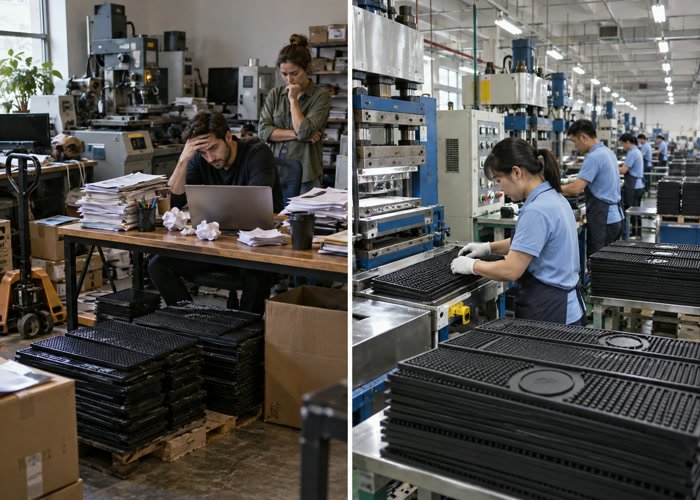
Starting a new product line often brings the daunting prospect of massive upfront investment in production facilities. This capital gets locked into machinery and real estate, starving the marketing and sales budgets that actually drive growth. OEM manufacturing completely sidesteps this problem by plugging you into a ready-made production powerhouse.
The core financial benefit is clear: OEM reduces costs by leveraging the manufacturer's existing infrastructure, economies of scale, and skilled labor. This eliminates the brand's need to invest millions in building, equipping, and staffing its own factory.
Dive Deeper: The Financial Levers of OEM
Working with an Original Equipment Manufacturer (OEM) gives you immediate access to several powerful cost-reduction mechanisms. It’s a model designed for financial efficiency.
Eliminating Capital Expenditure (CapEx) The most significant saving comes from avoiding the immense capital outlay required for in-house production. A factory isn't just a building; it's a complex ecosystem of specialized machinery, environmental controls, safety systems, and logistical infrastructure. For my company, which produces custom bar mats, this includes expensive equipment like PVC dispensers, large ovens, and molding machines. By partnering with an OEM like us, you get the full benefit of this equipment without spending a single dollar on purchasing or maintaining it. Your capital remains liquid, ready to be deployed for marketing campaigns, inventory expansion, or new market entry.
Leveraging Economies of Scale Established OEM manufacturers produce goods for multiple clients, often in high volumes[^1]. This gives them immense purchasing power.
- Raw Materials: We purchase PVC, silicone, and rubber by the ton, not by the kilogram. This allows us to secure far lower prices per unit than a single brand could ever achieve on its own. These savings are passed directly on to you.
- Shared Overhead: The costs of running the factory—utilities, management salaries, maintenance—are spread across all the projects we produce. This amortization means your project bears only a small fraction of the total overhead cost.
Reducing Operational Costs (OpEx) Beyond CapEx, the day-to-day operational expenses of a factory are substantial. An OEM partnership removes these from your balance sheet. You don't have to worry about:
- Labor: Recruiting, training, and managing a skilled factory workforce.
- Maintenance: Servicing and repairing complex machinery.
- Utilities: The high cost of electricity, water, and gas for industrial production.
- Compliance: The administrative burden of adhering to labor laws and safety regulations.
Here is a simple comparison:
| Cost Factor | In-House Manufacturing | OEM Manufacturing |
|---|---|---|
| Factory & Equipment | High (Millions) | Zero |
| Raw Material Cost | High (Low Volume) | Low (Bulk Purchase) |
| Labor & Training | High (Direct Payroll) | Included in Unit Price |
| Maintenance & Utilities | High (Direct Cost) | Included in Unit Price |
| Time to Market | Slow (12-24 months) | Fast (Weeks) |
This financial structure is why the OEM model is so powerful. It converts a fixed, high-cost model into a variable, predictable one, where you only pay for what you produce.
Can an OEM Partner Enhance Product Quality and Innovation?
Many brands worry that outsourcing production means sacrificing quality or creative control. In my experience, the opposite is true. A great idea for a product is only the beginning; turning it into a high-quality, market-ready item requires deep technical expertise. A specialized OEM partner brings that expertise to the table, often elevating the final product beyond the brand's original vision.
Yes, a skilled OEM partner significantly enhances product quality and innovation. They contribute specialized engineering knowledge, advanced manufacturing technologies, and robust quality control systems that a brand typically lacks internally.
Dive Deeper: From Concept to Superior Product
The value of an OEM isn't just in making your product; it's in making your product better. This happens through a combination of technology, process, and collaborative expertise.
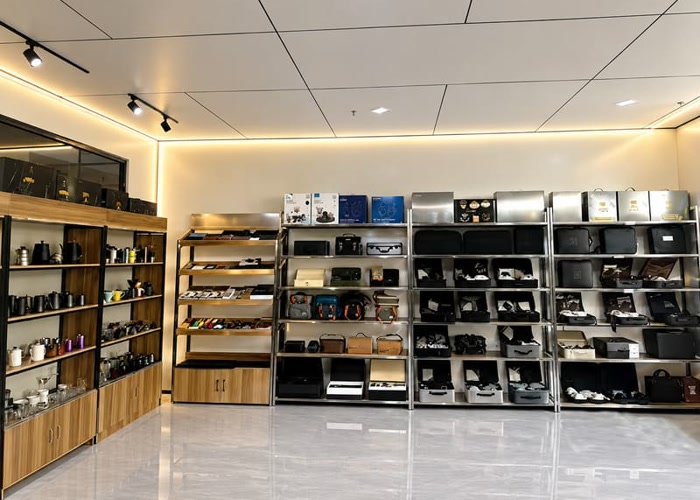
Access to Specialized Equipment and Technology An OEM's factory is a laboratory of possibilities. At SuperfectCraft, for instance, we have a vast library of existing molds that can be adapted for new clients, dramatically speeding up development time. We also have the machinery to work with multiple materials—PVC, silicone, rubber, non-woven fabric—and combine them in innovative ways.
This allows us to engineer products with specific functional attributes. For a client needing a barber mat, we can design a structure with:
- Enhanced Drainage: To keep tools dry and workstations clean.
- Magnetic Positioning: Embedding magnets within the mat to securely hold clippers and shears.
- Superior Heat Resistance: Using high-grade silicone to create a safe spot for hot styling tools. A brand owner might not even know these features are possible, but a good OEM can suggest them, adding significant value to the product.
Established Quality Control Systems Professional manufacturers live and die by their quality. We have multi-stage quality control built into our process, which ensures consistency and adherence to specifications.
- Sample Confirmation: We never proceed to mass production until you have approved a physical sample. You see, feel, and test the exact product you will receive.
- In-Process Inspection: Our teams check for quality at every step, from color matching the raw materials to the final demolding. This catches any potential issues early, saving time and money.
- Final Inspection: Every single mat is inspected before packing and shipment to ensure it meets the approved standard.
Collaborative Innovation The best OEM relationships are partnerships. Brands bring market insight and a vision; we bring manufacturing know-how. Our 24-hour design sketch service is a perfect example. A client can send us a simple logo and dimensions, and our team will create a professional design concept, often suggesting improvements to the texture, layout, or functionality. This collaborative loop refines the idea and ensures the final product is not only well-made but also commercially effective.
How Does OEM Manufacturing Help Brands Focus on Their Strengths?
In today's competitive landscape, a brand's most valuable asset is its relationship with its customers. Yet, many businesses find themselves bogged down in the operational quicksand of supply chain management, production scheduling, and logistics. Every hour spent on a factory floor problem is an hour not spent on marketing, sales, or innovation.
OEM manufacturing liberates brands by taking the entire production burden off their shoulders. By outsourcing the complex, capital-intensive work of making things, it frees up a company's most valuable resources—time, talent, and money—to be invested in its core competencies: building the brand and growing the business.
Dive Deeper: The Power of the Light-Asset Model
This strategy is at the heart of why so many successful modern brands have embraced OEM. They understand the power of focusing on what they do uniquely well.
The Light-Asset Business Model This is the core concept my most successful clients embrace. They choose to own the brand, the intellectual property, and the customer relationships—the "light" assets that generate high margins and brand loyalty. They strategically avoid owning the factories, machinery, and physical inventory—the "heavy" assets that tie up capital and require specialized management.
Think of a major beverage company. Their expertise is in creating a desirable brand, marketing it globally, and managing distribution networks. Their expertise is not in PVC molding or silicone injection. By partnering with us for their custom bar mats and promotional items, they get a best-in-class product that reinforces their brand at every point of sale, without ever having to divert focus from their primary mission.
Accelerating Speed to Market In a fast-moving market, being first can be everything. Building your own factory can take 1-2 years before you produce a single unit. With an established OEM partner, you can go from concept to market in a matter of weeks.
- Our Sample Lead Time: 7 days
- Our Mass Production Lead Time: 20–30 days This agility allows brands to react to market trends, launch seasonal promotions, and get products into their sales channels while the opportunity is hot.
Scaling with Agility Demand is rarely static. A successful product launch can lead to a sudden surge in orders. If you own your factory, scaling up means buying more machines and hiring more people—a slow and expensive process. Scaling down during a slow period means idle machines and staff.
With an OEM, scaling is simple. Need more units? We allocate more production capacity to your project. Demand is slowing? You can reduce your next order quantity (down to our MOQ of 200 pieces). This flexibility minimizes risk and allows you to match your supply directly to real-time market demand.
What Role Does Customization Play in OEM?
In a crowded marketplace, standing out is not just an advantage; it's a necessity. Off-the-shelf, generic products do little to build a memorable brand identity. Consumers connect with brands that have a clear point of view, and that identity must be reflected in every touchpoint—including physical products and promotional materials.
Customization is the very soul of OEM. It is the mechanism that allows a brand to translate its unique identity into a tangible product. From a specific Pantone color and logo to a completely unique shape or functional feature, OEM is about creating a product that is unmistakably yours.

Dive Deeper: Building Your Brand in Physical Form
Customization through OEM is about more than just aesthetics; it's a strategic tool for brand building and market differentiation. For our clients in the beverage and hospitality space, a custom bar mat is a critical piece of marketing real estate.
Brand Identity Through Physical Products A bar mat isn't just a tool to catch spills. It sits on the bar, front and center, where every customer sees it. It's a constant, physical reinforcement of the brand.
- Logo and Color: The most basic level of customization ensures brand consistency. We can precisely match your brand's PMS colors.
- Texture and Finish: A custom surface texture can communicate a premium feel or rugged durability, aligning with the brand's positioning.
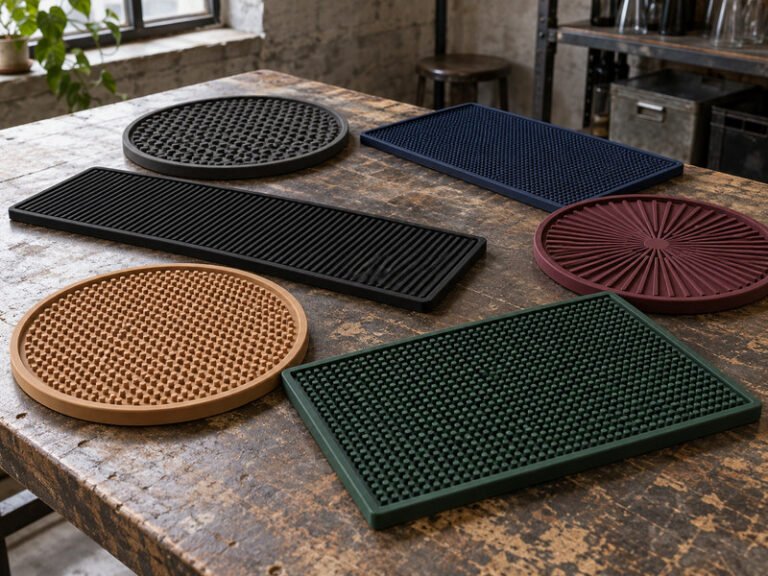
- Shape and Size: Why stick to a standard rectangle? A custom-shaped mat can echo the brand's logo or product packaging, creating a much stronger visual impact.
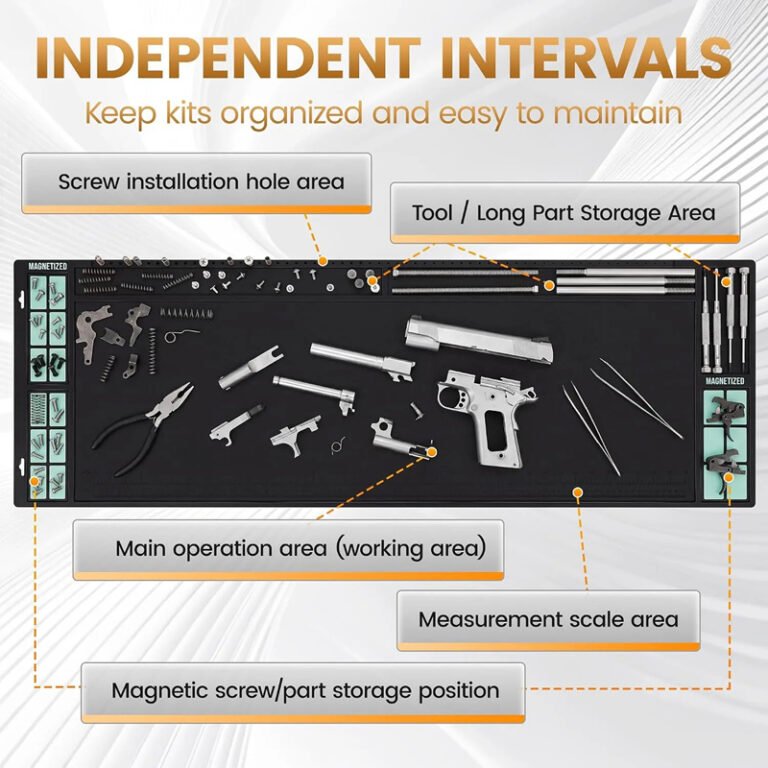
From Logo to Unique Structures True OEM partnership goes beyond surface-level changes. It involves co-engineering products to solve specific problems or create unique user experiences. At SuperfectCraft, we regularly work with clients to develop mats with special structures. This includes designing unique drainage patterns to keep surfaces drier or embedding functional elements like magnets for tool organization on a barber mat. This level of customization creates a proprietary product that competitors cannot easily replicate.
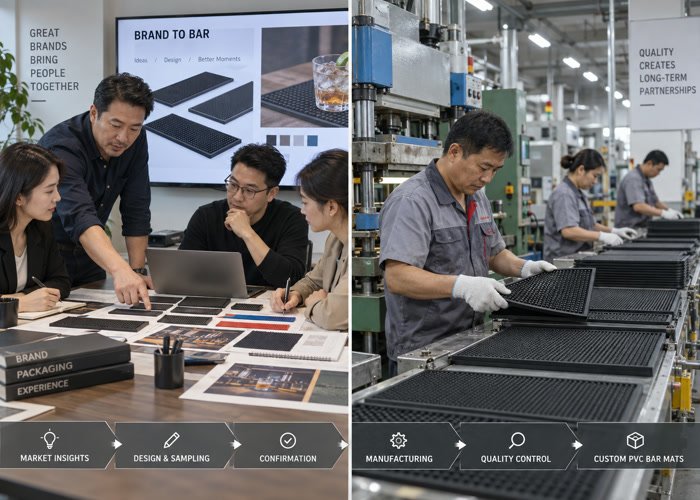
The OEM Customization Process To make this tangible, here is the simple, streamlined process we use to bring a client's vision to life:
- Client provides the brief: All we need to start is your logo file, desired dimensions, and any specific ideas you have.
- We create a free design sketch: Within 24 hours, our design team returns a professional visual of the proposed product for your review.
- You approve the design: We make any requested revisions until you are 100% satisfied.
- We produce a physical sample: You get to see and approve the final product before committing to a full production run.
- We begin mass production: Once the sample is approved, we move forward, ensuring every piece matches the approved standard.
This process de-risks customization and makes it accessible to any brand, regardless of whether they have in-house designers.
Frequently Asked Questions
What is the difference between OEM and ODM?
OEM (Original Equipment Manufacturer) is a process where we manufacture a product based on your design and specifications. You provide the design, and we build it for you. ODM (Original Design Manufacturer) is where we offer our existing product designs, which you can then brand with your logo. ODM is faster but offers less differentiation, while OEM provides full customization.
What is the minimum order quantity (MOQ) for OEM manufacturing?
The MOQ can vary widely depending on the product and manufacturer. At SuperfectCraft, for custom mats using our existing molds, our MOQ is typically 200 pieces per design and color. This low barrier to entry makes custom manufacturing accessible even for smaller brands or for testing new promotional products.
How do I protect my intellectual property (IP) when working with an OEM?
Protecting your IP is crucial. Reputable OEM partners understand this and will readily sign a Non-Disclosure Agreement (NDA) before you share any sensitive design files or business information. This legally binds the manufacturer to keep your designs confidential and not use them for other clients. We consider this a standard and essential part of building a trusted partnership.
Can OEM partners handle compliance and testing for different markets?
Yes, a global OEM partner should have experience with international compliance. While our standard materials are safe for commercial use, we regularly facilitate third-party testing for clients with specific market needs. This includes testing for REACH/SVHC (EU), California Prop 65, FDA/LFGB (food contact), and more. We manage the process based on your target market and requirements.
Conclusion
In essence, the move towards OEM manufacturing is a strategic decision to embrace focus and expertise. By partnering with a specialist, brands can shed the immense financial and operational weight of in-house production. This allows them to launch higher-quality, deeply customized products faster and more cost-effectively. The result is a lean, agile business model where capital and talent are concentrated on building brand equity and driving sales. OEM isn't just outsourcing; it's a powerful growth engine for the modern brand.
If you are a brand owner, importer, or distributor looking to create custom bar mats, tool mats, or other promotional products that truly stand out, our team is ready to help. We can turn your idea into a production-ready design in just 24 hours.
Contact us today to get started on your free design sketch. Whatsapp: +86 15816822766 Email: sales01@superfectcraft.com Website: www.superfectcraft.com
[^1]: "Pricing strategies for shared manufacturing platform considering ...", https://pmc.ncbi.nlm.nih.gov/articles/PMC11236110/. Institutional reports on manufacturing efficiency highlight that OEMs can reduce per-unit costs by producing for multiple clients simultaneously, leveraging shared resources and bulk purchasing. However, the savings depend on the scale of operations and client demand. Evidence role: statistic; source type: institution. Supports: High-volume production allows OEMs to reduce per-unit costs for their clients.. Scope note: The data may not apply to niche or low-volume industries.