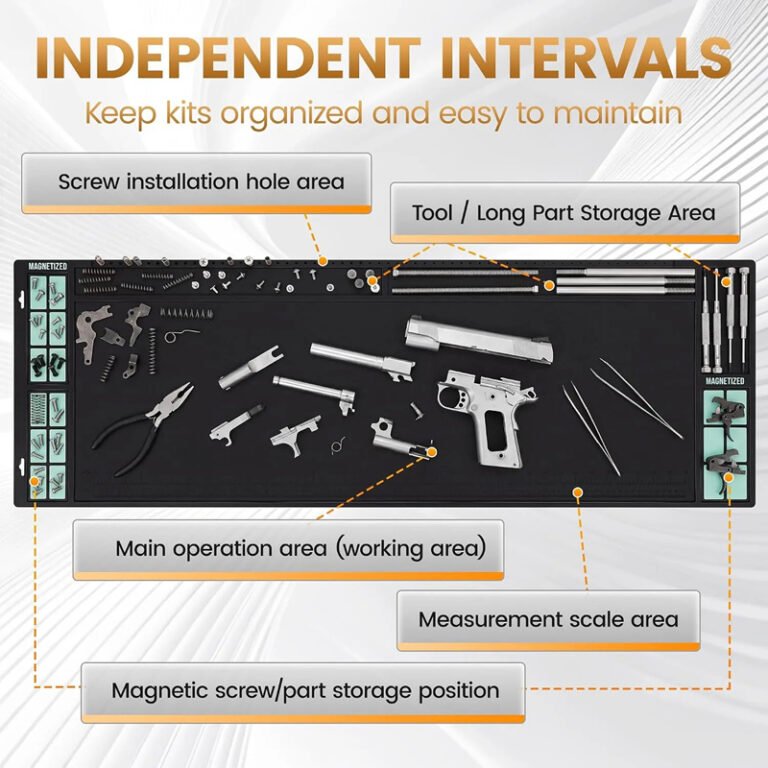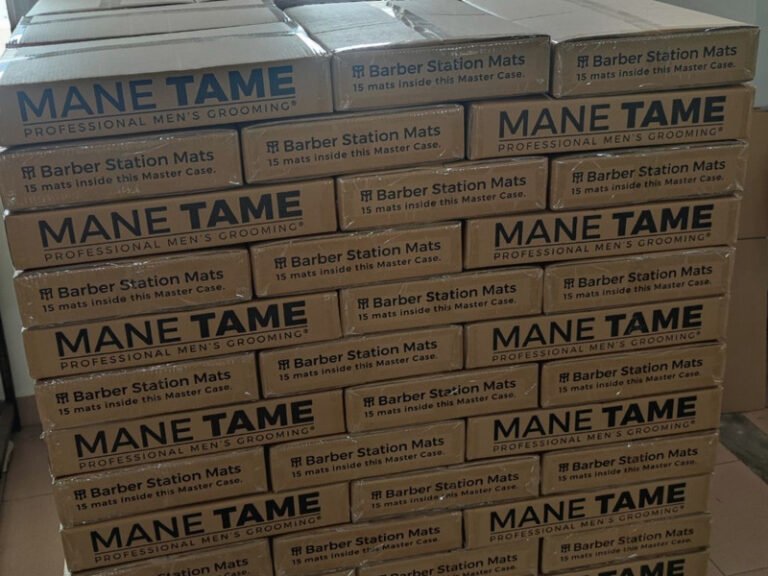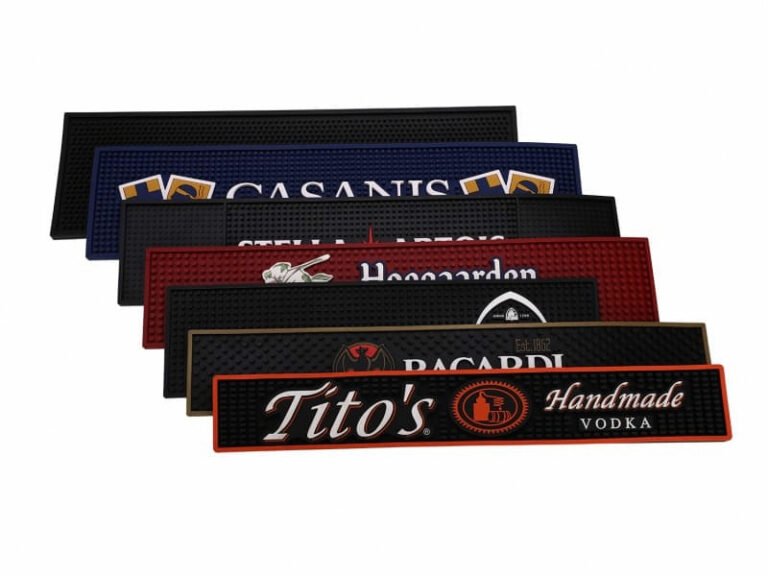

Struggling to find a manufacturer for custom promotional mats that offers both quality and affordability? Many brands find that local suppliers are too expensive, while other low-cost options deliver poor quality and inconsistent results. This frustration can derail marketing campaigns and damage your brand's reputation. The solution is to understand why top global brands consistently source mats from China.
The decision to source mats from China comes down to its comprehensive supply chain, which no other country can replicate. This ecosystem offers cost-effective custom 3D embossing, flexibility for both large and small orders, and a one-stop-shop for global compliance testing, stable delivery, and complete quality control. It's the optimal choice for brands building long-term assets.

This integrated advantage isn't just about lower prices; it's about a strategic partnership that enables speed, creativity, and reliability. Let's break down the specific reasons why China remains the undisputed leader for manufacturing custom mats for bars, negozi di barbiere, e laboratori.
What Makes China's Supply Chain So Powerful for Mat Sourcing?
Trying to coordinate designers, mold makers, material suppliers, and testing labs across different companies is a logistical nightmare. Juggling these moving parts often leads to delays, miscommunication, and quality control failures. China’s manufacturing ecosystem solves this by integrating every step of the process in one place.
The power lies in a complete, co-located industrial ecosystem. Raw material producers, advanced mold-making factories, specialized printing facilities, and global logistics hubs operate in close proximity. This incredible density drives efficiency, reduces lead times, and lowers costs significantly.

From Raw Materials to Finished Goods in One Place
When you decide to source mats from China, you tap into a network where every component is readily available. Factories that produce the base PVC, silicone, or rubber pellets are often just a short drive from our own production facility. The same goes for the high-quality, vibrant pigments used for color matching and the specialized inks for printing.
This proximity has two huge benefits:
- Velocità: We don't have to wait weeks for raw materials to be shipped from another country. We can source them in days, which drastically cuts down production lead times. Our 7-day sample turnaround is a direct result of this efficiency.
- Costo: Reduced shipping and logistics costs for raw materials translate directly into a more competitive final price for your custom mats. There are no import duties or international freight charges layered into the material cost.
A SuperfectCraft, we leverage this integration to offer services that are impossible elsewhere. For example, our 24-hour design sketch service allows clients without a dedicated design team to see their vision come to life almost instantly. We can do this because our designers, engineers, and production experts all work together under one roof.
The Power of Mold Libraries and Rapid Prototyping
One of the most significant hidden costs in custom manufacturing is mold creation. Starting from scratch is expensive and time-consuming. Tuttavia, established Chinese manufacturers have spent decades building vast libraries of existing molds.
At our facility, we have a large library of molds in various standard sizes and shapes for bar mats, tappetini da barbiere, and tool mats. This means our clients can often find an existing mold that fits their needs, eliminating thousands of dollars in tooling fees and slashing development time.
Even when a fully custom mold is required, our process is built for speed:
- Fare un passo 1: The customer provides their logo, dimensioni desiderate, and specifications.
- Fare un passo 2: Our team creates a detailed design sketch for approval, solitamente all'interno 24 ore.
- Fare un passo 3: Once the design is approved, we create the physical mold. Thanks to co-located tooling specialists, this is a fast and precise process.
- Fare un passo 4: We produce a physical sample for final confirmation.
- Fare un passo 5: Upon sample approval, we begin mass production.
This entire cycle, from initial idea to a physical sample in your hands, can be completed in about 7 giorni. This level of speed allows brands to be incredibly agile with their marketing and promotional efforts.
How Does Sourcing Mats from China Enable Unmatched Customization?
Your brand has a unique identity, but generic, off-the-shelf promotional items fail to capture it. The problem is that creating truly custom products often involves high minimum order quantities (MOQs) and prohibitive tooling costs, especially with Western suppliers. This financial barrier kills creativity before it can even start.
Chinese manufacturing is fundamentally built for high-level, cost-effective customization. Factories here excel at complex techniques like multi-color 3D embossed logos and offer low MOQs—like our 200-piece minimum. This combination makes it financially viable to test new designs and create exclusive, limited-edition products.
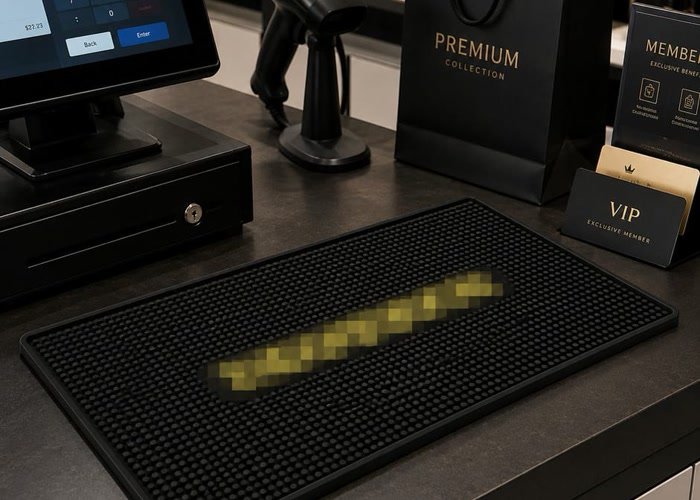
The Art of 3D Embossing and Debossing
While a simple printed logo on a flat mat is easy to produce anywhere, the true mark of a premium promotional mat is a crisp, vibrant, 3D embossed logo. This is where Chinese manufacturing truly shines. The process involves dispensing liquid PVC or silicone of different colors into a custom mold, strato dopo strato, before it's cured.
This technique requires specialized machinery, skilled technicians, and a deep understanding of material behavior. Because China has been the global hub for this type of production for decades, the process is highly refined and incredibly cost-effective. In my experience, trying to replicate this level of detailed, multi-color 3D work in Europe or North America would increase the unit cost by at least 100-200%.
This capability allows brands to:
- Create memorable, high-impact promotional items that customers actually want to keep and use.
- Replicate intricate logo details with perfect color accuracy.
- Add functional textures, such as anti-slip patterns or drainage channels, directly into the mat's design.
For example, a beverage company we worked with wanted to launch a limited-edition summer drink. We helped them design and produce a vibrant, tiki-themed bar mat with a 3D embossed logo that became a collector's item for bartenders. This was only possible because our rapid, affordable process fit within their campaign budget and timeline.
Low MOQs and Rapid Iteration
The other game-changing advantage when you source mats from China is the flexibility in order size. Western factories, burdened by high overhead, often require MOQs in the thousands to justify a production run. This is a non-starter for small businesses, private-label sellers testing a new product, or even large brands wanting a small batch for a specific event.
We are able to offer an MOQ as low as 200 pezzi per disegno. We can do this because our production lines are efficient and our mold-making process is streamlined. This low barrier to entry empowers our clients to:
- Test market demand for a new design without a huge financial commitment.
- Create exclusive runs for VIP clients or special events.
- Maintain a fresh inventory of promotional items by ordering smaller, more frequent batches of different designs.
This flexibility, combined with fast lead times, creates a powerful competitive edge.
| Caratteristica | Sourcing from China (SuperfettoCraft) | Western Sourcing (EU/US) | Southeast Asian Sourcing |
|---|---|---|---|
| Typical MOQ | Basso (200+ pz) | Molto alto (1,000–5,000+ pcs) | Varies, often unreliable |
| Personalizzazione | Eccellente (3D Embossing, Custom Molds) | Limited (Mostly 2D Printing) | Basic (Simple Shapes, Print Only) |
| Avg. Lead Time | Fast (4-5 weeks total) | Very Slow (3-6 mesi) | Inconsistent & Unpredictable |
| Cost Per Unit | $ | $$$ | $ (with hidden quality/compliance risks) |
| Supply Chain | Fully Integrated | Fragmented | Broken / Incomplete |
Why Aren't Southeast Asia or Europe Viable Alternatives to Source Mats from China?
As a procurement manager, you constantly hear about diversifying your supply chain and moving production to other regions like Southeast Asia. Tuttavia, when you dig into the practical realities of mat manufacturing, these alternatives often lead to quality compromises, compliance headaches, and unstable delivery schedules.
The simple truth is that Southeast Asia lacks the mature, integrated supply chain[^1] needed for high-quality custom mats. At the same time, European and American factories face prohibitively high labor, tooling, and operational costs, making them non-competitive for this specific product category.
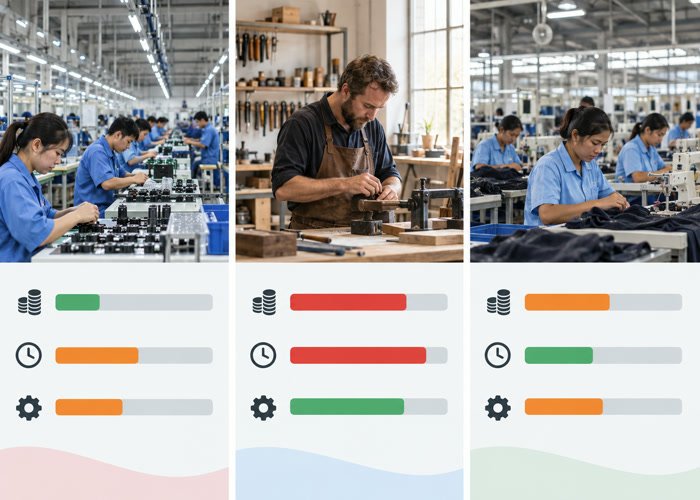
The Southeast Asian Challenge: A Fragmented Ecosystem
While countries like Vietnam and Thailand are growing as manufacturing centers, they lack the deep, specialized industrial ecosystem that China has built over 30 anni. For custom mat production, this manifests in several critical weaknesses:
- A Broken Supply Chain: These regions often have to import key components. High-precision molds, specialized pigments for accurate color matching, and testing services for global compliance standards frequently come from China or Europe. This adds significant cost, complexity, and lead time to the process.
- Limited Technical Capability: Most factories in Southeast Asia are equipped for basic, high-volume production of simple, flat printed mats. They lack the specialized equipment and technical expertise for the precise liquid dispensing required for complex 3D embossed logos. The final product often lacks the detail and quality of a Chinese-made equivalent.
- Compliance and Quality Risks: There is a much higher risk of quality issues. I’ve seen many mats from this region suffer from "blooming," where white residue (a plasticizer) leaches to the surface over time. Strong chemical odors are also common. Inoltre, these factories often lack experience navigating complex regulations like EU REACH, Prop. California 65, or LFGB, putting your brand at risk.
- Unstable Delivery: Due to their reliance on imported materials and less developed logistics infrastructure, production timelines and shipping dates are often unpredictable.
The Western Manufacturing Hurdle: Prohibitive Costs
Manufacturing in Europe or the United States offers benefits like proximity and perceived quality, but for a product like a custom promotional mat, the economic model simply doesn't work.
- Astronomical Costs: The combined cost of labor, factory overhead, and environmental compliance in the West is dramatically higher. A custom mold that costs a few thousand dollars in China can easily cost over $10,000 in Germany or the US. This results in a final unit price that can be double or triple that of an identical mat sourced from China.
- Extremely High MOQs: To offset their massive setup and labor costs, Western factories must enforce very high minimum order quantities. They are not structured to handle the 200- or 500-piece runs that brands need for targeted promotions.
- Slow Development Cycles: The process of creating a new mold and setting up a production line is much slower. A project that takes 4-5 weeks in China can take 3-6 months in the West, making it completely unsuitable for the fast-paced needs of marketing departments.
While sourcing locally seems appealing, for custom, high-detail promotional mats, it is not a commercially viable option for the vast majority of brands.
Domande frequenti
Qual è la quantità minima dell'ordine (MOQ) for custom mats from China?
A SuperfectCraft, our MOQ is 200 pezzi per disegno e colore, especially when using an existing mold from our library. This low threshold is designed to help both large and small brands create custom products without a massive upfront investment, making it perfect for testing new ideas or limited editions.
How do you ensure material safety and compliance for US or EU markets?
We take compliance very seriously. While standard orders don't require certification, we can arrange third-party testing for any project targeting the EU, NOI, or specific brand standards. This includes tests for REACH/SVHC, phthalates, LFGB/FDA, Prop. California 65, heavy metals, and more, ensuring your product is safe and market-ready.
How long does it take to get a sample and start mass production?
Our process is built for speed. Once your design is confirmed, producing a physical sample typically takes only 7 giorni. After you approve the sample, mass production lead time is generally between 20 E 30 giorni. The entire process from idea to shipped product is exceptionally fast.
Puoi aiutarmi con il design se ho solo un logo?
Assolutamente. Many of our clients come to us with just a logo and a concept. We offer a free, 24-hour design sketch service where our team will create a professional mockup of your custom mat for your review. We handle the technical design so you can focus on your brand vision.
Conclusione
The decision to source mats from China is a strategic one, rooted in an unmatched combination of capability, flessibilità, and value. It's not just about a lower price tag; it's about accessing an integrated supply chain that delivers complex 3D customization, low MOQs, rapid prototyping, and guaranteed global compliance. While other regions may offer one of these benefits, only China's mature ecosystem delivers all of them in one seamless package. This allows your brand to create superior promotional assets that build brand equity, engage customers, and deliver a measurable return on investment.
If you're ready to create high-quality, custom mats that elevate your brand without breaking the budget, our team is here to help. Contact SuperfectCraft today to get your free design sketch and see the difference for yourself.
[^1]: "Supply Chains in Southeast Asia: Connectivity and Resilience", https://www.oecd.org/content/dam/oecd/en/events/2025/04/oecd-emerging-markets-forum/Panel%203_OECD%20EMF%20Background%20Note%20-%20Supply%20Chains%20in%20Southeast%20Asia.pdf. Studies on regional manufacturing ecosystems highlight China's advanced integration compared to Southeast Asia's fragmented supply chains. Ruolo di prova: historical_context; tipo di fonte: ricerca. Supporta: Southeast Asia's manufacturing ecosystem is less integrated compared to China's.. Nota sull'ambito: The studies may focus on general manufacturing rather than mats.