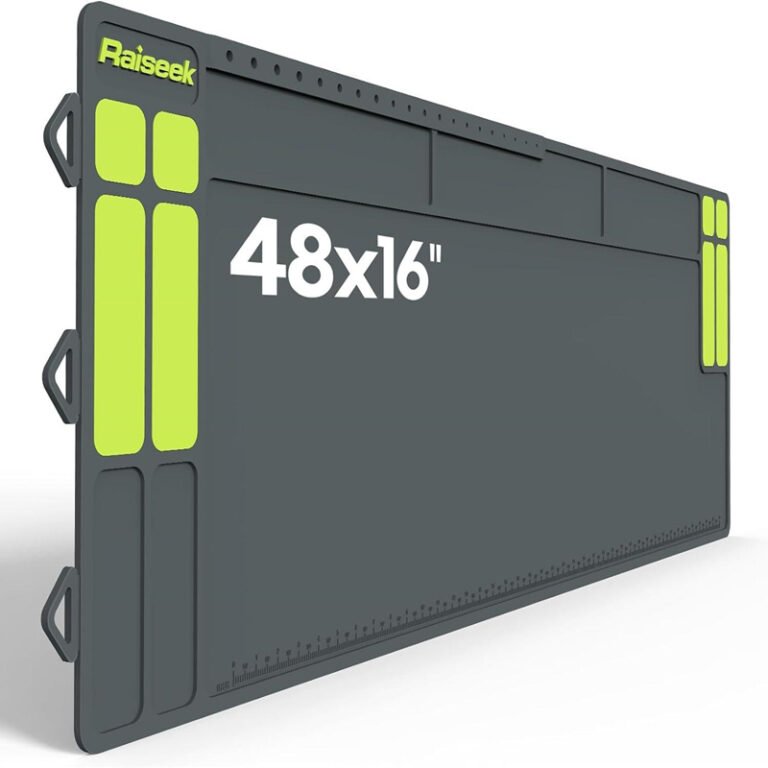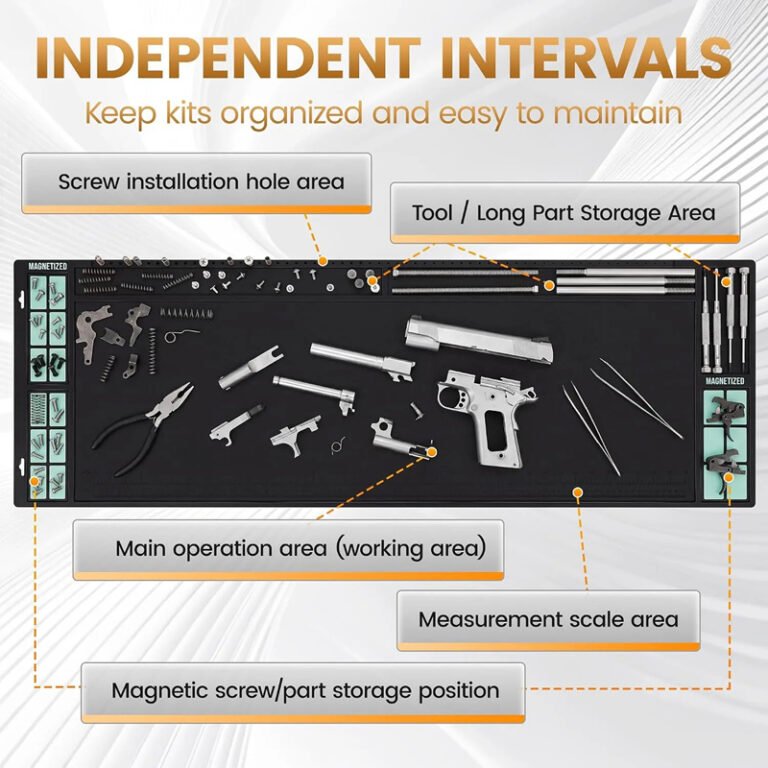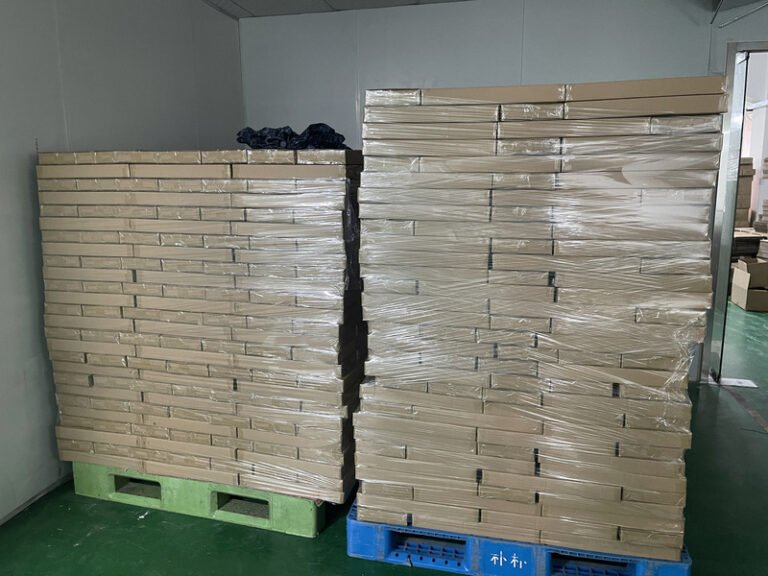

Struggling to understand how your custom bar mat idea goes from a simple sketch to a finished product? The OEM manufacturing process can seem complex and opaque, leaving you worried about quality, timelines, and hidden costs. This guide demystifies the entire bar mat production process, giving you a clear, step-by-step roadmap from initial design to final shipment.
The bar mat production process involves six key stages: design finalization, quoting and sampling, mass production preparation, automated manufacturing, comprehensive quality control, and finally, packaging and shipping. This end-to-end system ensures your custom design is accurately translated into a high-quality product, with critical checkpoints like sample approval safeguarding your investment.

Now that you have the high-level overview, let's break down each of these stages. Understanding the details will empower you to manage your project effectively and partner with your manufacturer for the best results, ensuring the final product perfectly matches your brand's vision.
Stage 1: How Do You Finalize Your Bar Mat Design and Requirements?
Have a great idea for a bar mat but not sure how to communicate it to a manufacturer? Providing incomplete or vague specifications can lead to misinterpretations, frustrating delays, and a final product that doesn't align with your vision. The key is to consolidate all your requirements into a clear, actionable design brief.
To finalize your design, you need to provide your manufacturer with your logo artwork, desired dimensions (length, width, thickness), color specifications (Pantone codes are best), and any special functional requirements like drainage pillars or anti-slip textures.

Dive Deeper: The Importance of a Detailed Brief
The quality of your initial brief directly impacts the success of the entire project. The more detailed you are upfront, the smoother the process will be. I've seen projects get delayed for weeks simply because a Pantone color code was missing or the artwork wasn't in the right format.
Here’s a checklist of what to include in your initial communication with a manufacturer:
- Artwork: Provide your logo and any other design elements in a vector format, such as .AI (Adobe Illustrator), .EPS, or a high-resolution PDF. Vector files allow us to scale your design to any size without losing quality. If you don't have a designer, don't worry. Here at SuperfectCraft, we offer a free 24-hour design sketch service to help you visualize the final product.
- Dimensions: Specify the exact length, width, and thickness. The standard thickness for PVC bar mats is typically between 8mm and 15mm, but this is fully customizable. Remember that larger and thicker mats will have a higher unit cost.
- Colors: Use the Pantone Matching System (PMS)[^1] to specify colors. This ensures that the color of the final product perfectly matches your brand guidelines, regardless of screen differences. Simply telling us "blue" can result in dozens of variations.
- Material: While PVC is the most common material for embossed bar mats, we also work with silicone, rubber, and TPE. Each has different properties regarding flexibility, heat resistance, and cost. Be clear about your choice.
- Special Features: Do you need raised edges to contain spills? Specific drainage patterns? A magnetic area for holding barber clippers? Let us know all functional requirements from the start.
Providing this information allows us to create an accurate production-ready artwork proof for your approval, which serves as the blueprint for the entire bar mat production process.
Stage 2: What Happens During the Bar Mat Production Process's Quoting and Sampling Stage?
Worried about committing to a large order without seeing and touching the final product first? This is where the most critical decisions are made, and skipping steps here can lead to disastrous and costly mistakes in mass production. The quoting and sampling phase is your ultimate safety net, allowing you to approve a physical prototype before you commit.
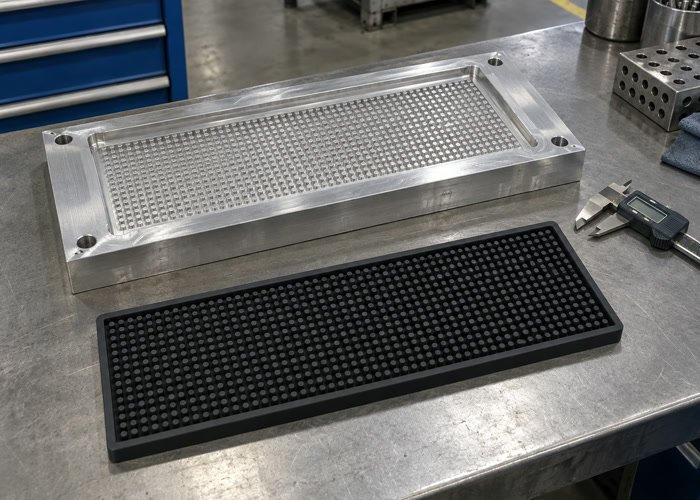
During this stage, the manufacturer provides a detailed quote based on your finalized design. Once you agree to the pricing, you pay a sampling fee. We then create a custom mold and produce a physical sample for your final approval. This is the most crucial checkpoint in the entire process.
Dive Deeper: From Quote to Physical Sample
Once we have your detailed brief, we'll provide a comprehensive quotation. This isn't just a single number; it breaks down the costs so you know exactly what you're paying for.
What's in a Quote?
- Unit Price: The cost per mat, which usually decreases as the order quantity increases.
- Mold Fee: A one-time fee for creating the custom steel mold for your design. This is essential for any unique shape or embossed logo. For simpler projects, we may be able to use one of the hundreds of molds in our large existing mold library, saving you time and money.
- Sample Fee: A small fee to cover the cost of materials and labor for producing the initial prototype. This fee is often refunded or credited toward your mass production order.
- Timeline: Estimated lead times for both the sample (typically 7 days) and mass production.
The Sampling Process in Action After you approve the quote and pay the sample fee, we move to the physical creation phase. This is a miniature version of the mass production run:
- Mold Creation: Our engineers craft a precision steel mold based on your approved artwork.
- Color Matching: We mix the liquid PVC to perfectly match your specified Pantone codes.
- Dispensing: Skilled technicians use dispensing needles to carefully inject the colored PVC into the corresponding areas of the mold, building your logo and design layer by layer.
- Oven Molding: The filled mold goes into an oven where the PVC is cured and solidifies into a single, durable piece.
- Demolding & Inspection: The finished sample is removed from the mold, trimmed of any excess material, and inspected for quality.
This physical sample is then shipped to you for approval. This is your chance to check the colors, feel the weight and texture, and confirm the dimensions. Crucially, never pay the mass production deposit until you have this physical sample in your hands and are 100% satisfied.
Stage 3 & 4: How Does a Factory Prepare for and Execute Mass Production?
Once your sample is approved, you might think the hard part is over. But how does a factory scale from one perfect sample to thousands of identical units without a single drop in quality? This is where meticulous factory-side preparation and advanced automated production lines take over the bar mat production process.
After sample approval and deposit payment, the factory prepares the bulk raw materials and schedules your project on the production line. A "pre-production sample" is made from the first run to ensure consistency before the full batch is manufactured using automated PVC dispensing machinery for speed and precision.

Dive Deeper: Scaling Up with Precision
Moving from a single sample to mass production requires a systematic approach to guarantee consistency.
Pre-Production Preparation and Material Vetting The first step after receiving your deposit (typically 30-50% of the total order value) is raw material preparation. We procure large batches of the specified PVC, silicone, or rubber. This is a critical point where a trustworthy manufacturer makes a difference. Your contract should always specify 100% new, eco-friendly raw materials. Some factories cut corners by mixing in cheaper, recycled scraps, which can lead to foul odors, poor durability, and compliance failures for standards like REACH or California Prop 65.
Before the main run, we produce a pre-production sample (PPS). This is one of the first units off the actual production line. We send this to you (or a photo/video of it) for a final green light. This step is vital to catch any minor color variations that can occur between a small sample batch and a large production batch of raw material.
Inside the Automated Production Line With the PPS approved, the switch is flipped for automated mass production. For PVC mats, this involves a sophisticated production line:
- Automated Dispensing: Instead of technicians filling molds by hand, a CNC (Computer Numerical Control) machine with up to 12 or 24 color-dispensing needles rapidly and precisely fills hundreds of molds as they move along a conveyor. This ensures every mat has the exact same color placement and volume.
- Conveyor Oven Curing: The filled molds travel through a long tunnel oven for consistent, even heating and curing.
- Vacuum & Cooling: After baking, the mats are processed to remove any air bubbles and are cooled to stabilize their shape.
- Automated Demolding: The finished, solid mats are removed from the molds, ready for the next stage.
This automated bar mat production process allows us to produce large quantities—often thousands of mats per day—while maintaining the high quality established by the approved sample. A typical mass production run takes between 10 to 18 days, depending on the order size and design complexity.
Stage 5: What Quality Control Checks Are Part of the Bar Mat Production Process?
How can you be sure that the 1,000th mat produced is just as perfect as the sample you approved? Without robust, multi-stage quality control, defects like color bleeding, air bubbles, or incorrect dimensions can easily slip through, harming your brand's reputation. A comprehensive inspection process is absolutely essential for ensuring consistency across the entire order.
A thorough quality control bar mat production process involves multiple checks: inspecting raw materials before production, monitoring the automated lines during production, a rigorous post-molding inspection for defects, and a final pre-shipment inspection to verify every detail against the approved sample and specifications.

Dive Deeper: The Four Pillars of Bar Mat Quality Inspection
At SuperfectCraft, we integrate quality control into every step, not just at the end. A defect caught early saves time, material, and money, ensuring your project stays on schedule and on budget.
- Raw Material Inspection (IQC - Incoming Quality Control): Before any production begins, we inspect the incoming raw materials. We verify that the PVC or silicone meets the specified grade and color standards. If your project requires compliance with regulations like REACH, SVHC, LFGB, or Prop 65, this is the stage where we ensure the base material is compliant before it ever enters the production line.
- In-Process Quality Control (IPQC): During the automated production run, our line managers and QC staff constantly monitor the process. They watch for machine calibration issues, check the consistency of PVC dispensing, and ensure oven temperatures are stable. This proactive monitoring prevents small issues from becoming large-scale problems.
- Post-Production Inspection: Once the mats are demolded and trimmed, each unit undergoes a 100% visual and tactile inspection. Our QC team checks for:
- Cosmetic Defects: Air bubbles, surface scratches, dust particles, or blemishes.
- Color Bleeding: Ensuring sharp, clean lines between different colors in your logo.
- Trimming: Verifying that the edges are cleanly cut with no excess flashing.
- Physical Integrity: Checking for any warping or structural weaknesses. Any mat that doesn't meet our strict standards is rejected.
- Final Pre-Shipment Inspection (FQC - Final Quality Control): This is the last line of defense. Before the mats are packaged, a final inspection is performed. We typically use an AQL (Acceptable Quality Level) standard to randomly sample a statistically significant portion of the order. We cross-reference these units against the approved golden sample, checking dimensions, colors, logo placement, and overall finish one last time. This ensures the batch as a whole meets the quality promise.
This multi-layered approach to the bar mat production process guarantees that the products you receive are flawless representations of your brand.
Stage 6: What Are the Final Steps in Packaging and Shipping Your Bar Mats?
Your mats have been produced and have passed all quality inspections, but the job isn't done. Improper packaging can ruin a perfect product in transit, causing permanent creases and warping that render the mats unprofessional and unusable. The final stage of packaging, final payment, and logistics is crucial for getting your products safely into your hands.
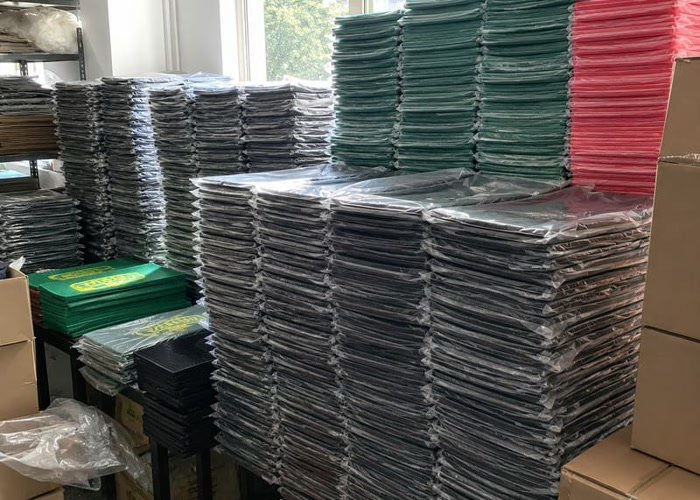
In the final stage, mats are individually packaged (we strongly recommend rolling them to prevent creasing), boxed for shipping, and prepared for dispatch. Once the final balance payment is made, the manufacturer arranges shipment according to the agreed-upon Incoterms (like FOB or EXW).
Dive Deeper: Protecting Your Investment Until Delivery
The final 2-3 days of the production timeline are dedicated to packaging and logistics preparation. This stage is just as important as the manufacturing itself.
Packaging: The Final Touch of Quality How your bar mats are packed can make or break their presentation upon arrival. We've seen competitors ship mats folded in half to save on shipping volume, but this almost always results in a permanent crease down the middle, making the mat look cheap and unprofessional.
For this reason, we always advise and prioritize rolled packaging.
- Standard Rolled Packaging: Each mat is rolled and placed in its own individual polybag. This completely prevents folding, creasing, and warping. The mats will lay perfectly flat as soon as they are unrolled.
- Custom Packaging Options: We can also accommodate a variety of custom packaging needs to enhance your branding. This includes custom-printed polybags, retail-ready color boxes, header cards for hanging displays, or bundling mats with other promotional items.
Final Payment and Shipping Logistics Once packaging is complete, we will notify you that your order is ready for shipment and send you a final invoice for the balance payment. After the payment is settled, we coordinate the logistics based on the shipping terms (Incoterms) agreed upon in the contract.
- FOB (Free On Board): This is a common term where we are responsible for getting the goods to the designated port in China (e.g., FOB Shenzhen). From there, you or your freight forwarder take over responsibility for international shipping, customs, and final delivery.
- EXW (Ex Works): We simply make the goods available at our factory. Your designated carrier is responsible for picking them up and handling all subsequent transport.
We handle all the necessary export documentation to ensure a smooth departure from China, completing the final step of the bar mat production process.
Frequently Asked Questions
What is the minimum order quantity (MOQ) for custom bar mats?
Our standard MOQ is 200 pieces per design, per color. This allows for efficient use of the automated production line. If you can use one of our existing mold sizes, it can make smaller runs more feasible and eliminate the mold fee.
Can I get a bar mat made without a professional design file?
Absolutely. If you just have a logo, a sketch, or even just an idea, our team can help. We provide a free design sketch service and can typically turn your concept into a professional, production-ready artwork proof for your approval within 24 hours.
Do I have to pay for a new mold for every order?
No. The mold fee is a one-time cost. Once we create a mold for your custom design, we store it for your future orders. You will not have to pay the mold fee again unless you change the size, shape, or core structure of the mat.
What material certifications can you provide for the bar mats?
Our standard materials are safe for commercial use. For clients with specific market requirements, such as selling in the EU, USA, or on Amazon, we can arrange third-party testing on request. This includes compliance tests like REACH / SVHC, Phthalates, LFGB / FDA, California Prop 65, and more.
Conclusion
Understanding the end-to-end bar mat production process transforms it from a daunting task into a manageable and transparent partnership. By following these six stages—from a detailed design brief to meticulous quality control and proper packaging—you can confidently navigate the world of OEM manufacturing. Key checkpoints like physical sample approval, requesting a pre-production sample, specifying new materials, and demanding rolled packaging are your best tools for ensuring a successful outcome. The right manufacturing partner will not only follow these steps but will guide you through them, making the entire journey smooth and predictable.
Ready to bring your custom bar mat design to life with a partner you can trust? Contact our team at SuperfectCraft. We offer free design sketches in 24 hours and will guide you through every step of the bar mat production process. Reach out to us at sales01@superfectcraft.com or via our contact page to get your project started today
[^1]: "Pantone Matching System", https://en.wikipedia.org/?title=Pantone_Matching_System&redirect=no. The Pantone Matching System (PMS) is a standardized color reproduction system used globally to ensure consistent color matching across various industries. However, slight variations may occur due to material differences or lighting conditions. Evidence role: general_support; source type: encyclopedia. Supports: Pantone Matching System is widely used for ensuring consistent color reproduction across different mediums.. Scope note: Material and lighting conditions can affect the perceived color despite PMS standardization.