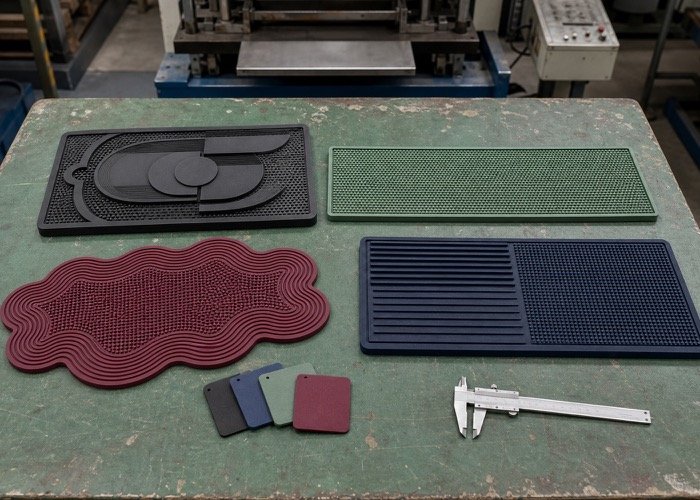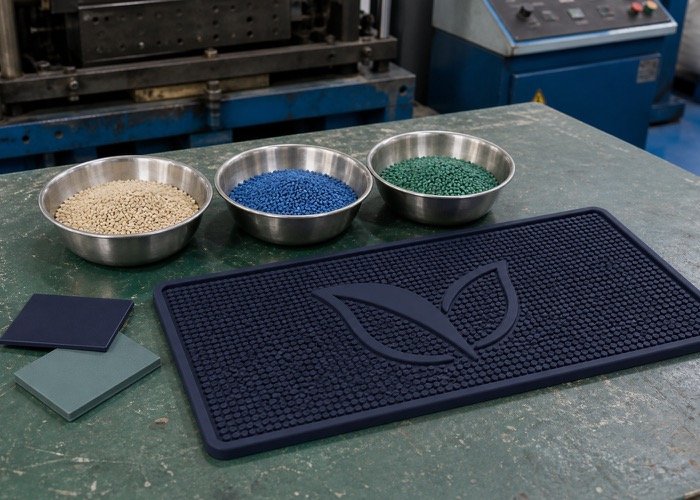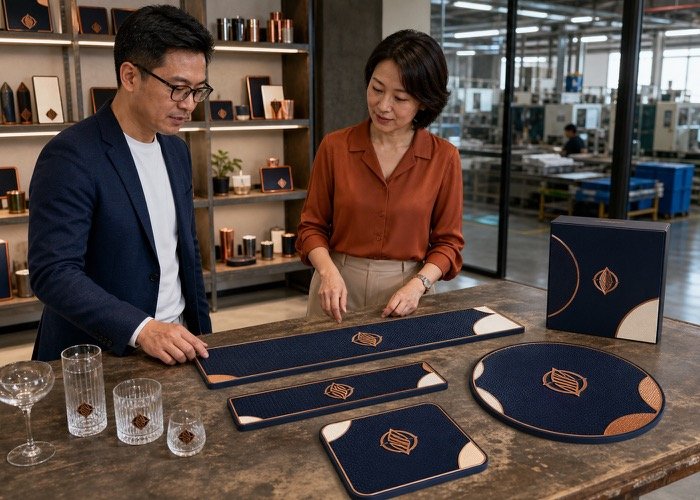

Cercare di decidere il materiale giusto per i tuoi tappetini da bar personalizzati può essere un vero grattacapo. Ti trovi di fronte a opzioni come il PVC, gomma, e silicone, ma le differenze non sono sempre chiare. Una scelta sbagliata può portare alla rottura dei tappetini sotto pressione, scivolare sul bancone, o semplicemente non riescono a rappresentare la qualità del tuo marchio, wasting both time and money. This guide provides a clear comparison to help you make an informed decision for your business.
When comparing rubber vs PVC vs silicone bar mats, the best material depends on your specific needs. Soft PVC is the most budget-friendly option, ideal for promotions and short-term use due to its excellent printing capabilities but lower durability.[^1] Natural rubber is the industry standard for high-traffic bars, offering the best anti-slip performance and durability.[^2] Food-grade silicone is the premium choice, perfect for coffee shops and high-end applications where heat resistance and food safety are paramount.[^3]
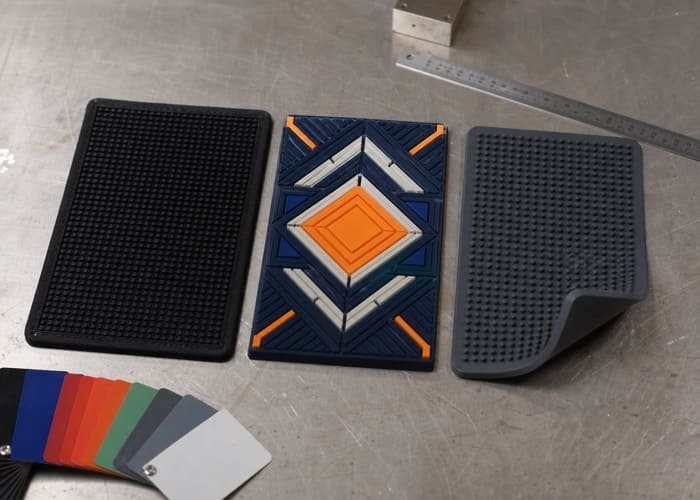
Now that you have the quick answer, you're probably wondering which of these materials aligns perfectly with your budget, design goals, and daily operational demands. Let's dive deeper into the specific pros and cons of each option so you can choose with confidence.
Are PVC Bar Mats the Most Cost-Effective Choice?
Are you working with a tight budget or need a large volume of mats for a promotional campaign? You might find that the low cost and vibrant design options of PVC are exactly what you're looking for. Tuttavia, this affordability comes with trade-offs in durability and heat resistance that you need to be aware of before placing an order.
For many of our clients, especially those in beverage promotion or running pop-up events, soft PVC is the go-to material. It offers unparalleled design flexibility and the lowest unit cost, making it perfect for campaigns where visual impact is key and long-term durability is a secondary concern.
Dive Deeper into PVC Bar Mats
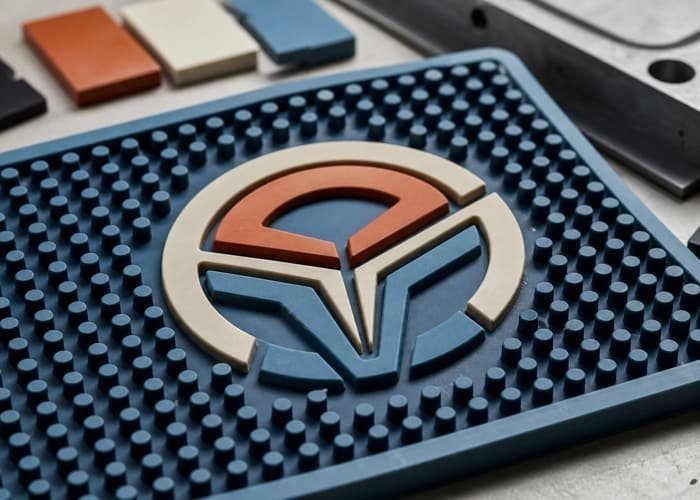
Soft PVC, also known as drip-molded plastic, is the champion of cost-effectiveness and design versatility in the world of custom bar mats. Its unique production process allows for intricate, multi-colored designs that are simply not possible with other materials.
Key Advantages of PVC:
- Lowest Cost: On a per-unit basis, a PVC mat can be 30–50% cheaper than a comparable rubber mat. This makes it an incredibly attractive option for large-scale giveaways or for businesses like new tea shops and cafes that need to outfit their space on a budget.
- Low Minimum Order Quantity (MOQ): A SuperfectCraft, we can start custom PVC projects with as few as 100–200 pieces. This low barrier to entry is fantastic for private-label brands testing a new product or for small, independent bars.
- Superior Printing and Logo Effects: This is where PVC truly shines. The material can be molded to create sharp, detailed 3D embossed and debossed logos. We can achieve a wide spectrum of colors, including vibrant and even fluorescent shades, ensuring your brand's visual identity is perfectly replicated.
Potential Downsides to Consider:
- Resistenza al calore: PVC has a low tolerance for heat. Placing objects hotter than 60°C (140°F) on the surface can cause it to soften, warp, or leave a permanent mark. It's not suitable for placement under hot coffee pots or near steam wands. I've seen mats in cafes permanently indented with the ring of a hot portafilter.
- Durability and Lifespan: With a typical lifespan of about one year under regular use, PVC is not the most durable option. It can become brittle and crack over time, especially if exposed to sunlight, unless a UV-resistant formula is used.[^4]
- Anti-Slip Performance: A standard PVC mat has only moderate anti-slip properties. We often recommend a grid-patterned base, which significantly improves grip on slick countertops, but it still won't hold as firmly as a rubber mat.
- Material Odor: While our eco-friendly, phthalate-free PVC is virtually odorless, lower-cost options made from recycled materials can sometimes have a distinct plastic smell that requires airing out.
For a quick overview, here is a breakdown of PVC's characteristics:
| Caratteristica | Performance | Best For |
|---|---|---|
| Unit Cost | Lowest | Promotional campaigns, large giveaways |
| MOQ | Basso (100–200 pcs) | Small businesses, market testing |
| Logo Detail | Eccellente (Multi-color, 3D) | Brands with complex or colorful logos |
| Durabilità | Fair (~1 year lifespan) | Short-term use, home bars |
| Resistenza al calore | Povero | Cold drink service areas |
| Antiscivolo | Moderare (Improved with grid base) | Standard countertop use |
Ultimately, PVC is a fantastic choice when budget and visual appeal are your top priorities. It's the perfect vehicle for getting a high-impact, branded mat into the hands of many.
Why Are Rubber Mats the Professional's Pick in the Rubber vs PVC vs Silicone Bar Mats Debate?
Walk into any busy professional pub or high-volume cocktail bar, and look at the counter. You're almost certain to see a sturdy rubber mat. Why is this the preferred choice for establishments where spills are frequent and speed is essential? The answer lies in its unmatched durability and superior grip.
When a client tells me they need a "workhorse" mat that can withstand the rigors of a commercial bar for years, I almost always point them toward natural rubber. Its resilience against alcohol and its ability to stay put on a wet surface make it the undisputed champion for high-traffic environments.
Dive Deeper into Rubber Bar Mats
When evaluating rubber vs PVC vs silicone bar mats for a professional setting, natural rubber (often a blend like NR/SBR) consistently comes out on top for pure performance. It's built to last and designed to function flawlessly under the most demanding conditions.
Key Advantages of Rubber:
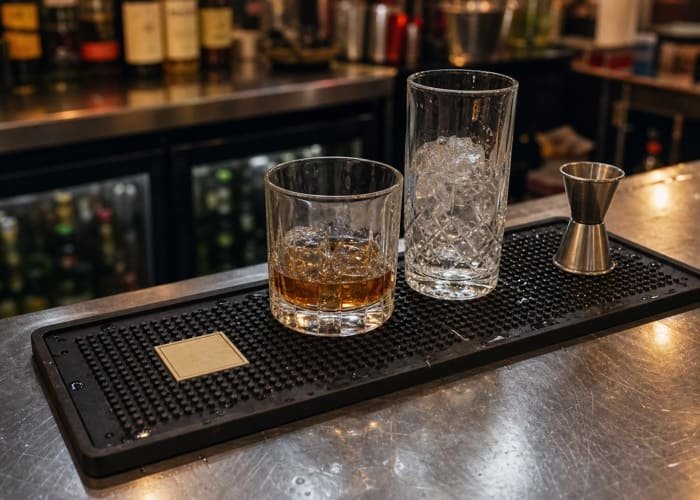
- Exceptional Anti-Slip Performance: This is rubber's standout feature. Its high-friction surface provides the best grip of all three materials, clinging securely to stainless steel, granite, or marble countertops, even when wet. This stability is crucial for preventing glassware from sliding and breaking during a busy service.
- Excellent Durability: A well-made rubber bar mat is an investment. It can easily last 2–3 years in a busy commercial setting, resisting the constant exposure to alcohol, sugar, and cleaning agents that would degrade lesser materials.
- Good Heat Resistance: While not as heat-proof as silicone, rubber can handle moderately hot items, like a rinsed bar spoon or a kettle of hot water, without damage. This adds a layer of versatility that PVC lacks.
- Proven Commercial Performance: Rubber is resistant to corrosion from alcohol and syrups, which is why it has been the go-to material for bars and pubs for decades.
Potential Downsides to Consider:
- Higher Minimum Order Quantity (MOQ): The molding process for rubber is more involved, leading to a higher MOQ, typically starting at 500–1000 pieces per design. This can be a barrier for smaller businesses.
- Limited Logo and Color Detail: While we can achieve excellent results with screen printing on a flat rubber surface, creating detailed 3D logos is more challenging. Embossed designs can sometimes have slightly "fuzzy" or less defined edges compared to the sharp lines of PVC. Color options are also generally more limited.
- Initial Odor: New rubber mats have a characteristic rubber smell. This is completely normal and harmless, and it typically dissipates within a day or two of airing out the mats.
- Storage: If you stack rubber mats for a long period, the edges can sometimes stick together slightly. For long-term storage, we recommend rolling them instead of stacking them flat.
Here's how rubber stacks up:
| Caratteristica | Performance | Best For |
|---|---|---|
| Unit Cost | Medium | Long-term investment |
| MOQ | Alto (500–1000 pcs) | Established bars, marchi di bevande |
| Logo Detail | Bene (Best with screen printing) | Simple, bold logos |
| Durabilità | Eccellente (2–3 year lifespan) | High-traffic commercial bars |
| Resistenza al calore | Bene | General bar use, occasional hot items |
| Antiscivolo | Eccellente | Wet, slick surfaces |
For any serious bar owner or beverage brand looking to supply professional establishments, the durability and unmatched grip of a rubber bar mat make it the most reliable and practical choice.
When Are Silicone Bar Mats Worth the Higher Investment?
You need a mat for a high-end coffee shop, a hot beverage station, or a place where hygiene is the absolute top priority. You're concerned about materials that could stain from coffee oils or degrade under the heat of a steam wand. This is the specific scenario where investing in silicone becomes a very smart decision.
Although silicone carries the highest price tag, its unique combination of extreme heat resistance, food-safe properties, and chemical inertness provides a level of performance that no other material can match. It's the premium option for specialized, demanding environments.
Dive Deeper into Silicone Bar Mats
In the rubber vs PVC vs silicone bar mats comparison, food-grade silicone occupies the premium, specialized niche. Its molecular structure gives it properties that make it uniquely suited for environments that go beyond the typical cold-drink bar, such as specialty coffee shops and upscale restaurant kitchens.
Key Advantages of Silicone:
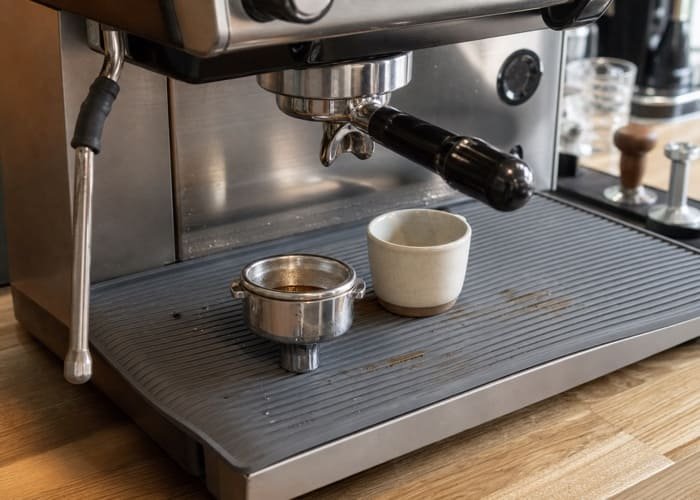
- Exceptional Heat Resistance: Silicone is the undisputed winner for high-temperature applications.[^5] It can easily withstand the heat from an espresso machine's steam wand, a hot portafilter, or freshly brewed coffee, making it the perfect coffee bar mat.
- Food-Safe and Odorless: Made from food-grade material, silicone is completely non-toxic and has virtually no odor.[^6] This makes it ideal for any area where food or sensitive products (like baby bottles) are prepared. It won't impart any taste or smell.
- Excellent Chemical Resistance: Silicone is highly resistant to coffee oils, solvents, and acidic liquids.[^7] It will not stain or degrade, and it's incredibly easy to clean, maintaining a hygienic surface. It's also non-porous, so it won't absorb liquids or develop odors over time.
- Superior Longevity: A silicone mat is built to last. With a lifespan of 3 years or more, its durability helps offset the higher initial cost. It remains flexible and won't crack or become brittle, even with outdoor use, thanks to its excellent natural UV resistance.
- Good Anti-Slip Properties: While natural rubber offers the strongest grip, silicone is not far behind. It provides a reliable, non-slip surface that performs well on most counters.
Potential Downsides to Consider:
- Highest Cost: Silicone is the most expensive of the three materials, often costing two to three times as much as a comparable PVC mat. The molds are also more expensive to produce.
- High Minimum Order Quantity (MOQ): Due to the high cost of tooling, the MOQ for custom silicone mats is typically the highest, often starting at 1000 pieces or more.
- Less Detailed Logo Reproduction: While we can produce colored and embossed logos on silicone, the material's soft nature means that 3D designs tend to have less depth and sharpness compared to PVC. The available color palette is also sometimes more limited.
Let's summarize the features of silicone:
| Caratteristica | Performance | Best For |
|---|---|---|
| Unit Cost | Highest | Premium applications, brand-building |
| MOQ | Alto (1000+ pz) | Large chains, high-end equipment brands |
| Logo Detail | Fair (Less depth in 3D) | Simple, elegant branding |
| Durabilità | Superior (3+ year lifespan) | Coffee shops, permanent installations |
| Resistenza al calore | Eccellente | Hot drink stations, under equipment |
| Antiscivolo | Bene | All standard counter surfaces |
For businesses where heat, hygiene, and a premium feel are non-negotiable, UN silicone bar mat is not just a purchase; it's a long-term investment in quality and safety.
Domande frequenti
Which bar mat material is easiest to clean?
PVC and silicone are the easiest to clean. Both materials are non-porous, meaning they won't absorb spills or odors. You can simply rinse them under the tap with soap and water. Rubber is also easy to clean, but if liquids are left to sit for a very long time, it can sometimes develop a slight odor that requires a more thorough scrubbing.
Can I get a custom shape for my bar mat?
Assolutamente. As an OEM manufacturer, we specialize in creating mats in custom shapes and sizes to fit your exact specifications, whether it's for a specific counter corner or a unique brand shape. We can create a new mold based on your artwork for PVC, gomma, or silicone mats.
What's the minimum order quantity (MOQ) per tappetini bar personalizzati?
The MOQ depends heavily on the material. For PVC, we can often start with just 100–200 pieces using an existing mold size. For rubber, the MOQ is higher, typically around 500–1000 pieces. Silicone has the highest MOQ, usually starting at 1000 pezzi, due to the cost of the production molds.
How does the logo printing process work for different materials?
For PVC, we use a liquid dispensing process that allows for intricate, multi-level, and multi-color 3D logos. For rubber, bold logos are best applied via screen printing for a flat design, as embossed rubber logos can be less sharp. Silicone can also be embossed, but the final effect is softer and has less depth than PVC.
Conclusione
Choosing the right material in the rubber vs PVC vs silicone bar mats debate comes down to aligning the material's strengths with your specific goals. PVC offers unbeatable value and design freedom for promotions and light-use scenarios. Rubber provides the rugged durability and non-slip performance required for any serious, high-traffic commercial bar. Silicone delivers premium heat resistance and food-safe hygiene for specialized environments like coffee shops. By understanding these key differences, you can select a bar mat that not only looks great but also performs perfectly for its intended use, ensuring you get the best return on your investment.
Ready to create the perfect custom bar mat for your brand? Contact us today with your logo and dimensions. Our team will provide a free design sketch within 24 hours to help bring your vision to life.
Whatsapp: +86 15816822766 E-mail: sales01@superfectcraft.com
[^1]: "Polyvinyl chloride", https://en.wikipedia.org/wiki/Polyvinyl_chloride. A general polymer reference describes polyvinyl chloride as a widely used thermoplastic valued for low cost and processability, which contextualizes its use in economical molded products; it does not directly verify bar-mat pricing or campaign suitability. Ruolo di prova: supporto_generale; tipo di fonte: encyclopedia. Supporta: PVC is a widely used, relatively low-cost thermoplastic with good processability, while its durability depends on formulation and conditions.. Nota sull'ambito: Contextual support only; it supports PVC's general material economics and processability rather than specific bar-mat market prices. [^2]: "FRICTIONAL PROPERTIES OF RUBBER", https://nvlpubs.nist.gov/nistpubs/jres/28/jresv28n4p439_a1b.pdf. Tribology studies of rubber identify viscoelastic deformation and adhesion as mechanisms that can produce high friction on hard surfaces, supporting rubber's suitability for anti-slip applications; such studies do not establish that natural rubber is universally the bar-industry standard. Ruolo di prova: meccanismo; tipo di fonte: paper. Supporta: Rubber materials are commonly used where friction, grip, and wear resistance are important, including contact with wet or smooth surfaces.. Nota sull'ambito: Supports the friction mechanism, not the commercial claim that it is the industry standard in bars. [^3]: "What is FDA Food Grade Silicone made up of?", https://silicone.co.uk/news/what-is-fda-food-grade-silicone-made-up-of/. Food-contact regulations and technical references recognize certain silicone materials as suitable for food-contact use when they meet specified compositional and migration limits, providing contextual support for silicone mats in hot beverage areas. Ruolo di prova: supporto_generale; tipo di fonte: governo. Supporta: Silicone materials can be permitted for food-contact applications subject to regulatory composition and migration requirements, and silicone elastomers are known for thermal stability.. Nota sull'ambito: Does not certify any specific bar mat as food-grade; compliance depends on formulation, testing, and applicable jurisdiction. [^4]: "Photodegradation and photostabilization of polymers ... - PMC", https://pmc.ncbi.nlm.nih.gov/articles/PMC4320144/. Studies of PVC weathering show that ultraviolet exposure can promote polymer degradation and embrittlement, while stabilizers are used to improve resistance to outdoor exposure. Ruolo di prova: meccanismo; tipo di fonte: paper. Supporta: UV exposure can degrade PVC, causing changes in mechanical properties such as embrittlement, and stabilizers can reduce degradation.. [^5]: "Silicone rubber", https://en.wikipedia.org/wiki/Silicone_rubber. Materials literature reports that silicone elastomers have broad service-temperature ranges and strong thermal stability relative to many organic elastomers and thermoplastics, supporting their use in high-temperature mat applications. Ruolo di prova: supporto_generale; tipo di fonte: paper. Supporta: Silicone elastomers generally retain properties across higher temperature ranges than many organic rubbers and thermoplastics.. [^6]: "Food Grade Silicone Rubber UK: FDA Approved", https://deltarubber.co.uk/food-grade-silicone-rubber/. Food-contact regulatory frameworks allow certain silicone materials for food-contact applications subject to composition and migration limits, supporting the claim that compliant food-grade silicone can be used safely around food. Ruolo di prova: esperto_consenso; tipo di fonte: governo. Supporta: Food-contact silicone materials may be considered suitable for contact with food when they comply with regulatory requirements and migration limits.. Nota sull'ambito: Regulatory permission is conditional; it does not establish that all silicone products are non-toxic or odorless. [^7]: "Chemical Compatibility Chart | Applications", https://jehbco.com.au/products/chemical-compatibility-chart/. Elastomer compatibility references describe silicone rubber as chemically stable toward water, oxidation, and many mild aqueous or acidic exposures, providing partial support for use around coffee liquids. Ruolo di prova: supporto_generale; tipo di fonte: ricerca. Supporta: Silicone rubber generally has good resistance to water, oxidation, and many mild chemicals, though compatibility varies with oils and solvents.. Nota sull'ambito: Support is contextual because silicone resistance varies by solvent type, oil composition, temperature, and exposure duration.