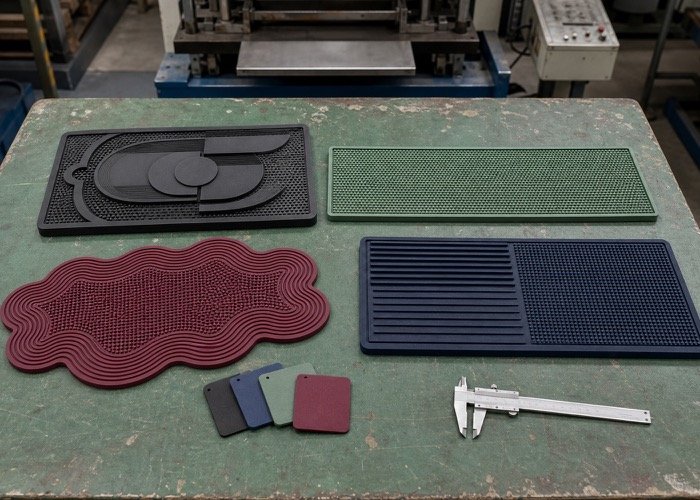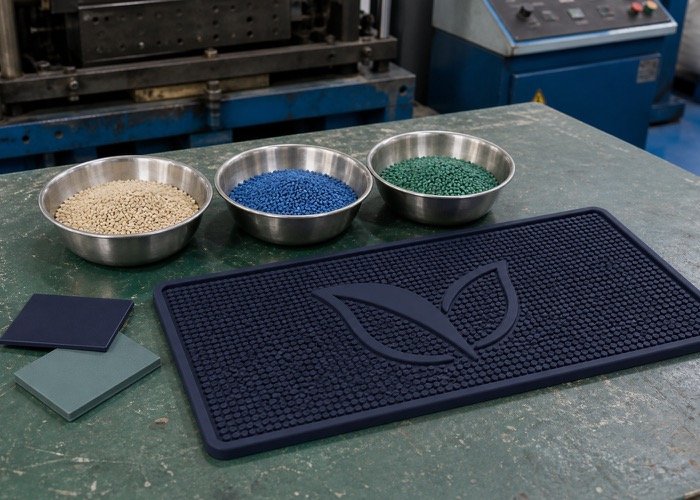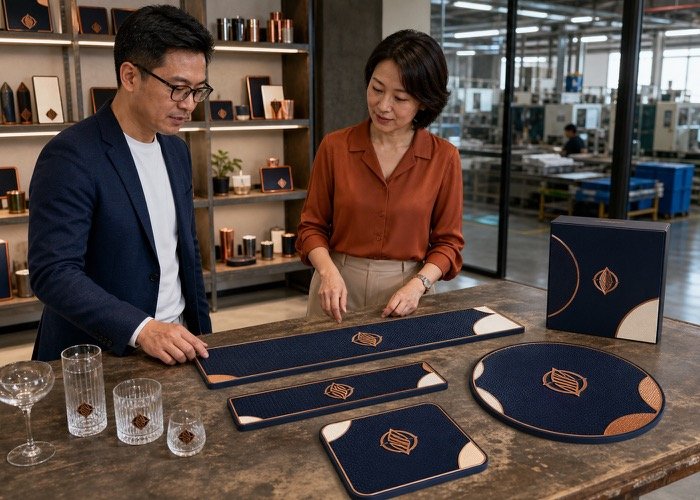

Ordering custom bar mats from an overseas manufacturer can feel like a daunting task, filled with uncertainty about the process and final quality. You might worry about communication gaps, hidden costs, or receiving a product that doesn't match your brand's vision. We're here to demystify the entire journey, providing a clear, step-by-step guide to ensure a smooth and successful procurement experience.
The complete guide to ordering custom bar mats involves six key stages: submitting your design specifications (logo, afmetingen, kleur), approving a physical sample made from a new mold, paying a deposit to initiate mass production, overseeing the manufacturing and color matching process, conducting final quality control and packaging, and finally, arranging the balance payment and shipment.
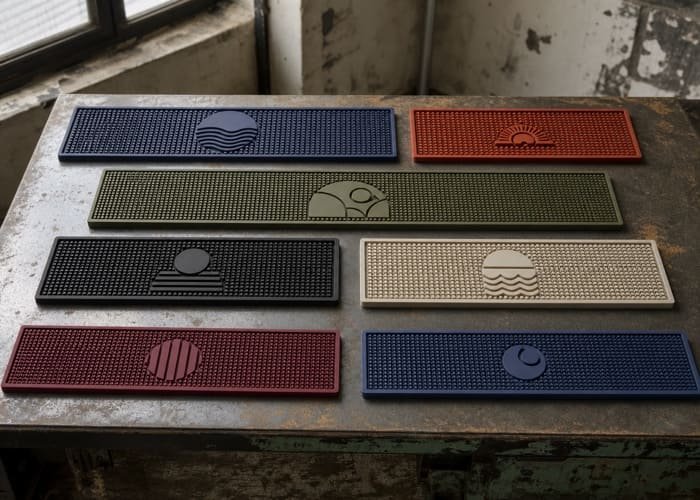
This simple overview provides a bird's-eye view, but the real confidence comes from understanding the details within each step. Let's dive deeper into each phase of the process, so you know exactly what to expect when you partner with a manufacturer like us.
What's the First Step in Designing Your Custom Bar Mats?
Starting a custom project feels exciting, but you might be unsure what information a manufacturer actually needs. How do you ensure your brand's logo and colors are replicated perfectly? The first step is the most critical: providing a clear design brief.
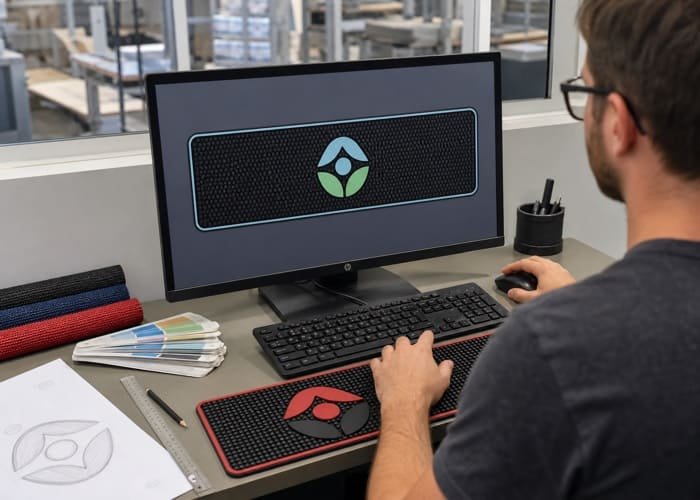
The initial stage involves finalizing your design and specifications. This includes providing your logo in a high-resolution vector format, defining the exact dimensions (length, width, and thickness) of the mat, and specifying the Pantone colors for your design to ensure perfect brand alignment.
Dive Deeper: From Idea to Technical Blueprint
This initial phase is all about translating your vision into a technical specification that we can use for manufacturing. The more precise you are here, the smoother the entire process will be.
1. Logo & Artwork Submission The single most important asset you'll provide is your logo or artwork. To ensure sharpness and scalability, we require vector files.
- Ideal Formats: Adobe Illustrator (.ai), Ingekapseld PostScript (.eps), or a high-quality PDF.
- Why Vector? Unlike pixel-based files like JPEGs or PNGs, vectors are made of mathematical paths. This means we can scale your logo to any size for the mat mold without any loss of quality or "pixelation."
If you don't have a designer on staff, don't worry. As part of our service, wij bieden een free 24-hour design sketch service. Just send us what you have—even a rough idea—and our team will create a professional production-ready mockup for your approval.
2. Dimensions and Structure The size and thickness of your mat are not just aesthetic choices; they are functional ones.
- Standard Sizes: Many clients start with common sizes like 60cm x 10cm or 50cm x 12cm. We have a large library of existing molds in these sizes, which can speed up development and reduce costs.
- Aangepaste formaten: We can create a mat of any size to fit a specific bar counter, service well, or workstation.
- Dikte: A typical thickness is around 1cm, which provides excellent sturdiness and spill capacity. Thicker mats can feel more premium but also increase material costs and weight.
3. Color Specification To ensure your brand identity is perfectly matched, we produce colors based on the Pantone Matching System (PMS). Instead of saying "dark blue," providing a specific code like "PANTONE 286 C" allows our team to precisely mix the PVC, rubber, or silicone to match that exact shade[^1]. This eliminates guesswork and guarantees consistency across your entire order of custom bar mats.
How Does the Mold and Sampling Process for Custom Bar Mats Work?
Once the design is approved, how does it become a physical object? You might be concerned about committing to a full production run without ever seeing or touching the final product. This is where the crucial mold and sample stage comes in.
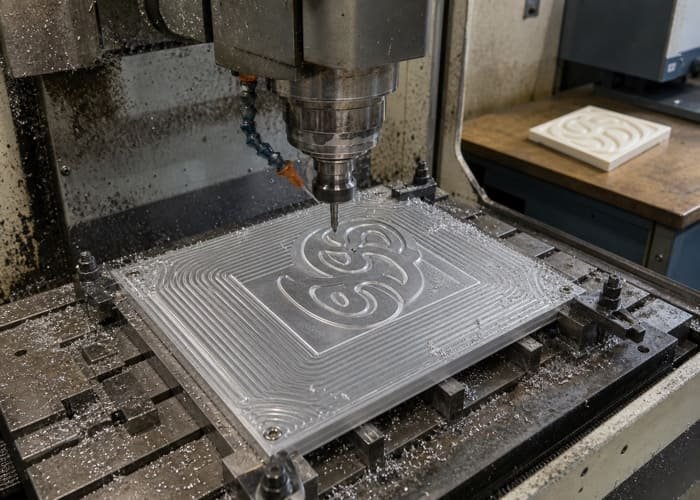
This phase translates your digital design into a physical prototype. We create a custom steel mold based on your artwork and then produce a small number of physical samples. This allows you to approve the mat's quality, kleuren, and details before committing to mass production.
Dive Deeper: Creating the Master Template
The sample is your insurance policy. It's our commitment to getting it right. I once worked with a beverage client who was hesitant about the texture of their logo. The physical sample allowed them to feel the raised elements and request a minor adjustment, which we easily made before the main production. This step saved them from a potential disappointment with 10,000 units.
Mold Creation The mold is the master tool that will form every single one of your mats.
- CNC Machining: Your vector file is fed into a Computer Numerical Control (CNC) machine. This machine precisely carves your design into a block of steel.[^2] Raised logos, spill-catching nubs, and borders are all engraved into the mold.
- Mold Type: The complexity and material of your mat (PVC, Siliconen, Rubber) determine the type of mold required. Our extensive library of existing molds for standard shapes and sizes can be a huge time-saver. If you use one, you skip the mold creation fee and lead time.
- Lead Time: Creating a new mold typically takes about 5-7 dagen.
Voorbeeldproductie With the mold ready, we create your first physical custom bar mats. This process mirrors mass production on a small scale:
- Kleuraanpassing: Our technicians mix the raw material (e.g., liquid PVC) to match your specified Pantone codes.
- Dispensing & Molding: The colored material is carefully injected or dispensed into the different sections of the mold. The mold is then heated in an oven to cure and solidify the material.
- Inspection: The sample is demolded and inspected for color accuracy, dimensional correctness, and any imperfections.
Our standard sample lead time is just 7 dagen after mold completion. We will ship this sample to you for physical approval. Only when you say "it's perfect" do we move forward.
What Happens After You Approve the Sample and Pay the Deposit?
You've approved the perfect sample and are ready to proceed. What's next? You might wonder how production is formally initiated and what financial commitments are required to get the machines running for your large order.
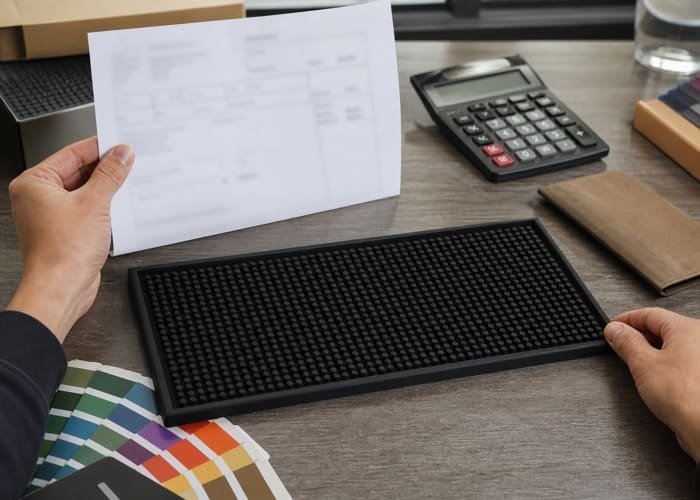
Once you provide written approval of the physical sample, the next step is to formally kick off mass production. This is done by submitting a purchase order and paying a deposit, which is typically 30-50% of the total order value. This secures your production slot and allows us to procure raw materials.
Dive Deeper: Locking In Your Production
The deposit serves a practical purpose for both parties. For you, it confirms your order and locks in the agreed-upon price and production schedule. For us, as the manufacturer, it provides the necessary capital to purchase the large quantities of raw materials needed for your order and allocate factory resources.
The Formal Steps:
- Voorbeeldgoedkeuring: You'll need to send us a formal confirmation, usually via email, stating that the sample is approved for mass production. If any minor changes are needed, this is the last chance to note them.
- Purchase Order (PO): Your company will issue a PO that details the item, hoeveelheid, agreed-upon price, and delivery terms. This is the official contract for the order.
- Proforma Invoice (PI) & Deposit: We will issue a Proforma Invoice based on your PO. You then arrange payment for the deposit amount listed on the PI. Most international transactions are handled via wire transfer (T/T).
Minimale bestelhoeveelheid (MOQ) It's at this stage that the order quantity is finalized. Our standard MOQ for custom bar mats is 200 pieces per design per color, especially when using an existing mold. This quantity is the minimum needed to make a production run efficient and cost-effective. For highly custom projects or very large mats, the MOQ might be adjusted, but 200 units is a great starting point for most brands, importeurs, and private-label companies. Once the deposit is received, your order officially enters our production queue.
What Does Mass Production of Custom Bar Mats Involve?
With the deposit paid, your order is now in the production queue. But what actually happens inside the factory? It's easy to imagine it as a "black box," but the process is a systematic and precise operation designed for quality and consistency.
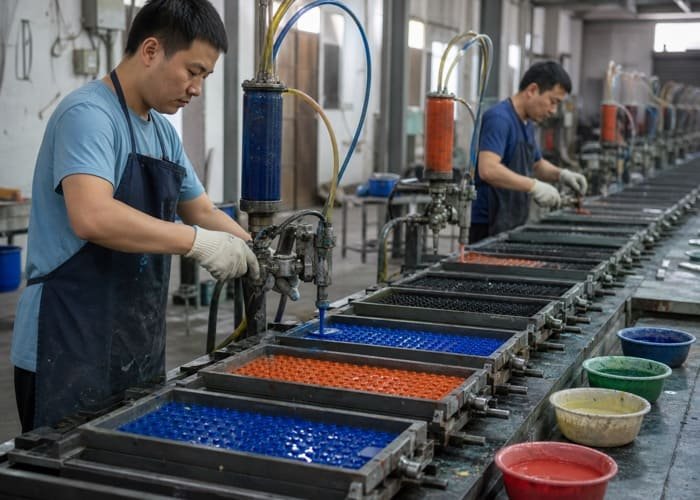
Mass production is the stage where we replicate the approved sample at scale. It involves meticulous color mixing for every batch, dispensing the liquid material into the molds, curing the mats in industrial ovens, and carefully demolding each finished unit before it moves on to quality control.
Dive Deeper: The Art and Science of Replication
Manufacturing hundreds or thousands of custom bar mats requires a process that is both repeatable and precise. Every single mat must be a perfect copy of the sample you approved. Our mass production lead time is typically 20–30 days, depending on the order size and complexity.
Here's a breakdown of the production steps:
| Step | Description | Key Details |
|---|---|---|
| 1. Bulk Color Matching | Large batches of raw material (PVC, siliconen, or rubber) are mixed to match the approved Pantone colors. | A sample from each batch is tested against the master color standard to ensure consistency from the first mat to the last. |
| 2. Automated Dispensing | For PVC and silicone mats, automated machines dispense the colored liquid material into the appropriate cavities of the steel mold. | This process is computer-controlled for precision, ensuring sharp lines and no color bleeding between logo elements. |
| 3. Curing / Vulcanization | The filled molds travel through a long industrial oven. The heat causes the material to cure (for PVC/silicone) or vulcanize (for rubber), solidifying it into its final, durable form.[^3] | Temperature and timing are precisely controlled based on the material and mat thickness to ensure proper curing without burning. |
| 4. Demolding | Once cooled, workers carefully remove each finished mat from its mold. | This is a manual step that requires skill to avoid tearing or damaging the mat, especially those with intricate details. |
| 5. Trimming & Cleaning | Each mat is inspected for "flash"—thin excess material that may have seeped out of the mold[^4]. This is carefully trimmed away. | The mats are then cleaned to remove any residual mold-release agents, preparing them for the next stage. |
Throughout this process, our line supervisors conduct in-process quality checks to catch any potential issues early, ensuring the entire batch meets the standards set by the approved sample.
Why is Quality Control and Packaging So Important for Custom Bar Mats?
The mats are made, but the job isn't done. How can you be sure that the 1,000th mat is just as good as the first? This is where a robust quality control (QC) and packaging strategy becomes your final guarantee of excellence.
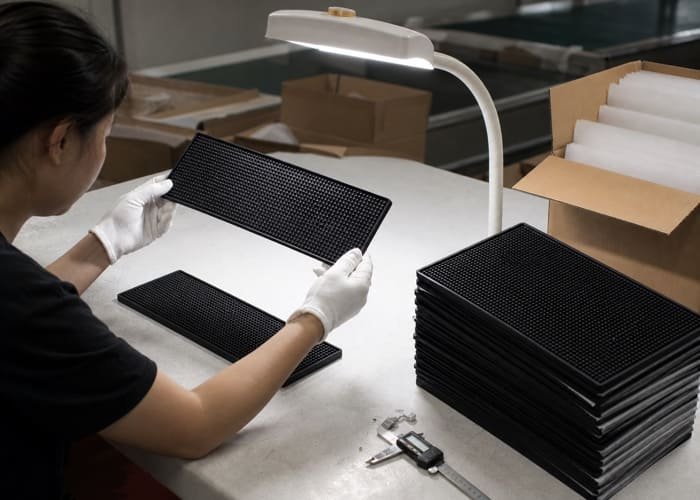
Final QC is a comprehensive inspection of every mat to check for defects in color, dimension, and detail. Following inspection, the mats are packaged according to your specifications, protecting them during transit and ensuring they arrive ready for your customers or distribution network.
Dive Deeper: The Final Checkpoint
A great product can be ruined by poor quality control or inadequate packaging. We treat this final stage with the utmost seriousness to protect your investment and brand reputation.
Our QC Inspection Checklist: Our dedicated QC team inspects the finished goods based on a strict set of criteria before a single unit is packed.
- Color Accuracy: Is the color of each logo element a perfect match to the approved Pantone standard?
- Dimensional Tolerance: Does the mat's length, width, and thickness fall within the acceptable variance (e.g., +/- 2mm)?
- Logo & Text Clarity: Are all logos, letters, and fine details sharp and fully formed?
- Surface Defects: We check for air bubbles, scratches, vlekken, specks of wrong-colored material, or any other cosmetic flaws.
- Structural Integrity: Is the mat flat? Are there any tears or weak points, especially around the edges or detailed logo areas?
Any mat that fails this inspection is rejected. We believe it's better for us to absorb the cost of a rejected unit than for a flawed product to reach you.
Verpakking: Protection and Branding Packaging is more than just a box; it's the first impression your product makes upon arrival.
- Standard Packaging: Typically, each mat is packed in an individual clear polybag to protect it from dust and scuffs. They are then packed in bulk into sturdy, double-walled master cartons.
- Custom Packaging Options: For retail or premium promotional products, we can develop custom packaging solutions. This could include:
- Printed color boxes with your branding.
- Header cards for retail display.
- Custom-printed polybags.
- Belly bands or wrap sleeves.
Proper packaging not only enhances your brand's presentation but also ensures your custom bar mats arrive in pristine condition, no matter how far they have to travel.
What Are the Final Steps for Payment and Shipping?
Your order of custom bar mats has passed inspection and is perfectly packaged. What are the final hurdles to getting the products from our factory to your warehouse? This last phase involves finalizing payment and coordinating the complex world of international logistics.
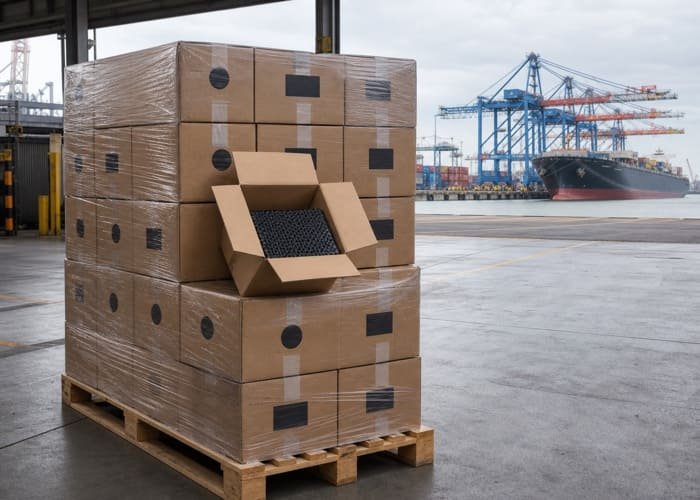
The final stage involves two parallel actions. First, you will arrange the balance payment as per the terms on your invoice. Second, we will work with your designated freight forwarder (or help you find one) to book transport and manage the shipment of your goods from our factory.
Dive Deeper: Getting Your Goods Home
Navigating international shipping can seem complex, but it's a well-established process. We are here to support you every step of the way.
Final Balance Payment Once production is complete and the goods have passed QC, we will send you the final invoice. This invoice will reflect the total order value minus the deposit you've already paid.
- Payment Trigger: The balance is typically due upon completion of production, before the goods are released for shipment.
- Documentatie: In some cases, we will send you a copy of the Bill of Lading (B/L)—the official shipping document—as proof of shipment, at which point the balance is paid. Terms can be negotiated based on the relationship and order size.
Logistics and Shipping This is the physical movement of your goods. You have a few options, and the choice depends on your level of experience with importing.
- Trade Terms (Incoterms): The most common term is FOB (Free On Board). This means we are responsible for all costs and processes to get your goods to the designated port in China (e.g., FOB Shenzhen). From that point on, you (or your freight forwarder) are responsible for ocean freight, insurance, customs clearance, and final delivery in your country.
- Using Your Freight Forwarder: If you import regularly, you likely have a preferred freight forwarder. You simply provide us with their contact details, and our logistics team will coordinate the handover of the cargo.
- If You Don't Have a Forwarder: Maak je geen zorgen. We have a network of reliable logistics partners and can get competitive shipping quotes for you, whether you need sea freight (cost-effective for large orders) or air freight (faster but more expensive).
We will provide all necessary export documentation, including the commercial invoice, packing list, and certificate of origin, to ensure a smooth customs clearance process on your end.
Veelgestelde vragen
Wat is de minimale bestelhoeveelheid (MOQ) voor op maat gemaakte barmatten?
Our standard MOQ is 200 pieces per design, per kleur. This allows for an efficient production setup. If you use one of our many existing molds for a standard size, this MOQ is often firm. For highly customized projects with new molds, we can sometimes discuss different quantities.
Can I get a sample before placing a large order?
Absolutely. We insist on it. After you approve the design sketch, we create a physical sample from the production mold and ship it to you. We will only begin mass production after you have seen, touched, and formally approved the sample, ensuring there are no surprises.
What file formats do you need for my logo?
For the best quality, we require a vector file of your logo or artwork. The preferred formats are Adobe Illustrator (.ai), .eps, or a vector-based .pdf. These files allow us to scale your design perfectly for the mold without any loss of sharpness or clarity.
Do your mats meet safety standards like BEREIK[^5] or Prop 65?
Our standard materials (PVC, rubber, siliconen) are commercial grade and safe for their intended use. For clients selling in the EU, US, or on platforms like Amazon, we can arrange third-party testing for specific compliance standards like REACH, California Prop 65[^6], FDA, LFGB, and others upon request.
Conclusie
Ordering custom bar mats from a manufacturer like SuperfectCraft is a transparent and structured process designed to give you full control and confidence. By following these six steps—from design brief to final shipment—you can ensure your project is executed flawlessly. The key is clear communication and partnership. From providing a free 24-hour design sketch to confirming every detail with a physical sample and conducting rigorous final QC, our goal is to turn your brand vision into a high-quality, durable product that you're proud of.
Ready to create a custom bar mat that makes your brand stand out? Contact us today to get a free quote and design sketch within 24 uur. Let's build something great together.
WhatsApp: +86 15816822766 E-mail: sales01@superfectcraft.com Website: www.superfectcraft.com Neem contact met ons op: https://babarmat.com/contact/
[^1]: "Pantone", https://en.wikipedia.org/wiki/Pantone. The Pantone Matching System is described as a standardized color reproduction system, supporting the use of Pantone codes as common references for specifying colors in production. Bewijs rol: definition; brontype: encyclopedie. Ondersteunt: An encyclopedia source should describe the Pantone Matching System as a standardized color reproduction system used to identify and match colors.. Reikwijdte opmerking: This provides contextual support for standardized color specification, but it does not independently prove that a particular factory can match every Pantone shade in PVC, rubber, or silicone. [^2]: "CNC Machining: Types, Uses, Parts and Components", https://www.iqsdirectory.com/articles/cnc-machining.html. Technical descriptions of computer numerical control explain that CNC systems use programmed instructions to control machine tools, supporting the article's account of digitally guided mold machining. Bewijs rol: mechanisme; brontype: government. Ondersteunt: A government or technical standards source should explain that CNC systems use computer instructions to control machine tools for precise manufacturing operations.. Reikwijdte opmerking: This supports the general mechanism of CNC machining, not the accuracy or lead time of any specific mold-making process. [^3]: "swell how vulcanization affects the properties of rubber", https://www.uakron.edu/polymer/agpa-k12outreach/lesson-plans/swell-how-vulcanization-affects-the-properties-of-rubber. Materials science references describe curing and vulcanization as processes in which heat and chemical reactions transform polymers or rubber into crosslinked solid materials with final properties. Bewijs rol: mechanisme; brontype: education. Ondersteunt: A materials science source should explain that curing or vulcanization uses heat and chemical reactions to crosslink or solidify polymeric materials.. Reikwijdte opmerking: This supports the general materials mechanism, but exact temperatures, times, and durability depend on the formulation and manufacturing conditions. [^4]: "What causes flash in injection molding?", https://easchangesystems.com/blog/what-causes-flash-in-injection-molding/. Manufacturing references define flash as excess material formed during molding, commonly at mold parting lines or gaps, supporting the article's description of trimming molded mats. Bewijs rol: definition; brontype: education. Ondersteunt: A manufacturing education source should define flash as excess molded material formed where material leaks from a mold cavity or parting line.. Reikwijdte opmerking: This supports the general defect terminology, not the frequency of flash in bar mat production. [^5]: "EU REACH", https://www.trade.gov/eu-reach. The European Chemicals Agency describes REACH as the EU regulation for the registration, evaluation, authorization, and restriction of chemicals, supporting the article's reference to REACH as a compliance framework for EU sales. Bewijs rol: definition; brontype: institution. Ondersteunt: An EU institutional source should define REACH and explain its role in regulating chemicals in the European Union.. Reikwijdte opmerking: This defines the regulatory framework but does not show that any particular bar mat material has passed REACH testing. [^6]: "The Proposition 65 List - OEHHA - CA.gov", https://oehha.ca.gov/proposition-65/proposition-65-list. California's Office of Environmental Health Hazard Assessment explains that Proposition 65 requires warnings about exposures to listed chemicals known to cause cancer, birth defects, or other reproductive harm. Bewijs rol: definition; brontype: government. Ondersteunt: An official California government source should explain Proposition 65 warning requirements and the covered chemical hazards.. Reikwijdte opmerking: This supports the nature of the law, not whether any specific custom bar mat requires a warning or is compliant.