
When planning a custom mat project, many clients focus on minimizing upfront expenses, which often puts the tooling fee under scrutiny. This fee can feel like a hurdle, a pure cost to be avoided, tempting brands to seek shortcuts. Imidlertid, understanding the crucial role of tooling costs is the key to a successful, high-quality project that protects your brand identity and your long-term budget.
In short, tooling costs are the investment you make in the foundational skeleton of your custom mat. Saving on this fee means sacrificing visual quality, increasing defect rates, and losing brand uniqueness. While it may seem like a short-term saving, it almost always leads to higher costs down the line from rework, customer complaints, and lost orders.
Now that we've established why this investment is so critical, let's dive deeper into what these costs actually cover. We will explore the tangible risks you take when you try to cut this corner and how a smart investment here pays dividends later.
What Exactly Are Tooling Costs in Mat Manufacturing?
You see a "tooling fee" on your quote, but it's not always clear what it actually pays for. This can make the expense feel like a mysterious black box, making it difficult to justify. But this fee isn't arbitrary; it's the price of precision.
Tooling costs cover the complete process of designing, engineering, and fabricating the custom mold. This mold is the unique, high-precision tool used to shape and form your specific mat design from raw materials like PVC, silikone, or rubber. It's a one-time investment for a reusable asset.
Dyk dybere: Deconstructing the Tooling Fee
Think of a mold as the foundation of a custom-built house. You wouldn't build your dream home on a weak, generic foundation, and the same principle applies to your branded mats. The tooling fee is a direct investment in the quality and integrity of that foundation. Hos SuperfectCraft, this process is meticulous and ensures a perfect result every time.
Here’s what’s happening behind the scenes when you invest in tooling:
H3: From Digital Design to Physical Mold
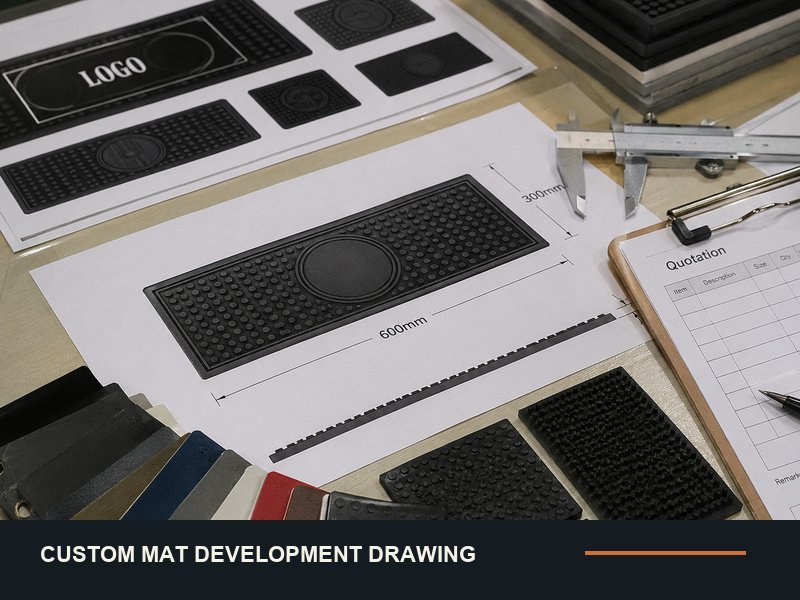
- Design & Engineering: The process begins with your logo, dimensioner, and creative ideas. Our team translates this into a detailed 2D and 3D CAD (Computer-Aided Design) file. This digital blueprint defines every single detail, from the height of the liquid-trapping nubs to the sharpness of your logo's edges. This stage requires skilled engineers who understand how materials flow and settle.
- Materialevalg: The mold itself is typically machined from a solid block of high-grade aluminum or steel. The choice depends on the production volume and complexity. Steel is more durable for extremely high-volume runs, while aluminum offers excellent heat transfer and is perfect for most projects. The cost of this raw material is a significant part of the fee.
- CNC Machining: The digital CAD file is sent to a CNC (Computer Numerical Control) machine. This sophisticated equipment carves your design into the metal block with incredible precision, often down to a fraction of a millimeter. This step can take many hours, depending on the design's complexity.
- Finishing & Texturing: After machining, the mold is hand-finished by skilled technicians. They polish surfaces, refine sharp corners, and can even add micro-textures (like a matte or sandy finish) to the mold surface, which then transfers to every mat produced.
- Testing & Refinement (Prototyping): Before mass production begins, we create a prototype or "first article" sample using the new mold. We send this to you for approval. This step confirms that the mold produces the mat exactly as designed and allows for any minor tweaks before committing to the full run.
The initial tooling cost covers all this expertise, machinery, and material. It’s a one-time charge to create an asset that belongs to your project and can be used to produce tens of thousands of identical, perfect mats.
How Do Low Tooling Costs Compromise Product Quality?
The temptation to use a cheaper, pre-existing mold or commission a low-quality new one is strong, especially when budgets are tight. Unfortunately, this decision often leads to a finished product that is disappointing or, in the worst cases, completely unsellable.
Low tooling costs almost always mean using inferior mold materials, rushed manufacturing processes, or inexperienced labor. This directly results in poor logo definition, inconsistent dimensions, structural weaknesses, and a significantly higher defect rate in the final mats you receive.
Dyk dybere: The Ripple Effect of a Bad Mold
When you approve a sample, you expect every piece in your bulk order to match that quality. A poorly made mold makes this impossible. I remember a client who, against our advice, opted for a cheaper tooling supplier to save a few hundred dollars. Their intricate logo came out looking like a blurry mess on over 30% of the units. They had to scrap the entire first run and start over, erasing any initial savings.
Here are the specific quality issues that arise from cutting corners on tooling costs:
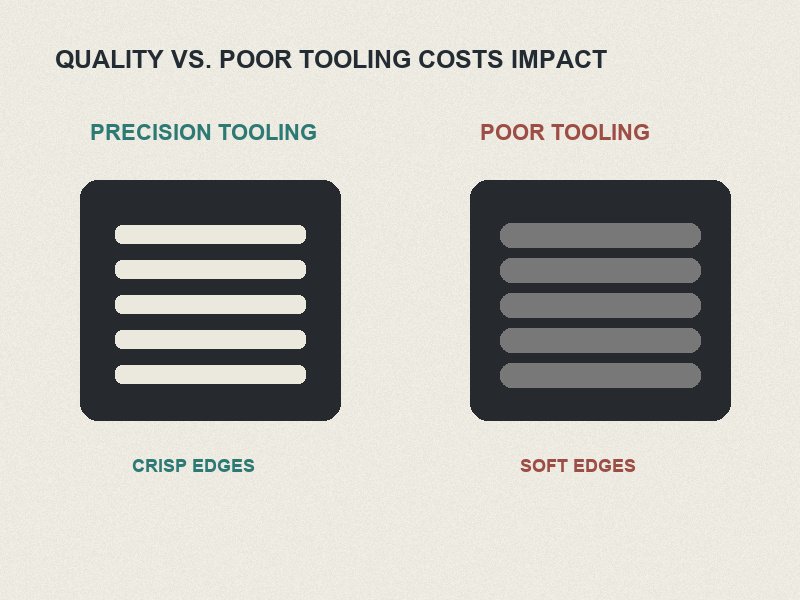
- Loss of Fine Detail: A premium brand identity is in the details. A high-quality mold can capture sharp corners, thin lines, and intricate logo elements. A cheap mold, often made from softer metal or machined poorly, has rounded, dull edges. This makes logos and text look soft, blurry, and unprofessional.
- Inconsistent Dimensions and Warping: A well-engineered mold accounts for how the material will shrink as it cools. A cheap one doesn't. This can lead to mats that are not perfectly flat, have warped edges, or vary in size from one piece to the next. This is especially problematic for functional mats where a perfect fit on a counter is essential.
- High Defect Rate: Bad molds are the primary cause of cosmetic defects.
- Flash: Excess material that seeps out of the seam of the mold, creating thin, unsightly plastic fins along the edges.
- Sink Marks: Small depressions or craters on the surface caused by uneven cooling.
- Short Shots: Incomplete parts where the material didn't fully fill the mold cavity. These defects mean more rejected units during our final inspection, which can delay your shipment and increase the effective per-unit cost.
- Poor Durability: If a mold is made from subpar materials, it wears down quickly. After just a few thousand cycles, the details can begin to soften, meaning the 10,000th mat you produce looks worse than the first. A proper investment ensures consistency throughout the entire production lifecycle.
I sidste ende, paying for proper tooling is a form of insurance. It insures that every single mat reflects the quality standard you approved and that your total cost isn't inflated by defects and delays.
Can Saving on Tooling Costs Damage Your Brand Identity?
You've spent years and significant resources building your brand's reputation. Every customer touchpoint, from your website to your packaging, is curated to reflect your values. A promotional item like a custom mat is no different—in fact, it can be even more important.
Absolut. A custom mat is a physical ambassador for your brand. Choosing to save on tooling costs by using a generic, ill-fitting, or poorly made mat communicates that your brand cuts corners. It devalues your perceived quality and erodes the very uniqueness you aim to project.
Dyk dybere: Your Mat Is a Statement
When a bartender uses your bar mat, a mechanic uses your tool mat, or a stylist uses your barber mat, they are interacting directly with your brand. That physical product makes a statement. Investing in custom tooling ensures it's the right one.
H3: The Perceived Value Proposition Imagine a luxury whiskey brand. Their marketing speaks of heritage, håndværk, and premium ingredients. If their promotional bar mat is a flimsy piece of rubber with a blurry logo, it creates cognitive dissonance. It tells the user that the brand's story of quality might just be marketing fluff. Omvendt, en tung, precisely molded mat with a sharp, clear logo reinforces the premium message. The mat feels like the brand.
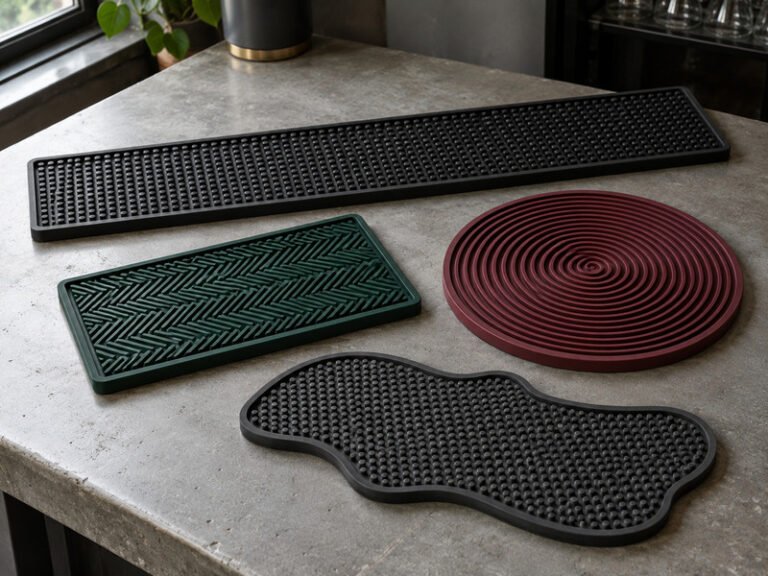
H3: Uniqueness and Brand Recall The entire purpose of a "custom" mat is to be unique. Using an existing, standard-shaped mold means your mat will look like dozens of others, with only the logo being different. This is a missed opportunity. Custom tooling allows you to create:
- Unique Shapes: Design a mat in the shape of your bottle, your logo, or another iconic brand element.
- Funktionelle egenskaber: Incorporate special drainage channels, magnetic sections for tools, or specific textures that are unique to you.
- A Memorable Experience: A distinctive design stands out and makes a lasting impression, improving brand recall.
Investing in proper tooling costs is not just about manufacturing; it's a strategic marketing decision.
The True ROI of Custom Tooling
| Feature | Low/No Custom Tooling | Proper Custom Tooling Investment |
|---|---|---|
| Brand Recognition | Generic shape, easily forgotten | Unique design, logo, and texture that stand out |
| Perceived Quality | Feels cheap, spinkelt, and has poor details | Feels premium, holdbar, and high-quality |
| Long-Term Cost | Høj (reworks, replacements, brand damage) | Lav (durable mold, low defect rate, positive ROI) |
| Marketing Impact | Negative or neutral at best | Positive, reinforces brand values and quality |
Ofte stillede spørgsmål
Why can't I just use an existing mold from your library?
You absolutely can! We maintain a large library of existing molds to help clients get to market faster and avoid a new tooling fee, provided their design fits. Imidlertid, for a truly unique shape, størrelse, or logo integration that fully embodies your brand, a custom mold is necessary. It's the difference between a tailored suit and one off the rack.
How much do tooling costs typically add to a project?
Tooling costs vary widely based on the mat's size, kompleksitet, and the mold's material (aluminium vs. stål). It is a one-time investment. While it adds to the initial invoice, this cost is amortized over the entire production run, often adding very little to the final per-unit price while guaranteeing a high-quality, unique product.
What is the lifespan of a custom mold?
A high-quality aluminum or steel mold, when properly manufactured and maintained, can produce tens of thousands, or even hundreds of thousands, of mats without degradation. This makes the initial investment in tooling costs extremely cost-effective over the long term, especially for popular products or large-scale promotional campaigns.
Is the tooling fee refundable?
Because the tooling fee covers the non-recoverable, upfront costs of design, engineering labor, machine time, and raw materials used to create your proprietary mold, it is a non-refundable investment in your unique product. To ensure your complete satisfaction, we always provide a physical sample for your approval before proceeding with mass production.
Konklusion
The temptation to cut upfront expenses is understandable, but when it comes to custom mats, skimping on tooling costs is a classic case of being "penny wise and pound foolish." This decision directly compromises product quality, dilutes your brand identity, and almost always increases your long-term budget through defects, rework, and missed opportunities. A proper investment in tooling is an investment in brand uniqueness, product integrity, and a lower total cost of ownership. It is the essential foundation upon which every successful custom mat project is built.
Ready to build a custom mat that truly represents your brand's commitment to quality? Contact our team today. We can provide a free 24-hour design sketch and walk you through the process, ensuring your investment in tooling costs delivers an exceptional and lasting return.