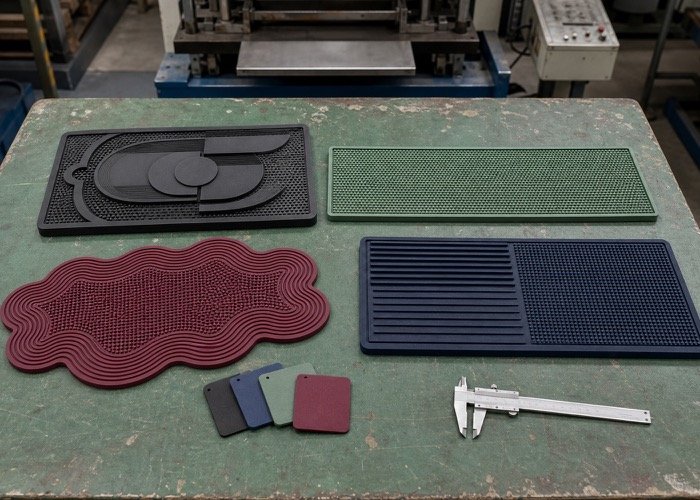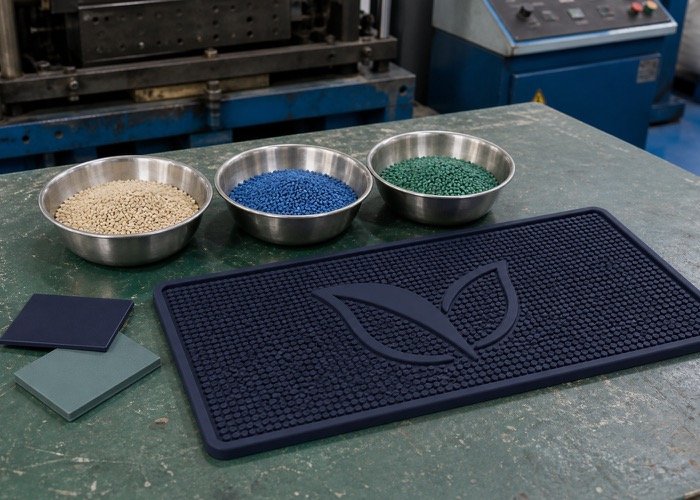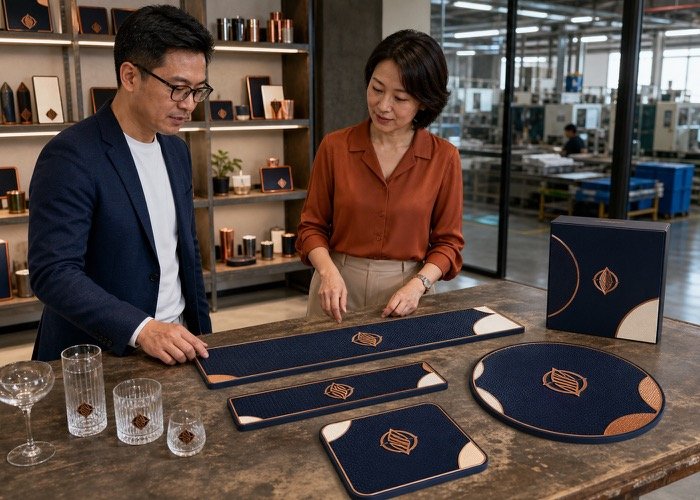

De nombreux chefs de marque ont une idée brillante pour un tapis de bar personnalisé, mais ne savent pas comment il se transformera en produit fini.. Le parcours de fabrication peut sembler opaque, rempli de risques potentiels comme des interprétations erronées de la conception, échecs de qualité, et des retards coûteux. Comprendre l'intégralité processus de production de tapis de bar démystifie chaque étape, vous donnant le contrôle nécessaire pour garantir que le produit final correspond parfaitement à la vision de votre marque.
Le processus de production de tapis de bar se déroule généralement en six phases clés: 1) Conception initiale et collecte des exigences, 2) Création de devis et d'échantillons pour approbation, 3) Préparations de pré-production en usine, 4) Production de masse automatisée, 5) Contrôle qualité rigoureux en plusieurs étapes, et 6) Emballage final et expédition. This structured workflow takes a concept from a digital file to a physical product ready for market.
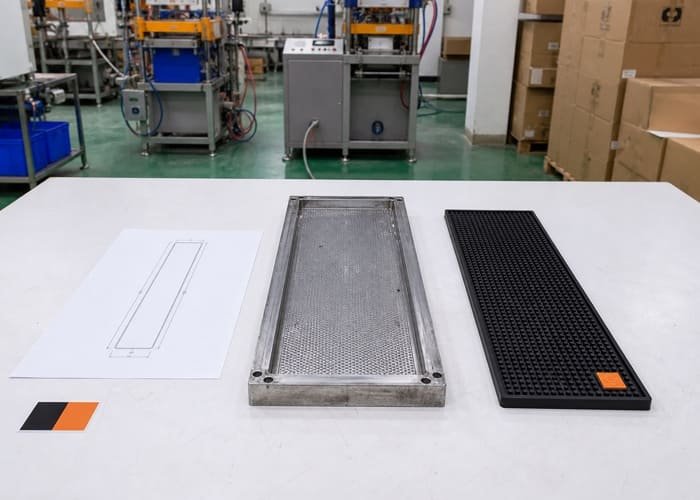
Now that you have the high-level roadmap, let's explore what actually happens at each stage. Gaining a deeper insight into this journey will empower you to collaborate effectively with your manufacturer and achieve a flawless result.
What Happens During the Initial Design and Requirements Phase?
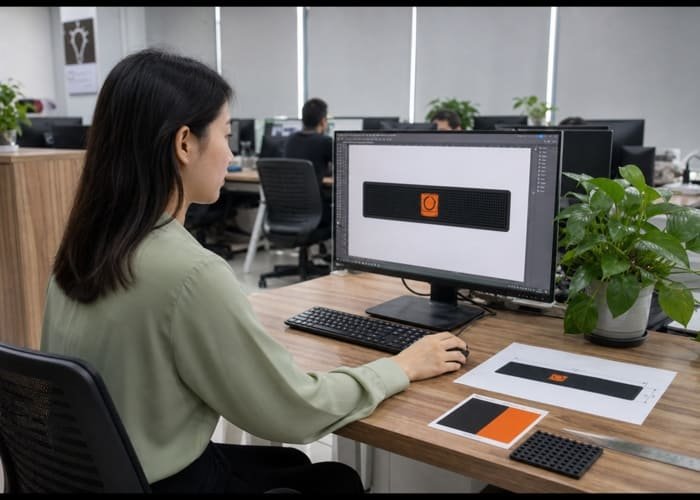
A fantastic concept for a promotional bar mat is only the beginning. Without translating that idea into precise, technical specifications, the factory can't execute your vision, leading to a final product that might miss the mark. This initial phase is all about turning your concept into a manufacturable blueprint.
This stage involves you, the client, providing your logo, dimensions souhaitées, et toutes les exigences fonctionnelles. The manufacturer then uses this information to create a detailed design sketch or "artwork proof" for your review and formal approval.
Plongez plus profondément
This foundational stage sets the trajectory for the entire project. Getting the details right here prevents costly changes later.
H3: Providing Your Core Specifications
The quality of the input you provide directly influences the quality of the output. The three most critical elements are:
- Logo/Artwork: For the clearest and most defined result, always provide your artwork in a vector format. Files with extensions like .IA (Adobe Illustrator), .PSE, or .PDF are ideal. These files can be scaled to any size without losing resolution, ensuring your logo looks crisp on the final mat. If you only have a .JPG or .PNG, a good manufacturer can help recreate it, but it might add time to the process. Chez SuperfectCraft, we offer a 24-hour design sketch service to support clients who may not have design resources in-house.
- Dimensions: Specify the exact length, largeur, and thickness you need. Standard bar runner mats are often long and narrow (par ex., 88x25 cm), while service mats might be more square (par ex., 45x30 cm). Thickness impacts the mat's weight, durabilité, and perceived quality, typically ranging from 8mm to 15mm.
- Color: To ensure perfect brand alignment, provide Système de correspondance Pantone (SPM) codes for your colors[^1]. Simply describing a color as "blue" can lead to ambiguity, as there are thousands of shades. A PMS code is a universal standard that tells the factory the exact shade of blue to formulate.
H3: Choosing Materials and Special Features
Beyond aesthetics, this is your chance to define the mat's functionality.
- Matériel: The most common material for embossed logo mats is PVC (Chlorure de polyvinyle) because it's durable, waterproof, and excellent for creating detailed, colorful designs. Other options include silicone (more flexible and heat-resistant) et caoutchouc (heavier and extremely non-slip).
- Special Structures: Think about how the mat will be used. Do you need raised pillars for drainage to keep glassware dry? An enhanced anti-slip texture on the bottom? At my company, we've even designed mats with positionnement magnétique areas to hold barber clippers or tools securely in place. Defining these functional needs upfront is crucial.
The culmination of this phase is your sign-off on the final design proof, which becomes the master document for the next stage.
How Does the Quotation and Sampling Stage of Bar Mat Production Work?
You've approved the digital design, but questions remain: What's the budget, and will the physical product feel right? Committing to a thousand-unit order without ever touching a physical prototype is one of the biggest risks in OEM manufacturing. The sampling stage is the single most important checkpoint in the entire bar mat production journey, serving as the bridge between concept and reality.
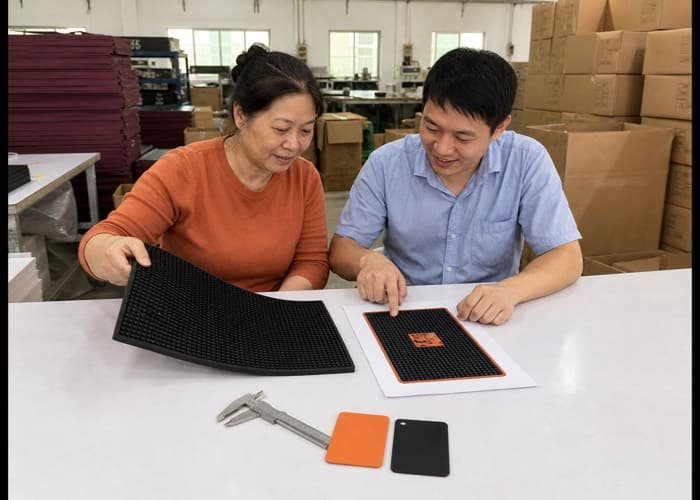
Based on the approved design, le fabricant fournit un devis détaillé. Une fois que vous avez accepté le prix et payé un échantillon, l'usine crée un moule de production et un prototype physique pour votre approbation. Cet échantillon est votre étalon d'or.
Plongez plus profondément
C'est ici que votre projet passe du papier au produit. C'est un processus méticuleux qui valide chaque choix de conception que vous avez fait.
H3: Comprendre la structure des coûts
Votre devis détaillera généralement quelques coûts clés:
- Prix unitaire: Le coût par tapis pour une production de masse. Ce prix dépend généralement de la quantité : plus vous commandez, plus le prix unitaire est bas.
- Frais de moisissure: Il s'agit d'un investissement unique pour créer le moule en acier personnalisé utilisé pour façonner vos tapis.. Since we have a large library of existing molds at SuperfectCraft, if your desired size is standard, you may be able to use one of ours, reducing or eliminating this fee. For a completely custom shape or logo, a new mold is necessary.
- Sample Fee: This covers the cost of labor and materials to produce one or two physical prototypes using the new mold. It's a small price to pay for peace of mind.
H3: The Prototyping Process
Creating your sample is a mini-production run. Here’s a simplified look at the steps we follow for a PVC mat:
- Correspondance des couleurs: We mix pigments to precisely match the Pantone codes you provided.
- Distribution: A CNC machine injects the colored liquid PVC into the mold, couche par couche, to form the different parts of your logo and design.
- Drying: Each color layer is briefly heated to set before the next is applied.
- Liquid Injection: The base color of the mat is poured into the mold.
- Vacuuming: Le moule est placé dans une chambre à vide pour éliminer les éventuelles bulles d'air, assurer une solide, flawless finish.
- Moulage au four: The filled mold is baked in an oven, curing the liquid PVC into a solid, flexible mat.
- Démoulage & Inspection: Une fois refroidi, the mat is carefully removed from the mold, trimmed of any excess material (flashing), and inspected for quality.
Once you receive the sample, your job is to be the ultimate critic. Check the colors against your brand guide. Measure the dimensions. Feel the weight and flexibility. Is the logo sharp? Does it feel durable? This is your last, best chance to request adjustments before committing to the full order.
What Are the Key Steps in Mass Production for Bar Mats?
With a perfect, approved sample in your hands, it's time to scale. The challenge now is ensuring that the 1,000th mat is an identical twin to that first approved prototype. This is achieved through meticulous pre-production planning and the power of automated machinery to guarantee consistency and speed.
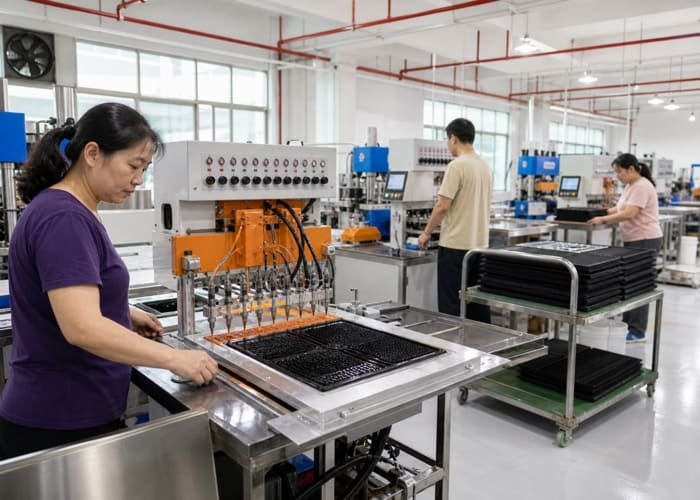
Upon sample approval and receipt of the production deposit, the factory procures raw materials and calibrates the automated PVC dispensing production line. Liquid PVC is then systematically injected into the series of molds, which cycle through a heating and cooling process to create hundreds or thousands of identical mats.
Plongez plus profondément
This phase is where your manufacturer's efficiency and process control truly shine.
H3: Pre-Production Preparations
Before the machines start running, several crucial behind-the-scenes steps take place.
- Raw Material Procurement: This is where you rely on your manufacturer's integrity. Your contract should explicitly state that the mats will be made from 100% new, eco-friendly PVC, not mixed with recycled scraps. Recycled materials can lead to unpleasant odors, brittleness, and potential safety compliance issues.
- Pre-Production Sample (PPS): This is a pro tip that I always recommend to my clients. We produce one of the very first mats off the mass production line and send photos (or the physical mat) for a final "go-ahead." This step confirms that the color batch for the large run is a perfect match to the original prototype, preventing any potential color drift.
- Machine Calibration: Les distributeurs automatiques sont programmés avec le fichier numérique de votre conception. Les buses, pression, et le timing sont tous finement réglés pour correspondre aux spécifications de l'échantillon approuvé.
H3: La ligne de production automatisée en action
Le cœur du moderne bar mat production est la ligne de distribution de PVC. C'est une merveille d'efficacité. Plusieurs moules, identique à celui utilisé pour votre échantillon, sont placés sur un tapis roulant. Un bras robotisé doté de plusieurs buses se déplace sur chaque moule, injecter avec précision les bonnes couleurs dans les bonnes cavités.
Ce processus automatisé offre plusieurs avantages par rapport aux méthodes manuelles:
- Cohérence: Chaque tapis est pratiquement identique, éliminer l'erreur humaine.
- Vitesse: La ligne peut produire un nombre important de tapis par heure, permettant de réaliser des commandes importantes dans les délais promis. Pour une commande type, the mass production stage takes about 10–18 days.
- Complexité: Automation allows for intricate, multi-color designs that would be incredibly difficult or time-consuming to produce by hand.
The conveyor then moves the filled molds through a long tunnel oven to cure, and finally to a cooling station before they are demolded.
How Is Quality Control and Shipping Handled in Bar Mat Production?
The mats have been molded, but the job is far from over. A single production flaw, whether it's a bubble in the PVC, a smudged color, or a warped edge from poor packaging, can damage your brand's reputation. A comprehensive, multi-stage quality control system and thoughtful packaging are the final guardians of your investment.
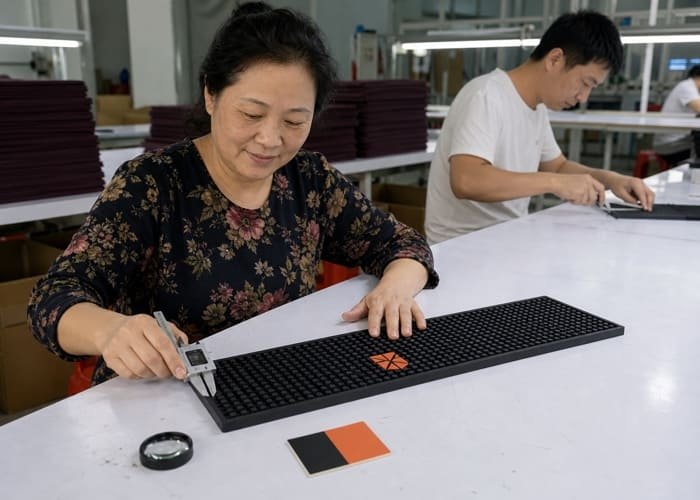
Every mat undergoes inspection at multiple points, with a final detailed check before it's packed. To preserve their shape, high-quality mats are rolled, not folded. Once the order passes the final QC, the balance payment is made, and the goods are prepared for shipment.
Plongez plus profondément
This final leg of the journey ensures that the quality you approved in the sample is the quality that arrives at your door.
H3: Multi-Point Quality Inspection
A reliable manufacturer doesn't just check the mats at the end; quality is monitored throughout the processus de production de tapis de bar.
- Inline QC: As mats come off the production line, workers perform an initial check, looking for obvious defects like air bubbles, incomplete fills, or major color bleeding.
- Post-Production QC: After demolding, each mat goes to a finishing station. Here, trained workers trim any excess flashing (thin bits of PVC on the edges) by hand and perform a more detailed visual and tactile inspection.
- Final Pre-Shipment Inspection: Before a single mat is placed in a box, a final QC team inspects a statistically significant portion of the order (or 100% for smaller orders). They check against the approved sample for color accuracy, dimensions, logo clarity, and cleanliness. This is also when we arrange third-party testing for compliance like ATTEINDRE, California Prop 65, or FDA standards[^2] if the client requires it for their market.
H3: Conditionnement: The Final Step in Protection
How your mats are packaged is critically important. I've seen too many beautiful custom mats ruined by improper packing.
- Rolled vs. Folded: Always insist on rolled packaging. Folding mats, especially thicker ones, creates permanent creases and can cause the edges to warp and never lay flat. Each mat should be individually rolled, often in a simple polybag, and then placed in a master carton.
- Custom Packaging: If your mats are intended for retail sale or as part of a high-end promotional kit, we can also design and produce custom packaging, such as printed cardboard boxes or branded sleeves.
H3: Final Payment and Logistics
Standard industry practice is to pay a deposit (typically 30-50%) to start mass production, with the final balance due upon completion and before shipment. Once the final payment is cleared, your order is handed over to the freight forwarder for its journey to you via sea or air.
What is the Standard Timeline and How Can You Avoid Common Pitfalls?
Understanding the individual steps is vital, but managing the overall project timeline and its inherent risks is what ensures success. An unexpected delay or a batch of low-quality mats can disrupt a product launch or marketing campaign. By knowing the standard schedule and being aware of common mistakes, you can become a proactive partner in the processus de production de tapis de bar.
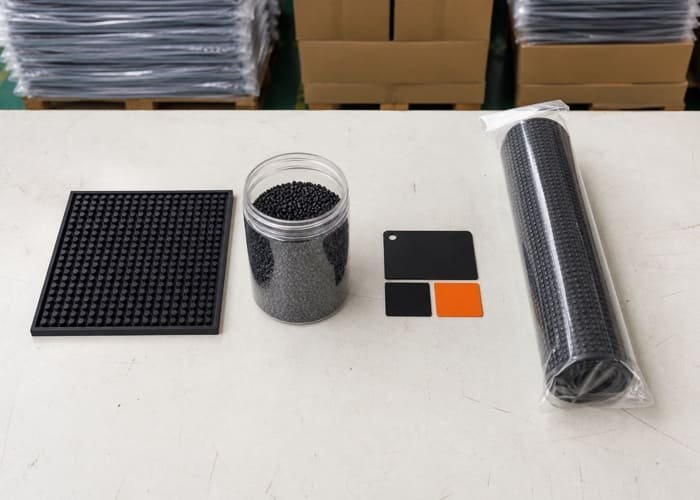
For a standard PVC embossed bar mat, the entire process from artwork approval to shipment-ready typically takes 16 to 30 jours. You can avoid the most common and costly pitfalls by never paying a deposit before sample approval, contractually specifying new materials, demanding a pre-production sample, and insisting on rolled packaging.
Plongez plus profondément
Let's put it all together with a clear timeline and actionable advice to protect your project.
H3: Standard Production Timeline
This table provides a realistic estimate for a custom PVC bar mat project. Note that lead times can fluctuate based on order quantity and factory capacity.
| Stage | Typical Duration |
|---|---|
| Artwork Confirmation | 1–2 Days |
| Mold Creation & Prototyping | 3–7 Days |
| Production de masse | 10–18 Days |
| Quality Control & Conditionnement | 2–3 Days |
| Total Estimated Time | 16–30 Days |
H3: Four Critical Mistakes to Avoid
Over my years in manufacturing, I've seen clients make the same preventable mistakes. Here is my essential checklist to ensure a smooth process:
- Never Pay the Mass Production Deposit Before Sample Approval. The physical sample is your contract. It is the proof that the factory can execute your vision. Signing off on a digital proof is not enough. Do not release the main deposit until you have the physical prototype in your hands and have confirmed it meets 100% of your requirements.
- Specify "100% New Eco-Friendly Material" in Your Contract. Unscrupulous factories may cut costs by mixing in cheaper, recycled materials. This can result in a product with a strong chemical odor, poor durability, and potential safety issues. Get it in writing.
- Always Request a Pre-Production Sample (PPS). Even with an approved prototype, slight variations can occur when mixing a large batch of raw materials for mass production. A PPS (even just a photo) is your final check to ensure the color of the main batch matches the original sample perfectly, preventing a large-scale color discrepancy.
- Insist on Rolled Packaging in Your Purchase Order. This may seem like a minor detail, but it's crucial. Folded mats arrive with permanent creases and warped edges that will not lay flat, making them look cheap and unprofessional. Specify that each mat must be rolled and packed in a way that prevents it from being crushed.
Foire aux questions
Quelle est la quantité minimum de commande (MOQ) for custom bar mats?
The MOQ can vary, but for a semi-standard design using an existing mold, our MOQ at SuperfectCraft is typically 200 pièces par motif par couleur. For a completely new custom mold, the MOQ might be slightly higher to offset the development costs.
Can I get a bar mat in a completely custom shape?
Absolument. We can create a new mold for virtually any shape you can design, whether it's the outline of your logo, a product bottle, or another unique contour. This is a key part of our OEM/ODM service.
What kind of artwork file do I need to provide for my logo?
The best files are vector-based, such as Adobe Illustrator (.IA), .PSE, or a high-quality .PDF. These files allow us to scale your design perfectly without losing any detail, ensuring a crisp and professional finish on the final mat.
Do I have to pay for a mold for every order?
Non. The mold fee is a one-time cost associated with a specific design. As long as you are reordering the exact same mat (same size, shape, and logo), you will not have to pay the mold fee again. We keep the molds for our clients for future orders.
What's the main difference between a PVC and a silicone bar mat?
PVC is the industry standard—it's cost-effective, durable, waterproof, and excellent for holding vibrant colors and complex logos. Silicone is a more premium option that offers higher heat resistance (good for placing hot tools on) and greater flexibility, but it typically comes at a higher cost.
Conclusion
The journey of a custom bar mat from a simple idea to a tangible marketing asset is a precise, multi-stage operation. It begins with a clear design brief, moves through the critical sampling phase, scales up during automated mass production, and concludes with rigorous quality control and protective packaging. By understanding each of these six phases—Design, Sampling, Preparation, Production, QC, and Shipping—you can navigate the processus de production de tapis de bar with confidence. A partnership with a transparent and experienced manufacturer is the key to transforming your vision into a high-quality product that strengthens your brand.
If you're ready to bring your custom bar mat design to life, our team at SuperfectCraft is here to guide you through every step. Contact us today for a free design sketch and a no-obligation quote.
- WhatsApp: +86 15816822766
- E-mail: sales01@superfectcraft.com
- Website: www.superfectcraft.com
[^1]: "Pantone Color Systems | Universal Language of Color", https://www.pantone.com/color-systems/pantone-color-systems-explained?srsltid=AfmBOorOAN57QfaJkWLRGnCl9S8DLol0cWSd04AW5iSZMGu-PJuolO5X. The Pantone Matching System is widely used in industries to ensure precise color matching, providing a universal reference for manufacturers to replicate brand colors accurately. Rôle de la preuve: mécanisme; type de source: institution. Prise en charge: PMS codes are a standardized system for ensuring consistent color reproduction across different materials and processes.. Note sur la portée: Effectiveness may vary depending on the material and production method. [^2]: "EU REACH", https://www.trade.gov/eu-reach. Government documentation confirms that adherence to REACH, California Prop 65, and FDA standards is critical for ensuring product safety and regulatory compliance in various markets. Rôle de la preuve: case_reference; type de source: gouvernement. Prise en charge: Compliance with REACH, California Prop 65, and FDA standards ensures products meet safety and environmental regulations.. Note sur la portée: Specific applicability to bar mats may depend on their intended use and market.