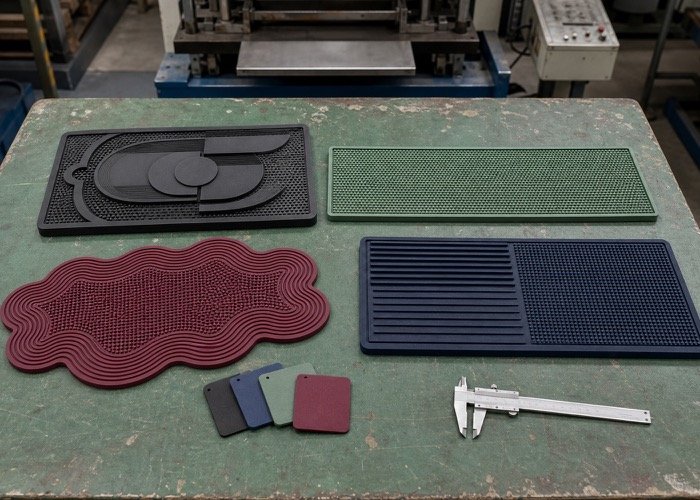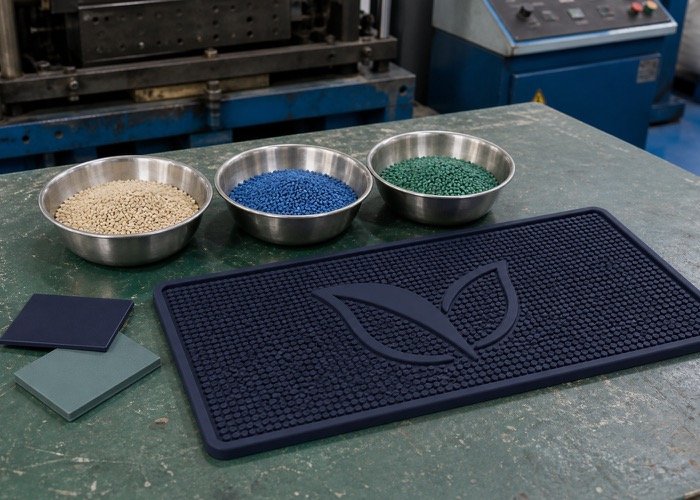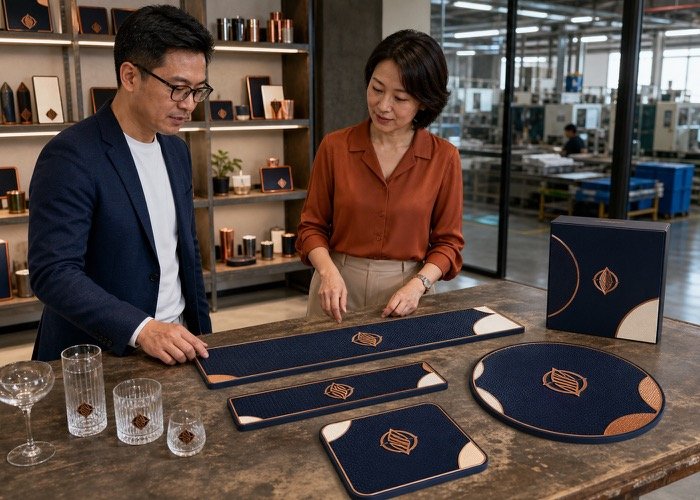

Kæmper med at vælge det rigtige materiale til dine tilpassede barmåtter? De PVC vs Silicone Bar mats debate can be confusing, efterlader dig bekymret for at begå en kostbar fejl. At vælge det forkerte materiale kan føre til falmede logoer, måtter, der smelter under varme, eller simpelthen ikke er i overensstemmelse med dit brands kvalitetsstandarder. This guide provides the clear answers you need to invest wisely.
The best choice between PVC and silicone bar mats depends on your primary application. For high-volume promotional campaigns, intricate multi-color logos, and budget-conscious projects, PVC is the superior option. For environments requiring high heat resistance, food-grade safety, and long-term durability, such as coffee shops or premium bars, silicone is the better investment.
Now that you have the direct answer, let's dive deeper into the specific scenarios where each material shines. Understanding the nuanced differences in cost, durability, and customization will empower you to select the perfect mat that enhances your brand and serves its purpose flawlessly.
When Are PVC Bar Mats the Best Choice?
Are you planning a large-scale marketing campaign or need to outfit numerous locations without breaking the bank? You might feel that a high-impact, custom-branded item is out of reach. Imidlertid, for visual appeal and cost-effectiveness, PVC bar mats offer the perfect solution for making a big impression on a budget.
PVC (Polyvinyl Chloride) bar mats are the ideal choice when your main goals are brand visibility, detailed logos, and cost control. They are perfect for promotional giveaways, beverage company marketing, and general bar use where extreme heat is not a factor.
Dyk dybere: The Power of PVC for Branding
As a manufacturer, I've produced hundreds of thousands of PVC mats, and they remain the most popular choice for a reason, especially for beverage brands, distributører, and promotional product companies. Their strength lies in the perfect balance of visual appeal, fungere, and cost.
H3: Unmatched Cost-Effectiveness for Bulk Orders
When you need to order hundreds or thousands of mats, per-unit cost is critical. PVC is inherently a more affordable raw material than silicone.[^1] The manufacturing process is highly optimized for mass production, allowing us to offer significant economies of scale.
For clients like large breweries or spirit brands, ordering 10,000 PVC mats for a nationwide promotion is far more feasible than doing the same with silicone. The initial investment in a custom mold is quickly offset by the low price of each subsequent mat. Hos SuperfectCraft, we also have a large library of existing molds in common sizes, which can sometimes eliminate mold fees entirely for clients, further driving down costs and speeding up production.
H3: Superior 3D Logo and Color Detail
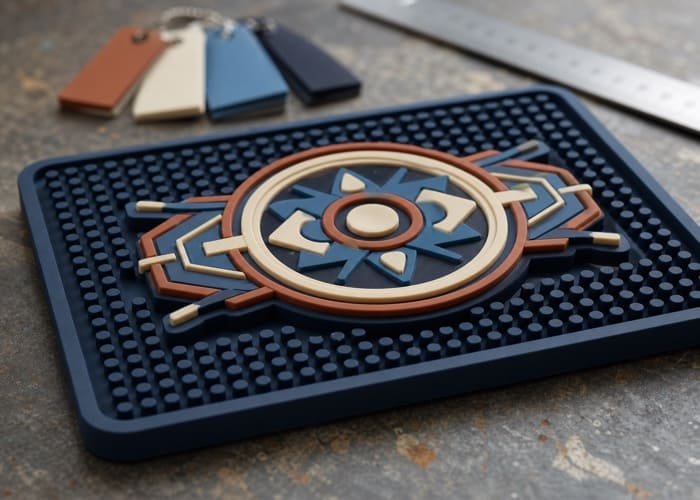
This is where PVC truly excels and outshines silicone. The PVC liquid dispensing process allows for incredible precision and creativity. We can create intricate, multi-level 3D designs and fill them with a wide spectrum of vibrant, distinct colors.
Here's how it works:
- A CNC machine carves your design into a metal mold.
- Our technicians use dispensing machines to inject liquid PVC of different colors into the mold's cavities, layer by layer.
- The entire mat is then heated (cured) in an oven, solidifying the design into a single, durable piece.
This process is perfect for complex logos with sharp lines, small text, and multiple colors that need to pop. Vores gratis 24-timers designskitseservice helps clients visualize this potential, turning their 2D logo into a 3D product rendering before any commitment is made.
H3: Material Properties and Ideal Applications
PVC is a robust and durable plastic.[^2] It provides an excellent anti-slip surface, contains spills effectively with its raised border, and is very easy to clean with soap and water. For a standard bar counter serving cold drinks, it's perfectly suited for years of service.
Imidlertid, it's crucial to understand its main limitation: low heat resistance. A standard PVC mat can start to soften or warp at temperatures above 60-80°C (140-176°F).[^3] This means it's not suitable for placing hot coffee pots, pans, or hot barber tools directly on its surface.
Best Use Cases for PVC Mats:
- Beer, wine, and spirits brand promotions
- High-volume distribution to bars and pubs
- Marketing giveaways at trade shows
- General service counters for cold beverages
Why Choose Silicone Bar Mats for a Premium Application?
Are you concerned about hot coffee carafes damaging your counter, or do you need a mat that meets food-safety standards for a high-end restaurant? A standard mat might fail, creating safety hazards and reflecting poorly on your brand. For these demanding situations, silicone bar mats provide the ultimate peace of mind and performance.
Silicone bar mats are the premium choice for applications requiring exceptional heat resistance, food-grade safety, and superior long-term durability. They are perfect for specialty coffee shops, upscale bars, restaurant kitchens, and as high-quality barber station mats.
Dyk dybere: Silicone's Superior Performance
While PVC is the workhorse for promotions, silicone is the thoroughbred for performance. When a client comes to me with needs that go beyond simple spill containment—specifically heat, safety, and a premium feel—I immediately steer them toward silicone. It's an investment in quality and longevity.
H3: Exceptional Heat Resistance and Safety
The number one reason to choose silicone is its ability to withstand high temperatures. While PVC struggles above 80°C, a high-quality silicone mat can easily handle continuous temperatures up to 230°C (446°F).
This makes it the only viable choice for:
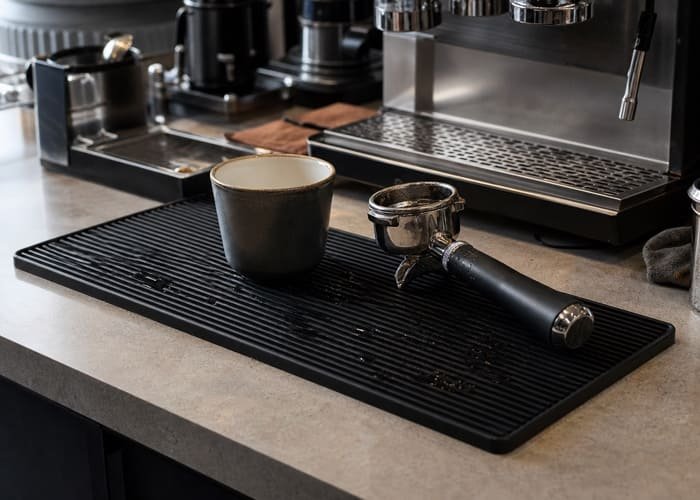
- Coffee Stations: Baristas can place hot portafilters or steaming carafes directly on the mat without any risk of melting or warping.
- Frisørforretninger: Stylists can rest hot clippers or other tools on a silicone mat between uses. We even design mats with magnetic inserts for organizing tools.
- Kitchen Environments: Can be used as a prep station mat or a drying mat for hot-sanitized equipment.
This heat resistance isn't just about preventing damage; it's a critical safety feature in a busy commercial environment.
H3: Unbeatable Durability and Longevity
Silicone is a remarkably resilient material. Unlike PVC, which can become stiffer and potentially crack over many years of exposure to UV light and cleaning chemicals, silicone remains flexible and supple. It doesn't degrade, become brittle, or lose its shape.
This means a silicone mat will look and feel like new for much longer, justifying its higher initial cost. For a permanent fixture in a high-end establishment, the total cost of ownership is often lower because you won't need to replace it. It's also completely dishwasher safe, making deep cleaning incredibly simple.
H3: Food-Grade Compliance and Premium Feel
For any application where the mat might come into contact with food or drink ingredients, silicone is the standard. We can produce silicone mats that comply with strict international food-contact regulations like FDA (USA) and LFGB (Germany/EU). This is a non-negotiable requirement for many global brands and high-end hospitality clients. We facilitate third-party testing to provide the necessary certifications for our clients' target markets.
Beyond the technical specs, silicone simply feels more premium. It has a soft, smooth, matte finish and a satisfying weight that PVC can't replicate. For a luxury brand, this tactile quality reinforces the brand's premium positioning.
PVC vs silikone barmåtter: A Head-to-Head Comparison?
Feeling stuck trying to visualize all the differences we've discussed? It's easy to get lost in the details of heat resistance and logo types. Seeing a direct, side-by-side comparison is the best way to make the trade-offs clear and your final decision easy.
The choice in the PVC vs silikone barmåtter debate ultimately boils down to your specific needs and priorities. PVC maximizes visual branding and cost-efficiency for promotions, whereas silicone delivers elite performance, safety, and durability for professional, high-use environments.
Dyk dybere: The Technical Breakdown
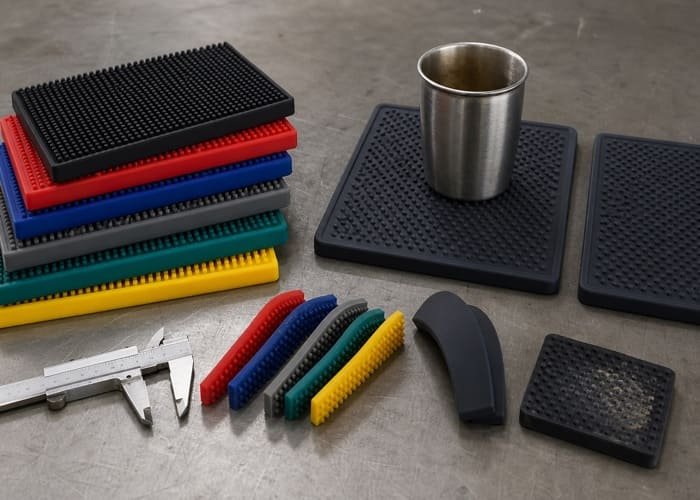
Having managed production for both material types, I can tell you that the differences are rooted in their fundamental chemistry and manufacturing methods. This impacts everything from cost to final appearance. Here is the ultimate cheat sheet for procurement managers and brand owners.
H3: The Core Manufacturing Differences
- PVC: This is an additive process. We start with a mold and add colored liquid PVC into cavities. It's like "painting by numbers" but in 3D. This is why it’s so good for complex, multi-color logos. The process is faster and the material is cheaper.
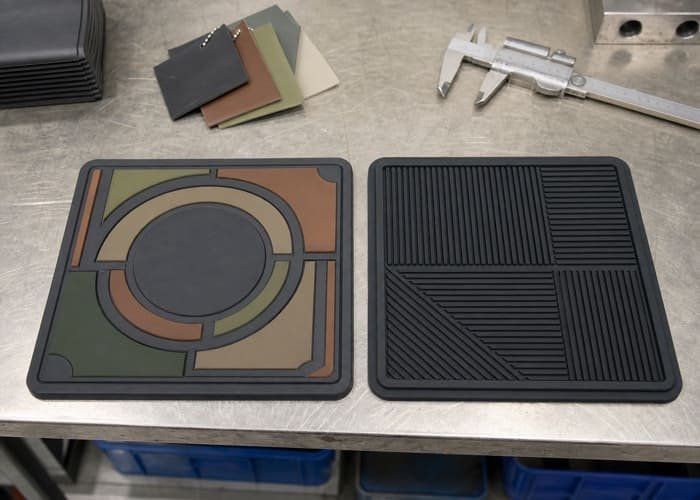
- Silikone: This is typically a compression molding process.[^4] A solid or putty-like piece of pre-colored silicone is placed into a heated mold, which is then compressed under immense pressure. This forces the material to fill the entire cavity perfectly. It’s a more energy-intensive process with a more expensive raw material, hence the higher cost.
Our role as an OEM/ODM partner is to guide you through this, from the free design sketch to final sample approval, ensuring the chosen process perfectly matches your vision and budget.
H3: Side-by-Side Feature Comparison Table
This table summarizes everything you need to know to make a final decision in the PVC vs silikone barmåtter showdown.
| Feature | PVC Bar Mat | Silikone Bar Mat |
|---|---|---|
| Primary Use Case | Salgsfremmende, High-Volume, Drikkevaremærker | Professional, Madservice, High-Temperature |
| Koste | Lower ($) | Higher ($$$) |
| Varmemodstand | Lav (up to ~80°C / 176°F) | Høj (up to ~230°C / 446°F) |
| Logo detalje | Fremragende (Multi-color, 3D embossed) | God (Debossed, screen printed, simpler) |
| Holdbarhed | God (can harden over time) | Fremragende (remains flexible, long-lasting) |
| Food Safety | Standard commercial use only | Can be certified to FDA / LFGB standards |
| Feel & Finish | Firmer, can be glossy or matte | Softer, fleksibel, premium matte finish |
| Cleaning | Easy (Hand wash) | Easiest (Dishwasher safe) |
Ofte stillede spørgsmål
Kan jeg få en tilpasset form til min barmåtte?
Absolut. Both PVC and silicone can be molded into custom shapes and sizes beyond the standard rectangle. As an OEM/ODM manufacturer, we create a unique mold based on your approved artwork and specifications. This is perfect for creating a truly unique branded item.
Hvad er den mindste ordremængde (MOQ)?
Our standard MOQ is typically 200 styk pr. design og farve, especially when using an existing mold size. For fully custom projects requiring a new mold, the MOQ might be slightly higher to offset the tooling costs, but we are always flexible and work to find a solution for our clients.
How long does it take to get a sample before mass production?
The standard lead time for producing a physical sample is approximately 7 days after the design sketch and technical specifications are approved. We always proceed with a sample for your confirmation to ensure every detail is perfect before starting mass production.
Are PVC bar mats safe?
Ja, PVC bar mats are completely safe for their intended purpose in bars, restauranter, and homes. The materials we use comply with standard commercial regulations. If your project requires specific certifications for markets like the EU or USA (f.eks., NÅ, Phthalate-free, Prop 65), we can arrange for third-party testing to ensure full compliance.
Konklusion
I sidste ende, the right choice in the PVC vs silikone barmåtter discussion is the one that aligns with your specific goals. PVC is the undisputed champion for cost-effective, visually stunning promotional items where intricate, colorful logos are key. It's the go-to for beverage brands and large-scale marketing. Silikone, on the other hand, is the premium choice for performance, offering unmatched heat resistance, durability, and food-grade safety for demanding professional environments like coffee shops and high-end bars. By defining your primary need—be it budget, branding, or performance—you can confidently select the perfect material to serve your customers and elevate your brand.
Ready to create the perfect custom bar mat for your business? Whether you need the vibrant branding of PVC or the high-performance durability of silicone, our team is here to help.
Contact us today for a free 24-hour design sketch and a no-obligation quote.
- Whatsapp: +86 15816822766
- E-mail: sales01@superfectcraft.com
- Or visit our contact page: https://babarmat.com/contact/
[^1]: "PVC vs. Silikone: Which is Better?", https://www.timcorubber.com/blog/archive/pvc-vs-silicone-which-is-better/. Materials references describe PVC as a low-cost, high-volume plastic and silicone rubber as relatively expensive compared with many other rubbers and plastics, supporting the assertion that PVC is generally the more affordable raw material. Bevis rolle: generel_support; kildetype: encyklopædi. Understøtter: Silicone rubber is commonly characterized as relatively expensive, whereas PVC is a low-cost, widely used commodity plastic.. Omfangsnote: Material pricing varies by grade, additives, and market conditions; this is a general comparison, not a current price quote. [^2]: "PVC Material and Properties", https://rollepaal.com/knowledge/pvc-material-and-properties. Materials summaries describe PVC as a widely used, durable plastic with useful mechanical strength and chemical resistance, supporting the characterization of PVC as robust and durable. Bevis rolle: generel_support; kildetype: encyklopædi. Understøtter: PVC’s common use stems from its favorable mechanical strength and durability characteristics.. Omfangsnote: Durability varies between rigid and plasticized PVC and depends on stabilizers and service environment. [^3]: "Heat Deflection Temperature of Plastics", https://www.specialchem.com/plastics/guide/heat-deflection-temperature-of-plastics. Reference works note that unplasticized PVC has a glass transition temperature around 80 °C, above which it softens; this supports the stated risk that PVC mats may warp at temperatures in the 60–80 °C range. Bevis rolle: mekanisme; kildetype: encyklopædi. Understøtter: PVC’s glass transition/softening range is near 80°C, explaining why PVC articles can warp at elevated temperatures.. Omfangsnote: Actual softening temperature varies with plasticizer content and additives; plasticized PVC can soften at lower temperatures. [^4]: "Compression molding", https://en.wikipedia.org/wiki/Compression_molding. Reference descriptions of compression molding identify silicone rubber as a typical material for this process, supporting the statement that silicone parts such as mats are commonly compression molded. Bevis rolle: mekanisme; kildetype: encyklopædi. Understøtter: Compression molding is a common manufacturing method for silicone rubber parts.. Omfangsnote: Silicone parts can also be produced by liquid silicone rubber (LSR) injection molding; the exact method varies by design and volume.