
At bringe et unikt salgsfremmende produkt ud i livet kræver en klar fremstillingsplan. Forståelse af udvikling af specialfremstillet PVC barmåtteform processen er det første skridt for mærkeejere og importører, der ønsker at skabe en holdbar, iøjnefaldende genstand, der skiller sig ud. Rejsen fra en simpel idé til et færdigt produkt kan virke kompleks, men med den rigtige partner, det er en strømlinet og gennemsigtig oplevelse.
Processen for udvikling af specialfremstillet PVC barmåtteform er en klar, fire-trins rejse. Først, kunden oplyser deres logo og ønskede produktdimensioner. Anden, vi opretter og leverer en gratis digital designskitse til gennemgang. Tredje, klienten bekræfter kunstværket. Endelig, vi fortsætter med at skabe den fysiske form og en produktprøve, en proces, der typisk tager omkring syv dage.
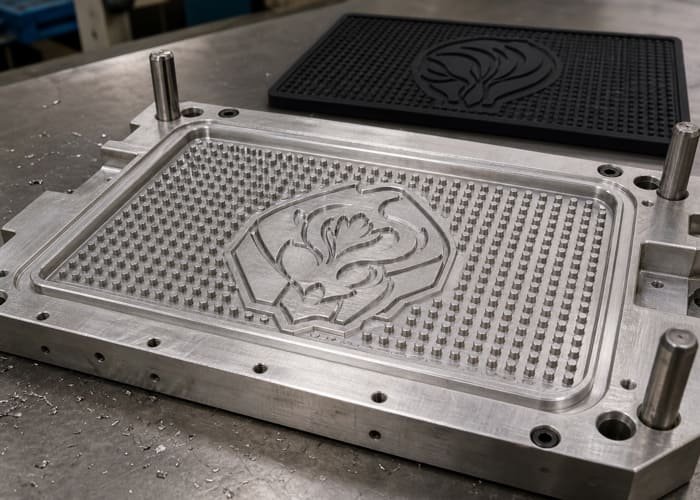
Now that you have the high-level overview, you're probably curious about what happens at each stage. Let's dive deeper into this process to demystify how we turn your brand's logo and a set of dimensions into a high-quality, physical bar mat ready for your customers.
How Do We Start With Just Your Logo and Dimensions?
Are you concerned that you need a full in-house design team to create a custom product? It's a common worry that can prevent great ideas from ever getting started. Vi fjerner denne barriere ved at omdanne dine kernemærkeaktiver til et produktionsklart design til dig.
Til at begynde, du giver os blot din logofil og de ønskede mål til måtten. Vores erfarne designteam oversætter derefter disse oplysninger til et professionelt 2D- eller 3D-digitalt bevis, som du vil modtage til gennemgang - ofte inden for 24 timer.
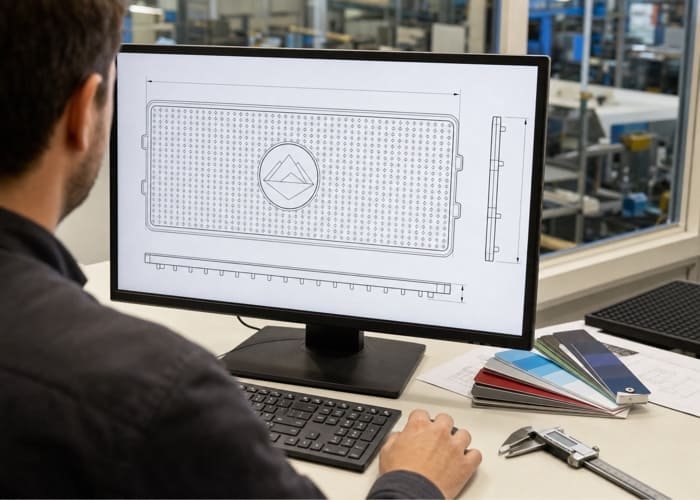
Dyk dybere: Fra brandaktiver til et håndgribeligt design
Den indledende designfase er uden tvivl den mest kritiske. Det danner grundlaget for hele projektet. Mit team og jeg har forfinet denne proces over tusindvis af projekter for at gøre det så enkelt som muligt for vores kunder.
Hvilke filformater virker bedst?
For at sikre den højeste kvalitet og nøjagtighed, vektorfiler foretrækkes stærkt[^1]. Disse formater giver os mulighed for at skalere dit logo til enhver størrelse uden at miste klarheden. De bedste filtyper inkluderer:
- Adobe Illustrator (.AI)
- Indkapslet PostScript (.EPS)
- Bærbart dokumentformat (.PDF)
Hvis du kun har en rasterfil som en .JPG eller .PNG, bare rolig. Så længe det er i høj opløsning, vores designere kan ofte arbejde med det eller genskabe det i et vektorformat for at sikre, at den endelige form er sprød og præcis.
Valg af de rigtige måttedimensioner
Mens vi kan skabe en form til stort set enhver størrelse eller form, det er nyttigt at overveje standard industristørrelser. Dette kan nogle gange give omkostningsfordele, hvis vi kan tilpasse en eksisterende form fra vores omfattende bibliotek. Nogle almindelige størrelser inkluderer:
- 60cm x 10 cm (23.6" x 3.9") - En typisk skinnemåtte.
- 50cm x 30 cm (19.7" x 11.8") - En alsidig serviceområdemåtte.
- Brugerdefinerede former, der matcher et produkt eller logo.
Da jeg startede i denne virksomhed, en kunde ønskede en cirkulær barmåtte, hvilket var usædvanligt på det tidspunkt. Vi arbejdede sammen med dem for at skabe en unik form, og det blev en stor succes for deres brandkampagne. Dette lærte mig, at det kan være et kraftfuldt markedsføringstiltag at træde uden for standarddimensioner.
Vores 24-timers Design Sketch Service
Vi ved, at hastighed er afgørende. For kunder, især importører og indkøbsansvarlige, at vente på design kan forsinke hele projekter. Derfor garanterer vi en gratis designskitse indeni 24 timer. Dette bevis viser dig præcis, hvordan dit logo, tekst, og valgte farver vil se på det endelige produkt, giver dig mulighed for at træffe hurtige beslutninger og holde dit projekt i gang.
What Happens During the Artwork Approval Stage?
Har du nogensinde bestilt en tilpasset vare, kun for at det endelige produkt ikke ser ud som du havde forestillet dig? Denne frygt for et misforhold mellem konceptet og virkeligheden er gyldig. Godkendelsesfasen for kunstværker er dit vigtigste kontrolpunkt, fungerer som en sikring for at sikre, at din vision udføres perfekt.
Dette er det punkt, hvor du omhyggeligt gennemgår og bekræfter hver eneste detalje i den digitale skitse. Dette inkluderer placering af logo, farvekoder, dimensioner, og eventuelle særlige strukturelle træk. Ingen fysisk udvikling af specialfremstillet PVC barmåtteform begynder, indtil vi har din eksplicitte sign-off på dette digitale bevis.
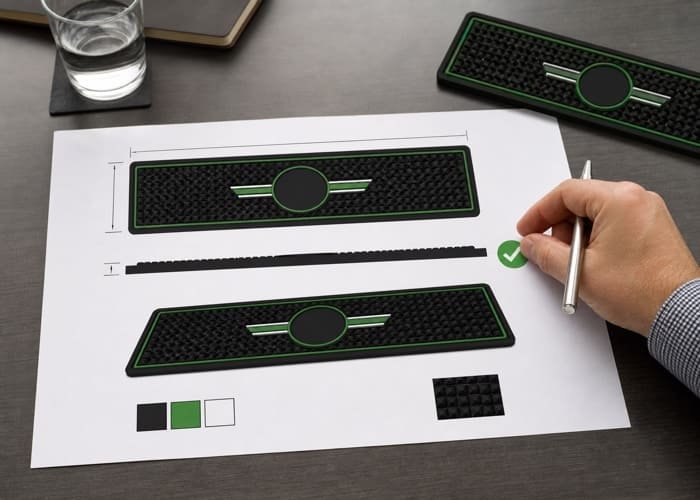
Dyk dybere: Færdiggør din Blueprint
Tænk på det godkendte kunstværk som det arkitektoniske plan for din barmåtte. Eventuelle ændringer, der foretages efter dette tidspunkt, bliver væsentligt mere komplekse og dyrere, da de ville kræve ændring af fysisk værktøj. Det er derfor, vi behandler denne fase med så stor betydning.
En tjekliste til gennemgang af dit digitale bevis
Når du modtager designskitsen fra os, Jeg anbefaler at gennemgå den i forhold til denne tjekliste:
- Logo og tekst: Er logoet klart og korrekt proportioneret? Er al tekst stavet korrekt?
- Farvespecifikationer: Passer farverne til dit brands retningslinjer? Vi bruger Pantone Matching System (PMS)[^2] for at sikre præcis farvenøjagtighed. Hvis du angiver PMS-koder, vi vil matche dem. Hvis ikke, vi vil foreslå koder baseret på din fil.
- Dimensioner og form: Er den samlede længde, bredde, og tykkelse korrekt? Er formen præcis som du forestillede dig?
- Strukturelle egenskaber: Hvis du har anmodet om specielle funktioner som anti-slip teksturer, drainage posts, or magnetic areas for tools, are they clearly indicated on the design?
- 3D Elements: For designs with raised logos, check that the height and beveling of the 3D elements are what you expect.
The Critical Role of Pantone (PMS) Farvetilpasning
Colors can look different on various computer screens. To avoid any ambiguity, the manufacturing industry relies on the Pantone Matching System. When you approve a specific PMS code on your artwork proof, you are approving a standardized color that our technicians will replicate precisely when mixing the liquid PVC. This guarantees that the vibrant red of your logo is your vibrant red, every single time.
Revisions and Collaboration
It’s completely normal to have revisions. Perhaps the logo needs to be a bit larger, or you want to try a different background color. This is the perfect time to make those changes. Our design team will implement your feedback and send you a revised proof until it's perfect. Our goal is 100% confidence before we move to the expensive and time-consuming step of cutting metal.
How Does the Physical Custom PVC Bar Mat Mold Development Work?
The term "mold making" can sound intimidating, suggesting a complex and costly industrial process. You might be concerned about the investment and the timeline. Imidlertid, our refined process makes this a predictable and efficient stage, typically completed within seven days for the first sample.
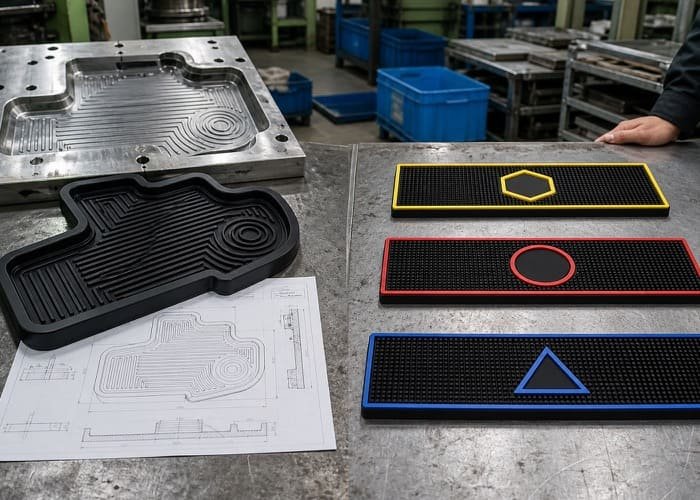
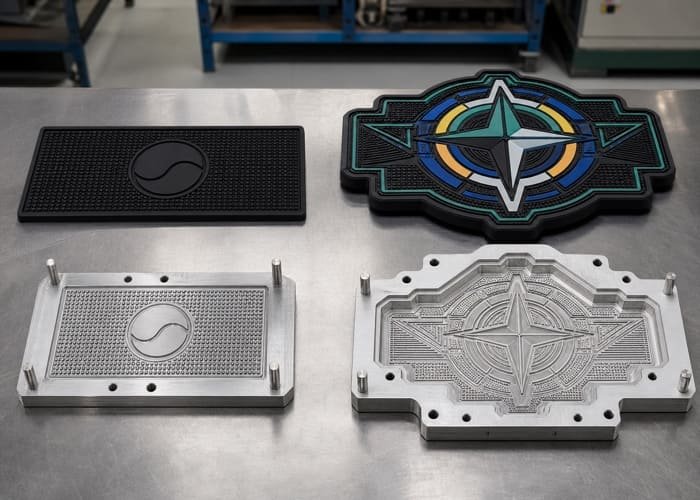
Once you approve the final artwork, we begin the physical udvikling af specialfremstillet PVC barmåtteform. This process uses the digital file to guide a CNC (Computer Numerical Control) machine, which meticulously engraves your design into a block of metal, creating the master mold that will form every one of your mats.
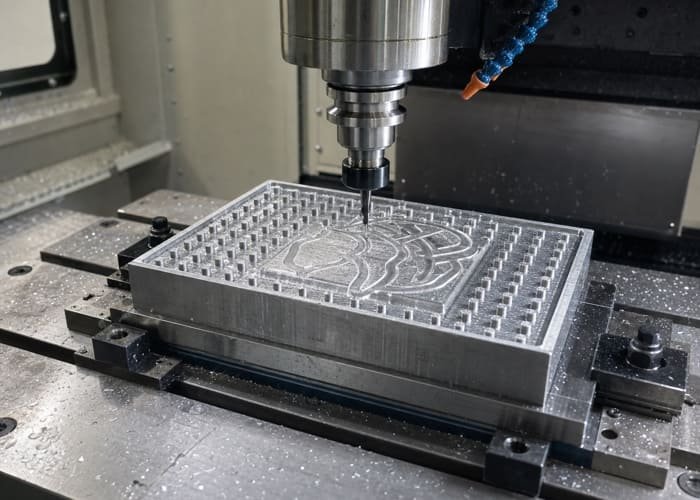
Dyk dybere: Fra en digital fil til et fysisk værktøj
Det er her dit design kommer til live. Præcisionen af moderne teknologi giver os mulighed for at fange utrolig fine detaljer fra dit logo og overføre dem perfekt til et holdbart produktionsværktøj.
Prototyping og prøveproduktionstrin
Når formen er skabt, vi producerer den første fysiske prøve. Dette er ikke bare en hurtig test; det er en miniatureversion af vores fulde produktionsproces, sikre, at det, du ser, er det, du får i din masseordre. Trinene er som følger:
- Farvetilpasning: Vores teknikere blander den flydende PVC præcist for at matche de godkendte Pantone-farvekoder.
- Udlevering: Brug af dispensere med fin spids, de fylder manuelt de forskellige hulrum i formen med den tilsvarende farvede PVC. Dette er en meget dygtig opgave, især til indviklede logoer med mange farver.
- Tørringslogo: The filled sections are partially cured or "baked" for at forhindre, at farverne bløder ind i hinanden.
- Injiceret væske: Grundfarven til måtten hældes eller sprøjtes ind i formen, omkring de allerede indstillede logodetaljer.
- Vakuum: Formen placeres i et vakuumkammer for at fjerne eventuelle luftbobler, sikre en solid, fejlfri overflade.
- Ovnstøbning: Hele formen opvarmes i en ovn ved en bestemt temperatur for at hærde PVC fuldstændigt, at gøre det fra en væske til det fleksible, holdbart solidt du ved.
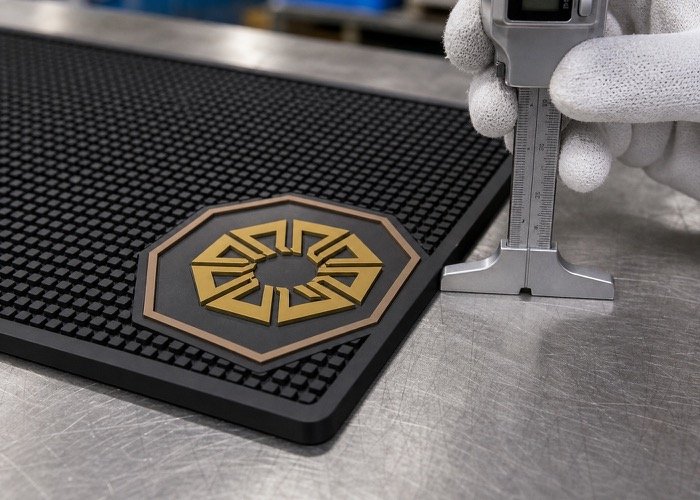
- Afformning & Inspektion: Når den er afkølet, den færdige barmåtte tages forsigtigt ud af formen. Vores kvalitetskontrolteam inspicerer derefter det i forhold til det godkendte kunstværk for nøjagtighed, farve, og eventuelle defekter.
Hvorfor en fysisk prøve er ikke-omsættelig
Et digitalt bevis er fantastisk, men intet slår at holde det faktiske produkt. Den fysiske prøve giver dig mulighed for:
- Bekræft farver: Se, hvordan Pantone-farverne ser ud i det virkelige liv, under forskellig belysning.
- Mærk kvaliteten: Test vægten, fleksibilitet, og måttens tekstur.
- Bekræft detaljer: Sørg for, at 3D-elementerne har den rigtige højde, og at detaljerne er skarpe.
Masseproduktion begynder først, når du har godkendt denne fysiske prøve.
What Influences the Cost and Timeline of Mold Development?
At forsøge at sætte et budget for et tilpasset projekt uden en klar forståelse af omkostningsdriverne kan være en stor kilde til frustration. For at sikre gennemsigtighed, det er vigtigt at vide, hvilke faktorer der påvirker den endelige pris og produktionsplan.
De vigtigste faktorer, der påvirker omkostningerne og tidslinjen for udvikling af specialfremstillet PVC barmåtteform er måttens fysiske størrelse, kompleksiteten af designet, og uanset om du opretter en helt ny brugerdefineret form eller udnytter en af vores eksisterende formformer.
Dyk dybere: Opdeling af projektvariablerne
At forstå disse variabler hjælper dig med at træffe informerede beslutninger for at balancere din kreative vision med dit budget og din tidslinje. Som din produktionspartner, vores opgave er at guide dig gennem disse muligheder.
Størrelse og kompleksitet
Dette er den mest direkte omkostningsdriver.
- Størrelse: En større måtte kræver en større blok metal til formen og mere rå PVC-materiale pr. enhed. CNC-bearbejdningstiden øges også med størrelsen.
- Kompleksitet: Et design med ti farver er mere komplekst end et design med to. Hver farve kræver en separat, manuel dispenseringstrin og en delvis hærdningscyklus, hvilket øger arbejdstiden for både prøveudtagning og masseproduktion. Indviklet, fine detaljerede logoer kræver også mere præcise (og langsommere) CNC gravering.
New Mold vs. Vores eksisterende skimmelbibliotek
Dette er et nøgleområde, hvor vi kan hjælpe kunder med at optimere omkostningerne.
- Ny brugerdefineret form: Hvis du har brug for en helt unik form og størrelse, vi skaber en helt ny form fra bunden. Dette medfører et engangsgebyr for værktøj, som dækker omkostningerne til metal og CNC programmering/bearbejdning.
- Eksisterende Skimmelsvamp: Vi har et massivt bibliotek med hundredvis af eksisterende forme til standard barmåtte former og størrelser. Hvis en af disse virker for dig, formgebyret kan være væsentligt lavere eller endda frafaldes, as we only need to create a smaller, new "logo insert" for the existing mold base. This is a popular choice for promotional product distributors and brands working within a tight budget. Our MOQ of 200 pieces is based on using these existing molds.
Produktions ledetider
Clear timelines are crucial for planning your marketing campaigns or inventory.
- Prøveleveringstid: 7 dage[^3]. This covers everything from CNC machining the mold to producing and inspecting the first physical sample.
- Mass Production Lead Time: 20-30 dage. This clock starts after you have approved the physical sample. The exact time within this range depends on the order quantity and the complexity of the design.
By discussing these factors upfront, we can tailor a production plan that aligns perfectly with your goals.
Ofte stillede spørgsmål
Hvad er den mindste ordremængde (MOQ) for custom PVC bar mats?
Vores standard MOQ er 200 styk pr design, pr farve. Dette er typisk baseret på at bruge en af vores eksisterende forme, som hjælper med at holde omkostningerne nede for vores kunder. Til helt nye formdesigns, MOQ'en kan diskuteres baseret på projektets detaljer.
Kan du hjælpe, hvis jeg ikke har en professionel designfil til mit logo?
Absolut. Dette er en almindelig situation, og vores 24-timers designskitseservice er designet til at løse det. Bare send os det bedste kvalitetsbillede, du har (som en JPG eller PNG i høj opløsning), og vores designere kan konvertere det til et vektorformat, der er egnet til produktion.
Hvor længe holder en PVC barmåtteform?
En vellavet form, som dem vi producerer, er ekstremt holdbar. En aluminiumsform kan typisk producere hundredtusindvis af enheder, mens en stålform kan holde til over en mio. Til langt de fleste OEM- og salgsfremmende projekter, the mold will last far beyond your production needs.
Can you produce mats that meet specific regulations like REACH or California Prop 65[^4]?
Ja. While our standard commercial-grade materials are safe for their intended use, we regularly work with brands that have strict compliance requirements for EU, OS, or Amazon markets. We can arrange for third-party testing for REACH, SVHC, Phthalates, Prop 65, and more upon request.
Konklusion
De udvikling af specialfremstillet PVC barmåtteform process, when broken down, is a logical and collaborative partnership. It begins with your vision—a logo and dimensions—and moves through four clear stages: a free design proof, your artwork approval, the creation of a physical mold and sample, and finally, full-scale production. By demystifying each step, from CNC machining to Pantone color matching, vi giver dig mulighed for at træffe informerede beslutninger og omdanne dit koncept til et reklameværktøj af høj kvalitet med tillid. Denne strømlinede rejse sikrer, at det endelige produkt matcher dit brands standarder perfekt.
Klar til at se dit brand på en tilpasset PVC barmåtte? Kontakt vores team i dag med dit logo og krav for at få en gratis, uforpligtende designskitse indenfor 24 timer.
Whatsapp: +86 15816822766 E-mail: sales01@superfectcraft.com
[^1]: "What is a Vector File & Sådan bruges & Create Them", https://www.adobe.com/creativecloud/design/discover/vector-file.html. Vektorfiler foretrækkes i fremstillingen, fordi de kan skaleres til enhver størrelse uden at miste opløsning, hvilket gør dem ideelle til præcise designs. Bevis rolle: mekanisme; kildetype: undervisning. Understøtter: Kilden skal forklare de tekniske fordele ved vektorfiler i fremstillings- og designprocesser.. [^2]: "Pantone", https://en.wikipedia.org/wiki/Pantone. The Pantone Matching System is widely used in manufacturing to standardize and ensure color accuracy across different production processes. Bevis rolle: generel_support; kildetype: encyklopædi. Understøtter: The source should confirm the role of the Pantone Matching System in ensuring color consistency in manufacturing.. [^3]: "How Long Does It Take to Make an Injection Mold?", https://jdiplastics.com/how-long-does-it-take-to-make-an-injection-mold/. Industry research indicates that creating a physical mold and sample for PVC products often takes 5-10 dage, depending on complexity. Bevis rolle: statistic; kildetype: forskning. Understøtter: The source should provide data or industry benchmarks on the typical time required for mold and sample production.. Omfangsnote: The timeline may vary based on specific project requirements and manufacturing capabilities. [^4]: "Proposition 65 - OEHHA - CA.gov", https://oehha.ca.gov/proposition-65. REACH and California Prop 65 regulations set strict standards for chemical safety in consumer products, including PVC items, to ensure they are free from harmful substances. Bevis rolle: generel_support; kildetype: government. Understøtter: The source should outline the requirements of REACH and California Prop 65 as they pertain to PVC products.. Omfangsnote: The source may not confirm specific compliance for the described product.