
Ordering a custom PVC bar mat seems simple, but you end up with a product that cracks, fades, or gives off a strong chemical smell. This reflects poorly on your brand and feels like a complete waste of your budget. The solution is to know what separates a premium mat from a cheap imitation before you place your order.
A high-quality PVC bar mat is defined by ten key standards: using new, eco-friendly raw materials; having a non-reflective matte finish; being made with a precision mold for clean logos; using high-adhesion ink; resisting alcohol and spills without degrading; remaining flexible without cracking; laying flat with uniform thickness; having zero surface defects; being formulated for low odor; and being produced under a fully traceable, standardized quality control system.

Now that you have the checklist, what do these standards actually look like in practice? Understanding these details is the key to sourcing a durable, professional product that truly represents your brand. Let’s dive into each of the ten standards one by one.
1. Why Are Eco-Friendly Raw Materials Essential for a High-Quality PVC Bar Mat?
Are you worried about product safety and meeting international regulations? Using the wrong raw materials can introduce harmful chemicals, leading to compliance failures and potential health risks for your staff and customers. Sourcing a mat made from certified, clean materials is non-negotiable for any serious brand.
The best mats start with 100% new, eco-friendly PVC resin. This ensures the final PVC bar mat is non-toxic, compliant with global safety standards like REACH and California Prop 65, and free from harmful substances like phthalates. It's the foundation for a safe, бат бөх, and brand-safe product.

The Difference is in the Pellets
At the molecular level, not all PVC is created equal. The distinction between a premium mat and a hazardous one often comes down to the choice between virgin materials and cheap, recycled alternatives.
- Virgin PVC: This is brand-new polymer resin that has never been processed before. It has a predictable chemical structure, making it stable, бат бөх, and free from unknown contaminants. We insist on using virgin PVC because it allows us to guarantee performance and safety.
- Recycled or Unregulated PVC: This material often comes from dubious sources. It can contain a cocktail of undesirable chemicals, including heavy metals and, most notoriously, phthalates. Phthalates are plasticizers that have been linked to health issues and are heavily restricted in the EU and US.
For any brand operating in Western markets, compliance is not optional. Here are the key regulations we help our clients navigate:
| Regulation | Region | What It Governs |
|---|---|---|
| ХҮРЭХ / SVHC | European Union | Restricts "Substances of Very High Concern," including many phthalates. |
| Калифорниа проп 65 | АНУ (Калифорни) | Requires warnings for products containing chemicals known to cause cancer or birth defects. |
| LFGB / FDA | ЕХ / АНУ | Standards for food-contact materials (though bar mats aren't direct contact, this indicates high purity). |
| Phthalate-Free | Global | A general standard ensuring the most common harmful plasticizers are absent. |
Үйлдвэрлэгчийн хувьд, we can arrange third-party testing to provide full certification for your specific market. Starting with clean, eco-friendly raw material makes this process smooth and predictable, ensuring your PVC bar mat is safe for everyone who uses it.
2. What Makes a Matte Finish Superior for a Professional Bar Mat?
Have you ever noticed how some bar mats have a cheap, glossy sheen that reflects every overhead light? This glare is not only distracting but also highlights every single scratch and smudge, making the mat look worn out almost immediately. A matte finish is the professional solution to this common problem.
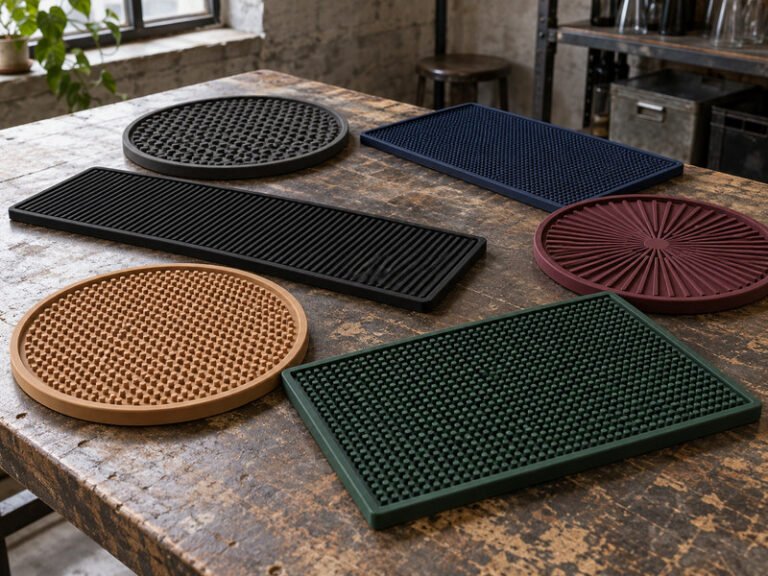
A matte or frosted surface is the superior choice for a PVC bar mat because it diffuses light, eliminating glare and creating a sophisticated, premium appearance. This texture also does a much better job of hiding minor scuffs and fingerprints, keeping your branded mat looking clean and new for longer.
Texture, Light, and Perceived Value
The finish of your bar mat has a direct impact on how customers perceive your brand. It's a subtle detail, but it speaks volumes.
A glossy finish is often the default for low-cost producers because it requires less precision in the molding process. Гэсэн хэдий ч, the results are subpar in a professional environment:
- High Glare: Under the bright, directional lighting found in bars and salons, a glossy mat acts like a mirror. It can create distracting reflections that take attention away from the logo itself.
- Shows Imperfections: Every tiny scratch, water spot, and fingerprint is magnified on a shiny surface.
- Looks and Feels Cheap: The high-gloss look is often associated with low-quality plastics, which can devalue the brand logo printed on it.
Үүний эсрэгээр, а царцсан өнгөлгөө is the hallmark of a thoughtfully designed product.
- Sophisticated Aesthetics: The soft, non-reflective surface feels more premium and looks more integrated with high-end bar tops made of wood, чулуу, or stainless steel.
- Enhanced Legibility: By eliminating glare, a matte surface makes your logo easier to read from any angle. The focus remains on your brand, not on distracting light reflections.
- Practical Durability: The slightly textured surface is more resilient to showing everyday wear and tear. It maintains its sophisticated look even after months of heavy use.
I remember a client who switched from a glossy supplier to us. They said their bartenders were constantly wiping down the old mats because the glare made the bar look dirty. After switching to our matte-finish mats, that problem disappeared, and they felt the new mats better represented their premium liquor brand.
3. How Does Mold Precision Affect Your PVC Bar Mat's Logo?
Have you ever seen a custom product where the logo looks "soft," with blurry edges or colors seeping into one another? This is a direct result of a low-quality, imprecise mold. It instantly makes your brand look unprofessional and sloppy, defeating the purpose of a custom mat.
A precision-machined, multi-level embossed mold is absolutely critical for a high-quality PVC bar mat. It creates sharp, clean dividing lines between different colors, ensuring your logo is rendered with perfect clarity and fidelity to the original artwork. There is no color bleeding, only crisp, professional details.

From Digital Design to Physical Reality
Creating a vibrant, multi-color PVC mat is a fascinating process that blends digital design with industrial craft. The mold is the most important tool in this process.
The Low-Quality Method: Some manufacturers cut corners by using crude, manually engraved molds or single-level molds. They try to create color separation by simply pouring different colors next to each other. The result is predictable:
- Color Bleeding: Without physical barriers, the liquid PVC colors mix at the edges, creating a messy, unprofessional look.
- Blurry Details: Fine text and intricate logo elements lose their sharpness and become illegible.
- Inconsistent Results: The quality can vary wildly from one mat to the next within the same batch.
The High-Quality SuperfectCraft Method: We use a fundamentally different approach based on precision engineering.
- Digital Separation: First, our design team (who can provide a sketch in 24 цаг) separates your artwork into different layers, one for each color.
- CNC Machining: We use computer numerical control (CNC) machines to engrave an aluminum mold. Each color in your design gets its own "level" or "channel" in the mold, separated by a thin, sharp wall.
- Layered Dispensing: During production, liquid PVC of a specific color is precisely dispensed into its designated channel. The physical walls of the mold prevent any mixing.
This multi-level mold structure is the secret to achieving the "3D embossed" нөлөө. It ensures that every line of your logo is perfectly defined and every color is vibrant and contained. When you run your finger over the surface, you can feel the quality and the crisp separation between the elements.
4. Why is High-Adhesion Ink Crucial for a Durable PVC Bar Mat?
Your branded logo looks fantastic on day one, but after just a few weeks of use and cleaning, it starts to peel, бүдгэрэх, or rub off. This is a common failure for printed mats and completely undermines your investment. The problem isn't the cleaning; it's the ink itself.
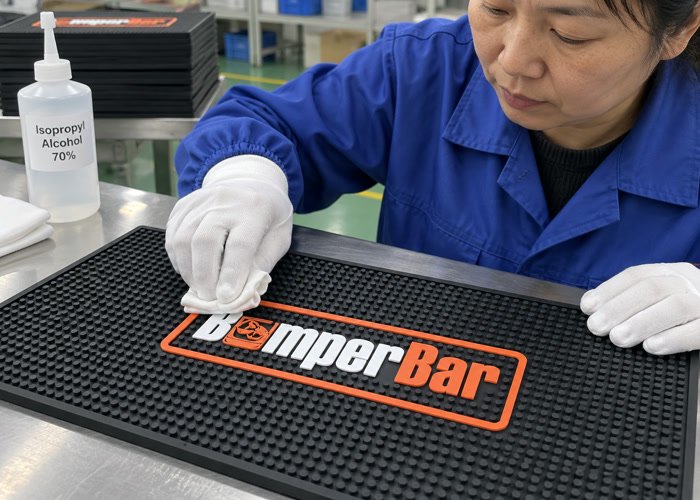
High-adhesion ink is a special formulation designed to chemically bond with the PVC surface, rather than just sitting on top of it. This makes your logo incredibly resistant to alcohol, detergents, and the physical abrasion of glasses and tools, ensuring it stays crisp and vibrant for the life of the mat.
The Science of a Lasting Logo
For mats with complex, photorealistic, or gradient designs, we often use printing instead of multi-color molding. But not all printing is the same. The durability of your logo depends entirely on the ink chemistry and its interaction with the PVC.
Standard Printing Ink:
- Mechanism: Sits on the surface of the PVC like a layer of paint.
- Weakness: It has poor adhesion and creates a weak physical bond. When exposed to solvents like alcohol (which is everywhere in a bar!) or the friction from repeated wiping, the ink layer quickly breaks down, flakes, or fades. This is why cheap promotional items often look terrible after a short time.
Specialized High-Adhesion PVC Ink:
- Mechanism: This ink contains special solvents that slightly "melt" the very top layer of the PVC upon application. As the solvents evaporate, the ink's pigment becomes permanently fused with the PVC substrate. It's not on the surface; it's in the surface.
- Strength: Because the logo is now an integral part of the PVC bar mat itself, it exhibits exceptional durability. We perform rigorous testing to ensure our printed logos can withstand:
- Alcohol Wipes: We test against common spirits and cleaning alcohols to ensure no fading or smudging.
- Abrasion Tests: We use standardized tests to simulate months of wear and tear from glasses, tools, and cleaning cloths.
- Detergent Soaking: The logo must remain stable even when soaked in common bar detergents.
Choosing a supplier that invests in high-adhesion ink means your brand's integrity is protected. Your logo will look as good on day 365 as it did on day one.
5. What Happens When a Bar Mat Isn't Resistant to Spills?
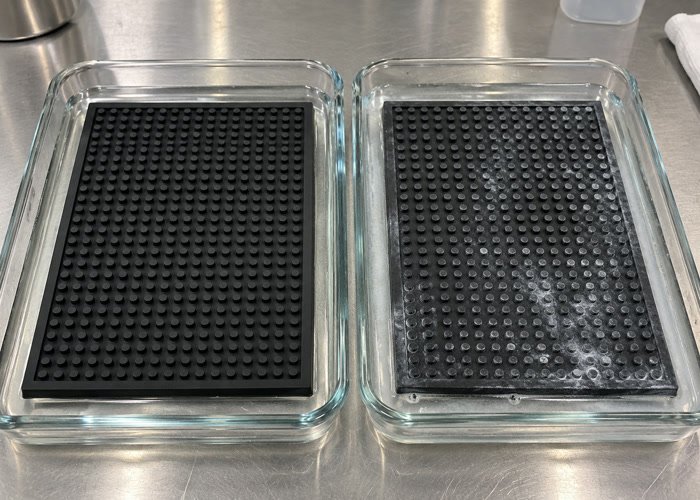
You’ve probably seen it: a bar mat that looks chalky, feels sticky to the touch, or has a weird white film on its surface, even after being cleaned. This is what happens when a mat degrades from constant exposure to liquids. It looks unhygienic and reflects poorly on the establishment.
A quality PVC bar mat is formulated to be chemically inert to common bar spills like beer, liquor, and sugary sodas. It will not develop "blooming" (a white, frosty residue) or become tacky after prolonged soaking. It remains easy to clean, non-porous, and hygienic throughout its service life.
The Enemy Within: Plasticizer Migration
The sticky feeling and white film are symptoms of a process called plasticizer migration, also known as "blooming" or "frosting."
Here’s what’s happening in a low-quality mat:
- Poor Formulation: To make PVC flexible, manufacturers add chemicals called plasticizers. In cheap formulations, these plasticizers are not well-bonded within the PVC matrix.
- Chemical Reaction: When the mat is exposed to liquids, especially alcohol and oils, these solvents act as a catalyst. They draw the poorly bonded plasticizers out of the PVC and onto the surface.
- Surface Degradation: This migrated plasticizer appears as a sticky, oily, or chalky white residue. It's almost impossible to clean off because it’s literally the mat's own ingredients leaching out.
A mat that suffers from this issue is fundamentally flawed. Not only does it look and feel terrible, but it also becomes harder to clean as the sticky surface traps more dirt.
А high-quality PVC formulation, like the ones we use, locks the plasticizers firmly within the polymer structure. We use stable, high-molecular-weight plasticizers that are far less prone to migration. This chemical stability means our mats can be submerged in water, doused in alcohol, and covered in sugary syrups without breaking down. You can simply rinse them off, and they return to their original state—clean, non-sticky, and ready for service.
6. Why Should a PVC Bar Mat Be Both Flexible and Durable?
A bar mat that feels stiff and brittle out of the box is a major red flag. This type of mat is prone to cracking when you roll it up for cleaning or storage. This inflexibility signals a poor-quality material that will age quickly, forcing you to replace it far sooner than expected.
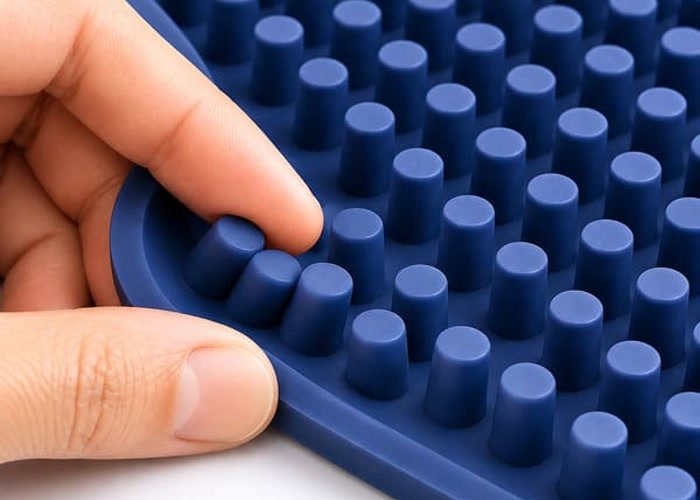
A premium PVC bar mat must strike the perfect balance between flexibility and toughness. It should be pliable enough to be rolled or bent without stress but durable enough to resist tearing and cracking. This quality, known as fold-resistance, is a key indicator of a superior polymer blend and a long service life.
The Balance of Pliability and Strength
The flexibility of a PVC product is determined by its formulation, specifically the type and amount of plasticizer used. Getting this recipe right is a science.
- Too Little Plasticizer (or the Wrong Kind): The mat becomes rigid and brittle. It might feel sturdy at first, but it has low tensile strength. When bent, the polymer chains are stressed and break, leading to visible cracks. This is common in mats made with cheap fillers or improper curing.
- Too Much Plasticizer: The mat becomes overly soft and gummy. It may be flexible, but it lacks structural integrity and can tear easily. It also won't provide a stable surface for glassware.
The ideal formulation creates a product with high tear resistance and excellent elastic memory.
- Elastic Memory: This means that after being rolled, bent, or stored, the mat returns to its original flat shape without retaining any creases or stress marks.
- Tear Resistance: The material is strong enough to handle the daily abuse of a busy service environment, including being dropped, dragged, or having heavy equipment placed on it.
Цаашлаад, a well-made PVC bar mat is also resistant to aging from environmental factors. Exposure to UV light (even from indoor lighting) and temperature fluctuations can cause inferior PVC to become brittle over time. Our formulations include UV stabilizers and are thermally stable to ensure the mat remains flexible and durable for years, not just months.
7. How Does Uniform Thickness Prevent a PVC Bar Mat from Warping?
There is nothing more frustrating than a bar mat that refuses to lay flat. Curled edges create an unstable surface for glassware, while warped or buckled centers just look unprofessional. This annoying issue is almost always caused by a lack of uniform thickness during the manufacturing process.
A perfectly uniform thickness across the entire mat is essential for dimensional stability. This precision ensures the PVC bar mat lays perfectly flat on the counter from day one, with no curling at the edges or distortion in the middle. It provides a reliable and professional foundation for serving drinks and organizing tools.

The Importance of a Controlled Process
Achieving consistent thickness is a direct reflection of the manufacturer's control over their production process.
The problem of uneven thickness typically stems from one of two issues:
- Imprecise Molds: If the mold itself is not perfectly level and milled to a consistent depth, the final product will mirror these imperfections. One side of the mat might be thicker than the other.
- Uncontrolled Material Flow: During the liquid PVC dispensing or injection phase, the material must flow evenly and fill the mold completely. If the viscosity is wrong or the dispensing is rushed, some areas will get more material than others.
When a mat has thick and thin spots, internal stresses are created as the material cools and cures. The thicker parts cool slower than the thinner parts, causing the entire mat to pull and twist. This results in:
- Curling Edges: The edges lift off the counter, creating a tripping hazard for glasses and looking untidy.
- Warping/Buckling: The center of the mat may not make full contact with the surface, allowing it to slide around.
- Instability: Glassware placed on an uneven surface is more likely to tip over, leading to spills and breakage.
SuperfectCraft дээр, we ensure dimensional stability through a multi-pronged approach. Our CNC-machined molds are milled to extremely tight tolerances. The viscosity of our PVC and the speed of our automated dispensing machines are carefully calibrated for each mat design. This guarantees that every single PVC bar mat we produce has a consistent thickness from corner to corner, so it will lay flat and perform flawlessly right out of the box.
8. Why Do Fine Details Like Trimmed Edges Matter on a Bar Mat?
You’ve just unboxed your order of brand new custom mats, but on inspection, you find rough edges, small plastic burrs, and other surface blemishes. These may seem like minor issues, but they are tell-tale signs of rushed production and poor quality control. These little defects detract from the premium feel you're trying to achieve.
A flawless finish, characterized by finely trimmed edges and a blemish-free surface, is a critical standard for a high-quality product. This meticulous attention to detail signals a manufacturer that takes pride in their work and delivers a safe, мэргэжлийн, and truly finished PVC bar mat.

The Final Step: Finishing and Quality Control
The journey of a bar mat doesn't end when it comes out of the oven. The finishing process, or post-production, is where a good product becomes a great one.
After a mat is demolded, there is often a tiny amount of excess material around the perimeter, known as "flashing" or "burrs."
- The Low-Quality Approach: Workers quickly and carelessly trim this excess, or sometimes skip the step entirely. This leaves behind sharp, ragged edges that can even be a minor safety hazard. They may also ignore small surface defects like air bubbles or specks of dust that were trapped during molding.
- The High-Quality Approach: Meticulous finishing is a dedicated step in our quality control process.
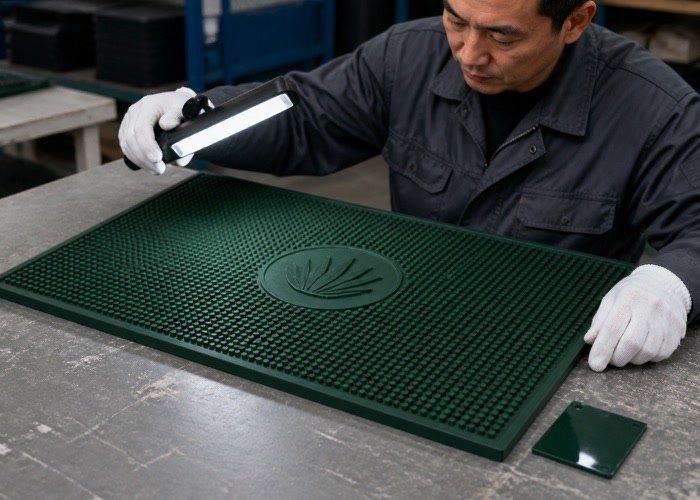
- Manual Trimming: Each mat is inspected, and any excess material is carefully trimmed by hand with specialized tools to create a perfectly smooth, clean edge.
- Surface Inspection: The entire surface, including the logo, is checked for any imperfections such as air bubbles, color spots, or blemishes. Any mat that doesn't meet our zero-defect standard is rejected.
- Final Inspection: Before a single mat is packed for shipment, it undergoes a final comprehensive inspection to ensure it meets all approved specifications, from color accuracy to dimensional stability.
This commitment to a flawless finish ensures that the product you receive is a perfect representation of your brand's own commitment to quality. When your customers and staff interact with your branded materials, the clean edges and smooth surface convey a sense of professionalism and care that cheap, unfinished products simply can't match.
9. What Causes a PVC Bar Mat to Have a Strong Chemical Smell?
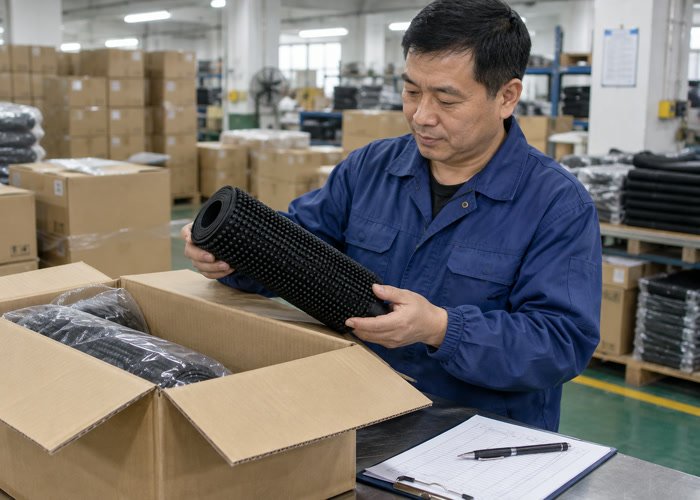
Opening a box of new products only to be hit by a powerful, unpleasant chemical smell is an immediate turn-off. This odor is a significant red flag, indicating the use of cheap, volatile materials. In an enclosed space like a bar or salon, that smell can linger and create a negative experience for everyone.
A strong odor in a PVC bar mat is caused by volatile organic compounds (VOCs) and unstable, low-grade plasticizers. A premium mat is made with a low-odor formulation and is properly cured to eliminate residual volatiles, ensuring it is neutral and pleasant to use right out of the box, even in warm environments.
Deconstructing the "New Plastic" Smell
While many new products have a faint scent, a pungent, headache-inducing chemical smell is a sign of a manufacturing defect.
The primary culprits are:
- Volatile Organic Compounds (VOCs): These are unstable chemicals found in low-quality PVC resins and solvents. They "off-gas" at room temperature, releasing that characteristic unpleasant smell. Beyond the bad odor, VOCs can contribute to poor indoor air quality.
- Improper Curing: The PVC matting process involves heating the liquid PVC in an oven to solidify (cure) it. If this process is rushed or done at the wrong temperature, the chemical reactions are incomplete. This traps residual solvents and unreacted monomers in the mat, which then slowly release over time as a foul odor.
- Cheap Plasticizers: As discussed earlier, low-grade plasticizers are not only prone to migration but are also often more volatile and have a stronger intrinsic odor.
A manufacturer committed to quality addresses this issue at every stage. We start with high-purity, low-VOC raw materials. More importantly, our curing process is precisely controlled. We use industrial ovens with calibrated temperature zones and timing to ensure the PVC cures completely, driving off any residual volatiles and locking the formulation in a stable, odorless state.
For a product that will be used in a hospitality or service environment—where ambiance and customer comfort are paramount—a low-odor or zero-odor PVC bar mat is not a luxury; it's a necessity.
10. Why is Standardized QC and Traceability the Final Mark of a Quality Supplier?
What happens if you discover an issue with a batch of mats weeks after delivery? Can your supplier identify the root cause, or do they just offer a shrug? A lack of process control and documentation means inconsistency is inevitable and problems are impossible to trace.
A fully standardized quality control (QC) system and complete product traceability are the ultimate standards of a professional PVC bar mat manufacturer. It demonstrates a commitment to consistency, accountability, and continuous improvement, giving you confidence that every order will meet the same high standard.
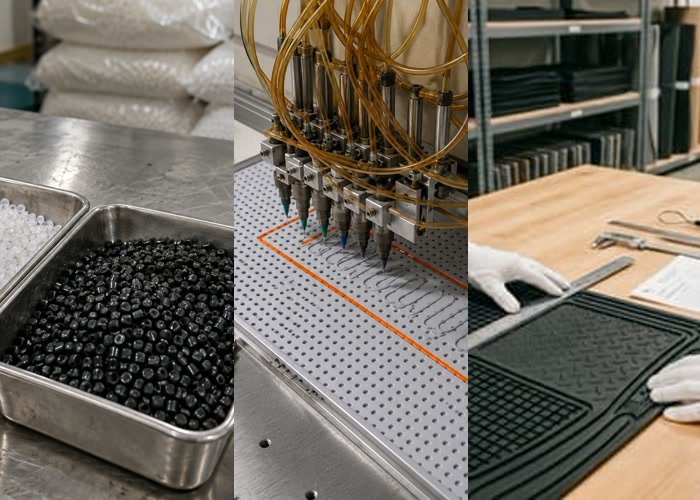
Building Trust Through Process
A beautiful sample is nice, but consistent quality across thousands of units is what truly matters for a B2B client. This is only achievable through a rigid, documented process.
A comprehensive QC and traceability system should include:
- Ирж буй материалын үзлэг (IQC): Every batch of raw PVC, pigment, and ink is tested upon arrival to ensure it meets our specifications before it ever enters the production line.
- Баталгаажуулалтын жишээ: We produce a physical pre-production sample for your approval. Mass production does not begin until you are 100% satisfied. This sample becomes the "golden standard" against which the full batch is measured.
- In-Process Quality Control (IPQC): Our QC technicians monitor the production line at key stages, checking for color accuracy, dispensing precision, and proper curing. This catches any deviations early.
- Final Quality Control (FQC): Every single finished mat is inspected before packing, checking against the 9 standards we've already discussed: материал, finish, logo clarity, ink, chemical resistance, уян хатан байдал, flatness, trimming, and odor.
- Traceability Records: Each production run is assigned a lot number. We maintain detailed records linking this number to the specific raw materials used, the machines it was run on, the date of production, and the QC reports. If an issue ever arises, we can trace the product's entire history to perform a root cause analysis.
This level of discipline is what separates a factory from a true OEM/ODM partner. It's how we build long-term trust with brand owners, импортлогчид, and distributors. You aren't just buying a PVC bar mat; you are investing in a reliable, transparent, and quality-assured supply chain.
Байнга асуудаг асуултууд
What's the difference between a PVC and a rubber bar mat?
А PVC bar mat offers superior color vibrancy and logo detail, making it ideal for branding and promotional use. It's created through a liquid dispensing process that allows for intricate, multi-color 3D logos. Rubber mats are typically compression molded, heavier, and often limited to single-color or simple designs, but they offer excellent grip and heat resistance.
How long should a high-quality PVC bar mat last?
A premium PVC bar mat, manufactured according to the ten standards outlined above, should last for several years even in a busy commercial environment. Its lifespan depends on its resistance to chemical degradation from spills, physical cracking from handling, and logo fading from cleaning. Cheap mats may only last a few months before showing significant wear.
Can PVC bar mats be made in custom shapes and sizes?
Тиймээ, absolutely. As an OEM/ODM manufacturer, we create a unique mold for each custom project. This means you can specify the exact length, өргөн, and even a custom die-cut shape for your PVC bar mat. This allows you to create a product that perfectly fits your bar, workstation, or promotional campaign.
Is there a minimum order quantity (MOQ) for custom PVC bar mats?
Тиймээ, because a custom mold needs to be created, there is typically an MOQ to make the production feasible. SuperfectCraft дээр, Манай стандарт MOQ байна 200 pieces per design and color when using one of our many existing mold sizes. For a completely custom shape and size, the MOQ may be slightly different.
Дүгнэлт
Distinguishing a truly high-quality PVC bar mat from an inferior one requires looking beyond the surface price. The ten standards—from the purity of the raw materials to the traceability of the production process—are what guarantee a durable, safe, and professional product. A mat built on these principles will not crack, бүдгэрэх, нугалах, or emit odors. It will lay flat, showcase your logo with perfect clarity, and withstand the rigors of a busy commercial environment, protecting your brand's image and providing real value for your investment.
If you're looking for a reliable OEM/ODM partner who understands these standards and can deliver a superior PVC bar mat tailored to your brand, we're here to help. Contact us today to discuss your project, and let's create something exceptional together.