
Finding a reliable manufacturing partner to create custom products can be a source of major stress. When you need to verify an OEM bar mat factory, you're not just buying a product; you're entrusting your brand's image to a supplier. Unfortunately, many companies claim to be OEMs but are actually just middlemen, leading to communication breakdowns, quality disasters, and frustrating delays. This guide provides the clear, actionable criteria you need to distinguish a true manufacturing partner from a mere distributor.
To verify a true OEM bar mat factory, you must confirm they have essential in-house capabilities. The most critical signs include a dedicated CNC mold-making workshop, a complete and independent production line from material mixing to packing, an internal quality control lab, and the ability to create custom molds for sampling. A genuine OEM will also offer one-stop custom packaging and have a portfolio of long-term brand partnerships, proving they are far more than a simple distributor of stock goods.
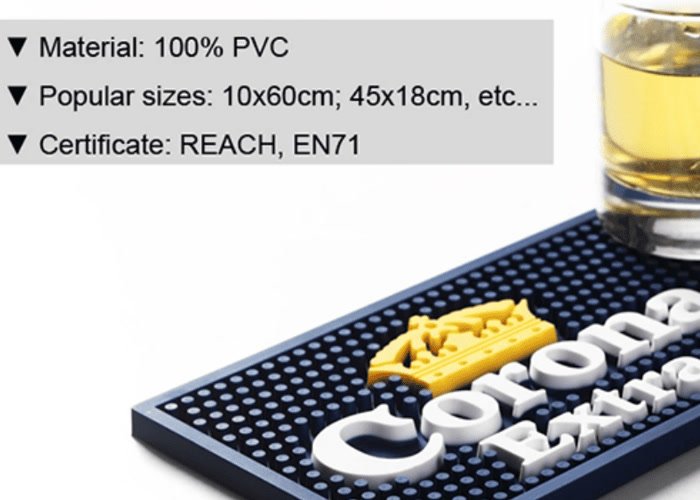
Knowing the high-level signs is the first step, but the real confidence comes from knowing how to check for them. Digging into a potential supplier's capabilities is easier than you think if you know the right questions to ask and the evidence to look for. Let's break down each verification point so you can choose your next factory partner with total certainty.
Does the factory have its own CNC mold workshop?
You've spent weeks perfecting a unique design for your bar mat, only to have a potential supplier push you toward one of their "existing popular templates." This is a classic red flag. It often means they lack the fundamental ability to create something truly custom from scratch.
A genuine OEM partner must have an in-house CNC mold workshop. This is the heart of customization. It gives the factory complete control to transform your digital design files into a precise, physical mold for production, ensuring accuracy, speed, and confidentiality for your design.
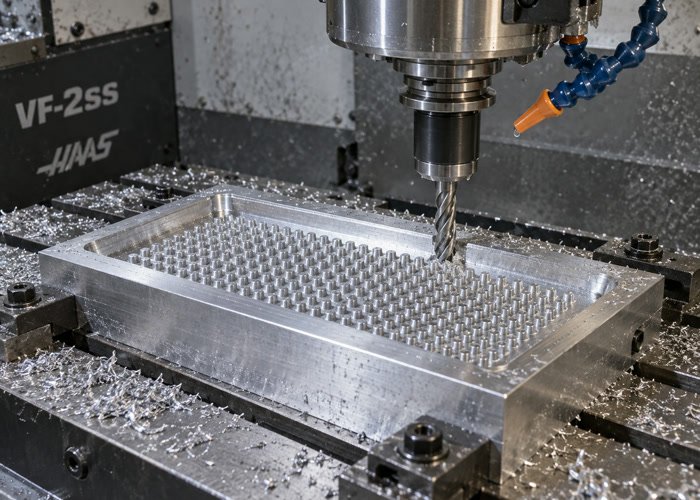
Tauchen Sie tiefer ein: Why In-House Mold Making is Non-Negotiable
The ability to create molds in-house is the clearest dividing line between a real factory and a trading company. A trader has to outsource this critical step, which introduces numerous problems for you, the client.
- Speed and Control: When a factory has its own CNC machines and technicians, they control the schedule. They can create a sample mold in a few days. I’ve seen this firsthand; our team can often turn a client’s approved design into a physical mold ready for sampling in just 3-4 Tage. An outsourced process can add weeks to your timeline and introduces communication errors between the trader and the third-party mold maker.
- Cost Efficiency: Every middleman adds a markup. By outsourcing mold creation, a trading company passes that extra cost on to you. An integrated factory handles this as part of a streamlined process, offering more competitive pricing for true custom work.
- Intellectual Property Protection: Your design is your asset. When a design file is sent to an unknown, third-party mold shop, you lose control over who sees it. Keeping mold production in-house under one roof is the best way to protect your IP and prevent your unique design from being "shopped around" to other clients.
- Precision and Revisions: What if the first sample isn't quite right? An in-house team can make micro-adjustments to the mold quickly and efficiently. A trader has to go back to their supplier, who then has to negotiate with the mold maker, adding significant delays over even the smallest change.
How to Verify Their Mold-Making Capability:
- Ask for a Video Tour: Don't just ask "Do you make your own molds?". Instead, say, "Could you please send me a short video of your CNC machine in operation, perhaps carving a mold?"
- Request Specific Photos: Ask for photos of their mold workshop and some recently completed molds. A real factory will have this media readily available.
- Discuss the Sample Process: A factory with in-house capabilities will confidently detail their process and timeline. Zum Beispiel, at SuperfectCraft, our standard sample lead time is just 7 Tage because we control the entire process from design sketch to final sample. A vague or lengthy timeline is a warning sign.
Can you see a complete production line at the OEM bar mat factory?
You approved a perfect pre-production sample, but the final shipment is a mess of inconsistencies—some mats are the wrong shade, others have sloppy logos. This nightmare scenario is common when your "supplier" is secretly outsourcing mass production to a network of smaller, less-qualified workshops.
A real OEM bar mat factory operates a complete, end-to-end production line under one roof. This integrated process should cover every step, from raw material preparation and color matching to automated dispensing, molding, curing, trimming, and final inspection.
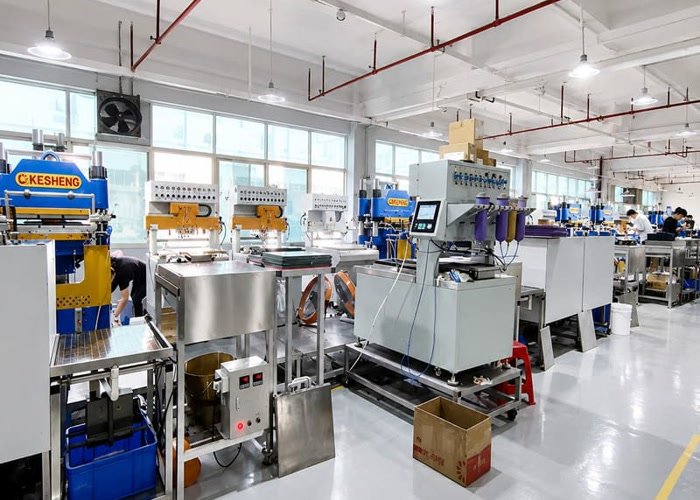
Tauchen Sie tiefer ein: The Anatomy of a Real Production Line
A trading company can show you a showroom full of finished products. Only a true manufacturer can show you the products being made. Consistency and quality are born on the production line, so understanding its stages is crucial.
Here are the key production stages you should be able to see at a legitimate OEM bar mat factory:
- Material Preparation & Farbabstimmung: This is where brand consistency begins. The factory should have a dedicated station with precision scales and Pantone color books to mix the PVC, Silikon, or rubber to your exact brand color specifications.
- Automated Dispensing: Look for machines—often robotic arms—that inject the colored liquid material into the molds. This automation is key for ensuring every mat has a sharp, clean, and identical logo without spillage or "bleeding" Farben. Manual dispensing by hand is slower and far more prone to errors.
- Molding & Curing: After the material is dispensed, the molds are moved into baking or curing ovens. The factory must have precise control over temperature and time to ensure the mat is durable, flexible, and properly set.
- Entformen, Trimming, and Inspection: This is the finishing stage. Workers remove the finished mats from the molds, trim away any excess material (flashing), and perform the first round of quality checks.
How to Verify the Production Line:
- Demand a Live Video Call: The most effective method. Ask your contact to walk the factory floor with their phone, showing you each station in action. Ask them to show a product moving from the dispensing machine to the oven. A trader can't do this.
- Ask About Production Capacity: A real factory knows its numbers. Ask, "What is your daily or monthly production capacity for a standard-sized bar mat?" They should be able to give you a clear number (z.B., "We can produce 1,000 units per day"). A vague answer like "don't worry, we can handle it" is a red flag.
- Review Their Company Profile: Look for photos and videos on their website or Alibaba page that show the factory floor, not just product showrooms. Do the workers in the photos wear a uniform with the factory's logo? These small details indicate a cohesive, managed operation.
Does the OEM bar mat factory have an independent quality control process?
You are launching in a market with strict regulations like the EU or California, and you're worried about product safety and compliance. A supplier who dismisses your concerns with a casual "it's fine, no problem" is creating a massive risk for your business. You need a partner who takes quality and compliance seriously.
A reliable OEM bar mat factory must have a robust, independent quality control process integrated throughout production. This includes a dedicated team or lab for final inspections and a clear system for facilitating third-party compliance testing for regulations like REACH, FDA, or California Prop 65.

Tauchen Sie tiefer ein: Deconstructing a Professional QC System
"Quality Control" is more than just a final glance before boxing. A professional system is a multi-stage process designed to catch issues early and ensure every single unit meets the approved standard.
Here are the components of a trustworthy QC system:
- Incoming Quality Control (IQC): The process starts before production. The QC team should inspect all raw materials (z.B., PVC resins, color pigments) as they arrive from suppliers to ensure they meet specifications.
- In-Process Quality Control (IPQC): During production, QC staff should pull units directly from the line at various stages. They check for color accuracy against the approved Pantone, dimensional correctness, and logo clarity. This prevents a small error from affecting thousands of units.
- Final Quality Control (FQC): Before any product is packaged, a dedicated team should perform a 100% inspection of the finished goods. They look for cosmetic defects, structural integrity, and overall adherence to the golden sample. I once worked with a client whose previous supplier only did a 10% random check, which is how they ended up with a shipment where hundreds of units had a critical flaw.
Verifying Compliance Capabilities: A sophisticated OEM partner understands that compliance is not one-size-fits-all. Instead of giving a blanket "yes," they will guide you.
Don't ask: "Are your mats compliant?" Instead, ask: "Can you share a past report for a product you made that passed California Prop 65 testing?" or "What is your process for managing REACH SVHC testing for an order shipping to Germany?"
A knowledgeable factory like ours will explain that test requirements depend on the specific material, Farben, and printing used. We don't just promise compliance; we facilitate the testing with accredited third-party labs (like SGS, TUV, or Intertek) based on your target market's needs.
Here are some common tests an experienced OEM bar mat factory should be familiar with:
| Test / Regulation | Zielmarkt(s) | What it Primarily Tests For |
|---|---|---|
| ERREICHEN / SVHC | European Union | Presence of over 200 "Substances of Very High Concern" |
| Kalifornien Prop 65 | USA (California) | Presence of chemicals known to cause cancer or toxicity |
| LFGB / FDA | EU / USA | Safety for materials intended for contact with food |
| Phthalates Content | Global (especially EU/US) | Restricted plasticizers, particularly in PVC products |
| PAHs Test | EU (especially Germany) | Polycyclic Aromatic Hydrocarbons, common in rubber/plastic |
Does the supplier offer one-stop customization for packaging and accessories?
Your beautifully designed, high-quality bar mats have finally arrived, but they're stuffed into flimsy, generic plastic bags and thrown into a weak master carton. Many are damaged, and the unboxing experience is a complete letdown for your end customer. Now you have to find and manage a separate packaging supplier, adding another layer of cost and complexity.
A full-service OEM bar mat factory recognizes that the product experience extends beyond the mat itself. A true partner provides comprehensive, one-stop customization for packaging, labels, inserts, and even bundled accessories, demonstrating they manage the entire supply chain.
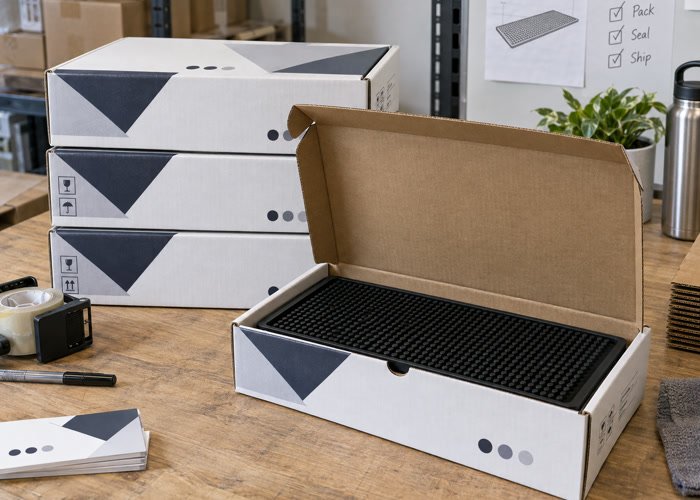
Tauchen Sie tiefer ein: Why Integrated Packaging Signals a True OEM Partner
Offering custom packaging is a strong indicator of a factory's sophistication and customer focus. It shows they are thinking about your business needs, not just their own production efficiency.
- Supply Chain Control: A factory that manages your packaging is a factory that has strong relationships with a network of supporting suppliers (printers, box makers, usw.). This demonstrates a level of logistical maturity that trading companies often lack. They take responsibility for the entire finished good, not just one component of it.
- Brand Cohesion: Your packaging is a critical brand touchpoint. A true OEM partner helps you ensure that the quality and design of your box, labels, and inserts match the quality of the product inside. Bei SuperfectCraft, we even offer a 24-hour design service that extends to creating packaging artwork for clients who need it.
- Efficiency and Cost Savings: Sourcing, managing, and shipping packaging from a separate supplier to your product factory is a logistical nightmare. It adds costs, introduces potential delays, and creates a new point of failure. Integrating it into one production order with one partner saves you time, money, and countless headaches.
Customization Options to Inquire About: When vetting a factory, ask about their capabilities for the following:
- Retail Boxes: Can they produce custom-sized, full-color printed boxes? Do they offer different materials like corrugated cardboard or kraft paper?
- Poly Bags: Can they print logos or suffocation warnings on individual poly bags?
- Etiketten & Stickers: Can they print and apply barcode stickers, SKU labels, or "Made in China" stickers to your exact specifications?
- Inserts & Accessories: Are they able to include items like thank you cards, instruction manuals, or even bundle other small promotional items with your mat?
- Master Cartons: Can they use custom-sized, durable shipping cartons with your required shipping marks to ensure safe transit and easy warehouse receiving?
A supplier who can confidently say "yes" to these questions is likely a well-established and capable OEM bar mat factory.
Häufig gestellte Fragen
What's the difference between an OEM and an ODM factory?
OEM (Original Equipment Manufacturer) means the factory produces goods based on dein unique design and specifications. ODM (Original Design Manufacturer) means the factory offers its own existing product designs, which you can then private label with your brand. A strong factory like SuperfectCraft provides both OEM and ODM services to meet diverse client needs.
Why is a Minimum Order Quantity (Mindestbestellmenge) necessary for OEM orders?
An MOQ is required for custom OEM orders to cover the significant fixed costs of setup. This includes creating a brand-new mold, machine configuration, purchasing custom raw materials, and the labor for trial production runs. Our MOQ starts at just 200 Stücke, which is highly competitive for true custom manufacturing.
How can I verify a factory without visiting China?
You can effectively verify a factory remotely. Request a live video call where a sales representative walks you through their CNC workshop and production line. Ask them to film specific, real-time actions, like holding up a piece of paper with your name on it next to a machine. Ordering a custom sample is also a powerful test of their true capabilities.
What are the biggest red flags of a trading company, not a real factory?
Key red flags include: an extremely diverse product catalog spanning unrelated industries (z.B., bar mats and electronics); an inability to provide videos of their own factory floor; vague answers about production capacity and lead times; and an unwillingness or inability to make small, custom modifications to a product.
Abschluss
Choosing the right manufacturing partner is one of the most critical decisions for your brand. To avoid the pitfalls of working with a middleman, you must learn to identify the non-negotiable traits of a genuine OEM bar mat factory. The verification process centers on confirming their in-house capabilities: a CNC mold workshop for true customization, a complete production line for quality consistency, a multi-stage QC process for reliability, and integrated services like custom packaging. A partner who checks all these boxes is not just a supplier; they are an extension of your team, invested in bringing your vision to life with precision and care.
Ready to partner with a verified OEM that can deliver on its promises? Kontaktieren Sie SuperfectCraft noch heute. Provide us with your logo and dimensions, and our team will deliver a free, professional design sketch within 24 hours to kickstart your custom bar mat project.