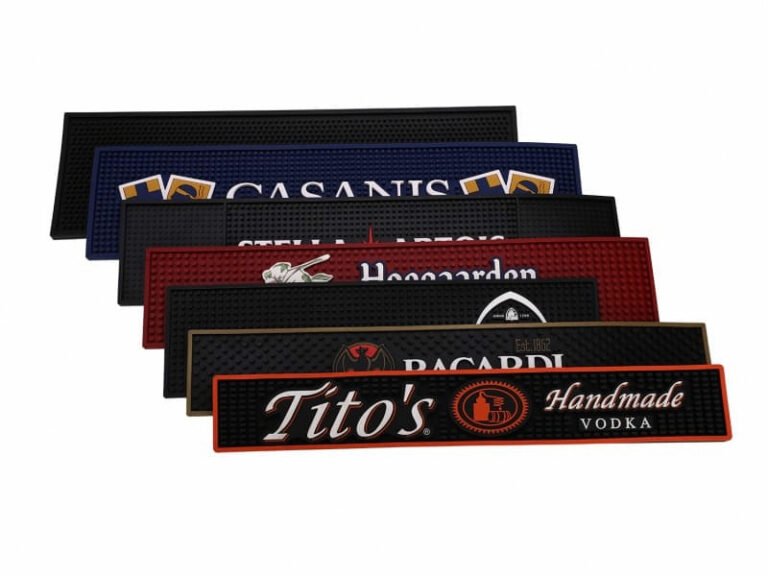

Sourcing promotional items for your brand can feel like navigating a minefield, especially when it comes to materials. A key step in ensuring brand integrity is understanding PVC bar mat quality. Um barato, poorly made mat can crack, fade, or emit unpleasant odors, reflecting poorly on your company. This guide provides a simple, five-step process to help you distinguish premium mats from subpar alternatives, protecting your investment and your reputation.
To evaluate PVC bar mat quality, perform five simple tests on a sample: 1) a visual and tactile inspection for clean details and a smooth feel, 2) a smell test for chemical odors, 3) an alcohol rub test on the logo to check for fading, 4) a 24-hour water soak to test for color bleeding, e 5) a bending test to check for cracks. A mat that passes all five is a high-quality product.
Agora que você tem a resposta rápida, let's dive deeper. These five tests are simple enough for anyone to perform on a sample, yet powerful enough to reveal the true manufacturing standards behind the product. Let's break down each step so you know exactly what to look for.
What Does a Visual and Tactile Inspection Reveal About PVC Bar Mat Quality?
You've just unboxed a sample mat. At first glance, it might look fine, but looks can be deceiving. The immediate feel and appearance are your first clues to the underlying manufacturing process and material standards. A flimsy feel or messy details can signal problems down the line.
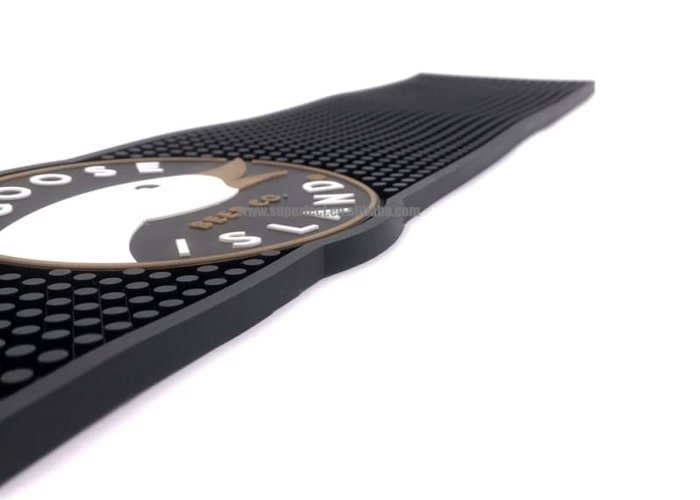
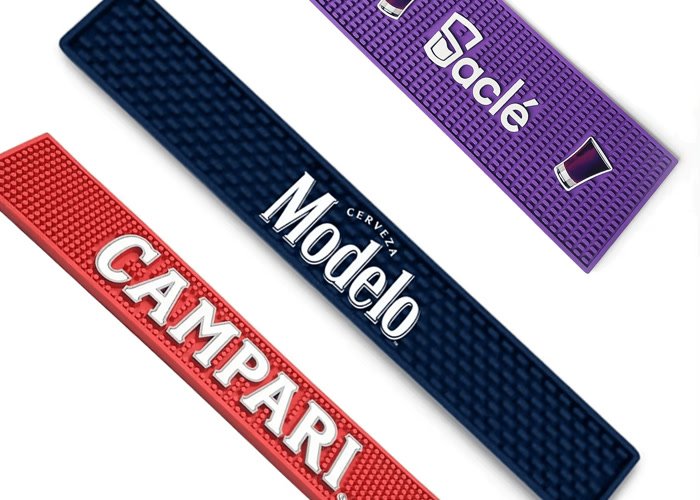
A high-quality PVC bar mat should have vibrant, distinct colors without any bleeding between them. The logo details should be sharp and precise. The surface should feel smooth and substantial, not sticky or oily, and the edges should be clean-cut and uniform.
Mergulhe mais fundo: The Devil is in the Details
Como fabricante, we know that the final appearance is a direct result of the precision used in every step, from mold creation to material injection. Here’s what to scrutinize.
Color, Logotipo, and Surface Clarity
A premium mat is made using a high-precision mold and a meticulous color-filling process. Look closely at the logo. Are the lines crisp? Are the corners of letters and graphics sharp? On a low-quality mat, you'll often see:
- Color Bleeding: Colors smudging into one another.
- Air Bubbles: Tiny bubbles or pinholes on the surface, indicating a rushed vacuuming or curing process.
- Uneven Surfaces: The logo area might be higher or lower than the rest of the mat, creating an uneven feel.
The surface of the mat should be smooth to the touch but provide grip. If it feels overly sticky or oily, it's a major red flag. This often indicates the use of inferior plasticizers that can leach out over time, creating a mess and potentially failing safety standards.
Edge Finishing and Uniformity
Turn the mat over and inspect the edges and the back. The edges should be clean and straight, without any jagged or frayed bits of PVC. The overall thickness should be consistent across the entire mat. Place it on a flat table—it should lie perfectly flat without any warping or curling at the corners.
Here’s a quick comparison of what we look for during our final inspection:
| Recurso | High-Quality Mat | Low-Quality Mat |
|---|---|---|
| Detalhe do logotipo | Sharp, crisp, well-defined lines | Blurry, rounded, or incomplete details |
| Color | Vibrant and contained within its area | Dull, faded, or bleeding into other colors |
| Surface Feel | Suave, non-sticky, slightly matte | Oily, sticky, or overly glossy |
| Edges | Clean-cut, straight, and uniform | Jagged, frayed, or uneven |
| Flexibilidade | Lays flat, parece substancial | Warped, curled corners, feels flimsy |
Na SuperfectCraft, our 24-hour design sketch service ensures your logo is optimized for production, and our extensive library of existing molds allows for rapid prototyping with proven, crisp results.
Why is the Smell Test Crucial for PVC Bar Mat Quality?
You open the sample package and are immediately hit with a strong, pungent chemical smell. This isn't just unpleasant; it's a significant warning sign about the material itself. This odor will permeate a bar or workshop, creating a negative experience for customers and staff.
A strong, unpleasant smell indicates the use of low-grade recycled PVC, harsh industrial solvents, or unsafe plasticizers. A high-quality, eco-friendly PVC bar mat should be virtually odorless or have a very faint, neutral scent that dissipates quickly.

Mergulhe mais fundo: What That Smell Really Means
The odor from a PVC product is primarily caused by Volatile Organic Compounds (VOCs). While all PVC has some, the quantity and type of VOCs are what separate safe, high-quality material from hazardous, low-quality material.
The Source of the Odor
The most common culprits for a bad smell in PVC mats are:
- Low-Grade Recycled Materials: Some manufacturers cut costs by using post-industrial or post-consumer PVC scrap that hasn't been properly cleaned or stabilized. These materials can contain unknown contaminants that off-gas over time.
- Cheap Plasticizers (Ftalatos): Phthalates are chemicals added to PVC to make it flexible. Low-cost, unregulated phthalates are highly volatile and release a strong, distinctive chemical odor. They are also a major health concern and are restricted in many regions, including the EU (ALCANÇAR) and California (Suporte 65).
- Incomplete Curing: If the mat is not heated in the oven for the correct amount of time at the right temperature, chemical components may not fully bond, leading them to off-gas.
Brand Reputation and Safety Implications
Imagine a bartender serving drinks on a mat that smells like a chemical factory. It instantly cheapens the customer's perception of the establishment and, por extensão, the beverage brand promoted on the mat. Beyond brand damage, there are potential health concerns for employees who are exposed to these fumes for hours every day.
This is why, for clients targeting EU, NÓS, or Amazon marketplaces, we always recommend and can arrange third-party testing. We can test for REACH/SVHC, ftalatos, Suporte 65 compliance, and more to ensure the final product is safe, compatível, and protects your brand's integrity.
How Can an Alcohol Rub Test Verify Logo Durability?
Your logo is the most important part of a custom bar mat; it’s your brand's signature. You need assurance that it won't fade, casca, or smudge away after a few weeks of spills and wipe-downs. A simple durability test can provide that confidence.
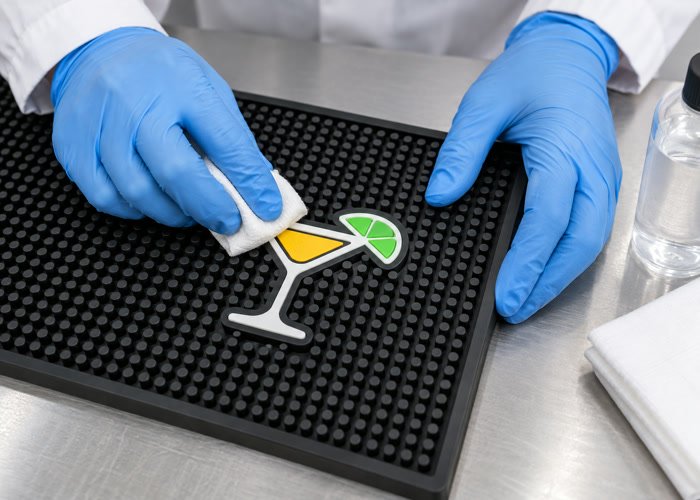
To test logo durability, dampen a soft cloth with isopropyl (rubbing) alcohol and rub a section of the logo firmly for 15-20 seconds. A high-quality, properly cured logo will show no signs of color transfer onto the cloth, fading, or smudging.
Mergulhe mais fundo: The Science of a Lasting Logo
The durability of a logo on a PVC mat isn't about printing; it's about chemistry and process. Unlike screen-printed mats where the logo is just a layer of ink on top, our logos are physically part of the mat itself.
Molded In, Not Printed On
High-quality PVC bar mats use a liquid PVC dispensing process. Here’s a simplified look at how it works:
- CNC Mold Creation: A metal mold is carved with the inverse of your design, creating cavities for the logo and base.
- Color Dispensing: Liquid PVC of different colors is precisely injected into the corresponding logo cavities by a machine.
- Curing: The partially filled mold is heated to semi-cure the logo colors, preventing them from mixing.
- Base Injection: The base color liquid PVC is poured in, filling the rest of the mold.
- Final Curing: The entire mat is baked in an oven, which chemically bonds all the liquid PVC parts into a single, solid, and seamless piece of material.
When you perform the alcohol rub test on a mat made this way, you're not rubbing ink off a surface. You are rubbing the pigmented PVC material itself. Because the color is integral to the material, it cannot fade or be removed without physically destroying the mat. If the color comes off, it means the curing process was incomplete or the pigments used were of extremely low quality.
Why This Matters for B2B Customers
For beverage brands, tool manufacturers, or private-label companies, a fading logo is a critical failure. It defeats the entire purpose of the promotional item. A mat with a durable, molded-in logo provides lasting brand exposure, justifying the investment. Our process, from free design sketch to sample confirmation and final inspection, is built to guarantee this longevity.
What Does a 24-Hour Water Soak Reveal About PVC Bar Mat Quality?
Bar mats live in a wet environment. They are constantly exposed to spilled beer, liquor, soda, and water, plus the detergents used to clean them. You need to know if your mat will bleed its colors onto a pristine white countertop or warp out of shape.
After fully submerging the mat in water for 24 horas, check for any changes. A high-quality mat will not release any color into the water (the water will remain clear), and the mat itself will not swell, soften, or change its shape or texture.

Mergulhe mais fundo: Testing for Material Stability and Colorfastness
This test simulates the long-term effects of a wet service environment on the mat's material composition. A failure here points to serious flaws in the PVC formulation and pigments.
What Causes Color Bleeding and Warping?
- Low-Quality Pigments: The color in PVC comes from added pigments. Cheap, unstable pigments are not properly encapsulated within the PVC polymer matrix. When exposed to water, especially if it contains alcohol or acids from spills, these pigment particles can leach out, causing the water to become colored.
- Hydrophilic Fillers: To reduce costs, some manufacturers add large amounts of inexpensive fillers like calcium carbonate to the PVC formula. If these fillers are low-grade or improperly treated, they can absorb water, causing the mat to swell, deform, and lose its structural integrity. It might feel soft and spongy after soaking.
- Poor Formulation: A well-balanced PVC formulation ensures all components—the PVC resin, plastificantes, stabilizers, and pigments—are chemically stable and bonded. A poor formulation is like a bad recipe; the ingredients separate under stress.
The Real-World Consequences
A mat that bleeds color can permanently stain expensive bar tops, leading to angry clients and potential liability. A mat that swells or warps will no longer lie flat, becoming a nuisance and a potential hazard. It will look cheap and unprofessional, undermining its promotional value.
Our commitment to PVC bar mat quality means using only virgin PVC resins and high-grade, stable pigments. Every batch of material is carefully formulated to ensure it can withstand the harshest bar conditions, guaranteeing that your brand continues to look its best, spill after spill.
How Does a Bending Test Determine the Durability of a PVC Bar Mat?
Your bar mats will be handled—rolled up for storage, dropped on the floor, and bent over the edge of a sink for cleaning. The material must be flexible enough to withstand this daily abuse without failing. This simple physical test checks for brittleness.
To perform the test, fold the mat in half and press down firmly along the crease, then unfold it. Bend it back and forth several times. A durable, high-quality mat will spring back to its original flat shape with no signs of cracking, stress whitening (white lines along the fold), or permanent creasing.

Mergulhe mais fundo: Understanding Flexibility and Material Fatigue
This test reveals the quality of the PVC formulation, specifically the type and amount of plasticizer used. It's a direct indicator of the mat's expected lifespan in a real-world setting.
Brittle vs. Flexible: O papel dos plastificantes
PVC in its raw form is a rigid plastic. Plasticizers are oily substances added to make it soft and flexible.
- High-Quality Formulation: The right amount of high-grade plasticizer is used, creating strong molecular bonds that allow the material to flex and return to its shape without breaking. The material is resilient.
- Low-Quality Formulation: To save money, a manufacturer might use too little plasticizer or a cheap, inefficient type. Worse, they might add excessive amounts of rigid fillers (like chalk), which makes the material brittle.
When you bend a brittle mat, you are literally breaking the weak bonds between the polymer chains. This appears as a crack or a "stress whitening" line, which is a precursor to a full tear.
Long-Term Durability
A mat that fails the bend test when new will have a very short service life. The first time it's dropped in cold weather or bent sharply, it will crack and become useless. For a brand owner, this means needing to replace promotional materials far too often, increasing long-term costs and logistical headaches.
We formulate our PVC to a specific durometer (hardness) that balances flexibility with sturdiness. It needs to be flexible enough not to crack, but firm enough to contain spills and support glassware. This expertise in material science is fundamental to producing a mat that not only looks great but also performs reliably for years.
Perguntas frequentes
What is the difference between PVC and rubber bar mats?
PVC mats excel at holding vibrant, complex, multi-color logos due to the liquid injection molding process. They are cost-effective and highly customizable. Rubber mats are generally heavier and more heat-resistant but are often limited to single-color, embossed logos and can be more expensive.
How long should a high-quality PVC bar mat last?
A well-made PVC bar mat, subject to the quality tests described above, should last for 3-5 years or even longer in a typical bar or restaurant environment. Its lifespan depends on proper care, but durability is primarily determined by the initial manufacturing quality.
Can you produce a custom shape for my brand's bar mat?
Absolutamente. As an OEM/ODM manufacturer, we specialize in custom production. We can create molds for custom shapes, tamanhos, and unique structural features based on your artwork and specifications. Our free design sketch service can help you visualize the final product.
Qual é a quantidade mínima de pedido (Quantidade mínima) para tapetes personalizados?
Nosso MOQ padrão é 200 pieces per design and color, especialmente ao usar um dos nossos muitos moldes existentes. For fully custom projects requiring a new mold, the MOQ may vary, but we work with clients to find a viable production solution.
What safety certifications are important for PVC mats?
For mats sold in the EU or to major brands, REACH compliance (especially for SVHC) é crítico. For the US market, Proposta da Califórnia 65 is a key consideration. Other tests like FDA/LFGB (for food contact) or phthalate content testing are also common. We can arrange any necessary third-party testing based on your target market.
Conclusão
Evaluating PVC bar mat quality doesn't require a laboratory. By performing these five simple tests—visual inspection, smell test, alcohol rub, water soak, and bend test—you can confidently determine if a sample meets the high standards your brand deserves. A mat that passes these checks is one that is made from safe, stable materials with a precision manufacturing process. It will represent your brand well, withstand the rigors of daily use, and provide a genuine return on your investment. Don't let a poor-quality promotional item undermine your brand's image. Insist on quality you can see, feel, and test.
Ready to develop a high-quality, custom PVC bar mat for your brand? Contact our team at SuperfectCraft today. We'll provide a free design sketch and a no-obligation quote to get your project started.
Whatsapp: +86 15816822766
E-mail: sales01@superfectcraft.com
Site: www.superfectcraft.com