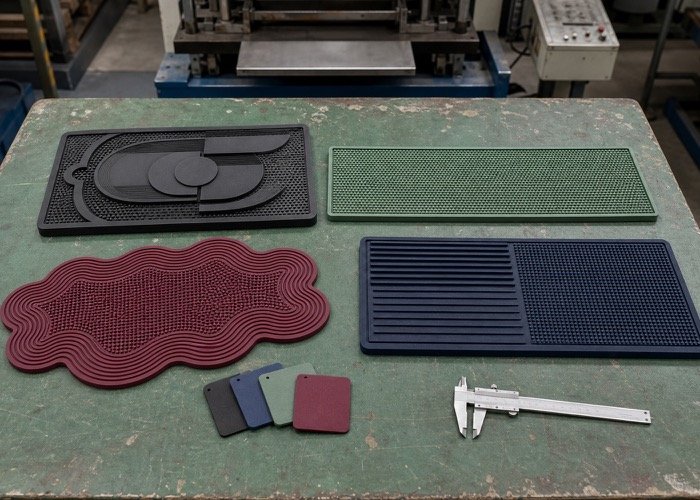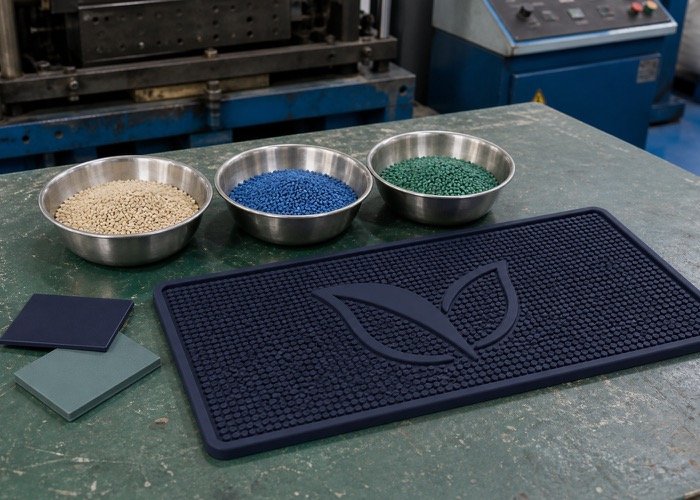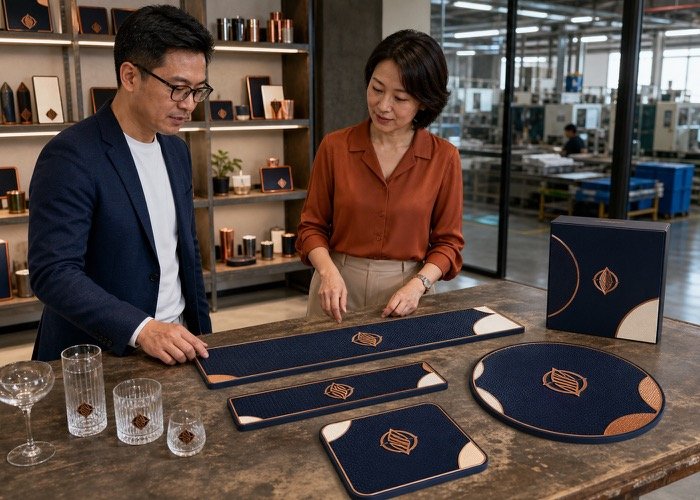

Designing a custom bar matm that truly elevates your brand can be a significant challenge. Many businesses end up with mats that look cluttered, feel cheap, and ultimately fail to project a high-quality image. This misstep can undermine your brand's premium positioning, leaving a poor impression on customers and partners. The solution lies in a strategic design approach that prioritizes material quality, sophisticated color choices, and subtle, three-dimensional details.
To design a premium custom bar mat, focus on five key principles: select a thick, high-quality material with a matte finish; use a low-saturation, earth-tone color palette; feature a centered, multi-layered embossed logo; incorporate generous negative space for a clean look; and add subtle, same-color textures for depth. The goal is to create a sense of luxury through tactile quality and structural detail, not flashy colors.
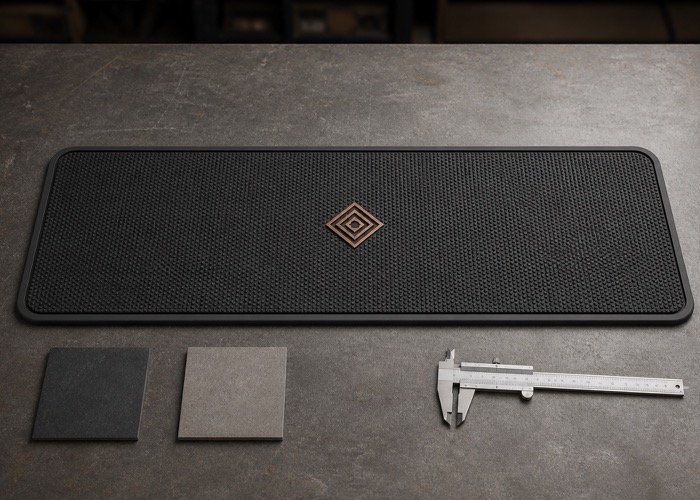
Now that you have the core formula for a high-end design, let's break down each element. Understanding the specific choices behind material, צֶבַע, and logo application is what separates a standard promotional item from a genuine brand asset. This guide will walk you through the details that make all the difference.
What Materials Make a Custom Bar Mat Feel Premium?
The choice of material forms the foundation of your mat's perceived value. A flimsy, shiny plastic mat immediately signals low quality, which can cheapen your entire brand presentation in a bar or workshop setting. To avoid this, you should select a material that offers substantial weight, a refined surface, and proven durability.
A premium feel for a custom bar mat comes from using high-density, matte-finish PVC or food-grade silicone. These materials are heavier, providing a satisfying sturdiness. Their non-reflective matte surface looks more sophisticated and professional than glossy alternatives, conveying an immediate sense of quality and attention to detail.
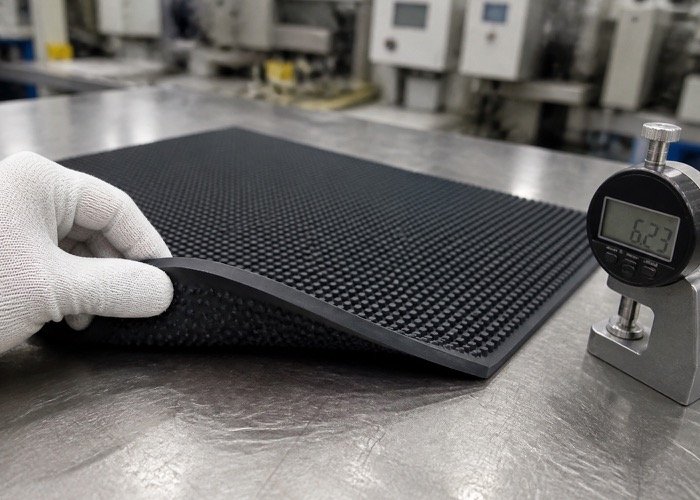
H3: PVC vs. סיליקון: The Premium Choice
Both high-grade PVC and silicone can be used to create an exceptional mat, but they have slightly different characteristics. Your choice depends on your specific priorities for feel, function, and budget.
| תכונה | High-Grade PVC | Food-Grade Silicone |
|---|---|---|
| Feel & Weight | Sturdy, dense, and substantial. | Softer, more flexible, and pliable. |
| Logo Detail | Excellent for creating sharp, crisp, and intricate embossed logos. | Very good for detailed logos, with a softer edge. |
| Heat Resistance | Good for standard bar use. | Excellent; can withstand higher temperatures. |
| Cost | More cost-effective for high-quality results. | Generally a higher-priced raw material. |
| Best For | Beverage brands, detailed logos, and achieving a premium feel on a budget. | High-end spirits, culinary brands, and when FDA/LFGB compliance is key. |
In my experience manufacturing thousands of mats, a thick, heavy-gauge PVC with a matte treatment is the most popular route to a premium product. It perfectly balances cost with the ability to hold extremely fine, layered detail.
H3: The Importance of a Matte Finish
A glossy finish on a bar mat often looks cheap because it reflects light harshly, highlights imperfections, and shows every scratch and scuff. It screams "mass-produced plastic."
A matte finish, on the other hand, does the opposite:
- Absorbs Light: It creates a soft, non-glare surface that looks sophisticated and understated.
- Hides Wear: Minor scuffs and scratches are far less visible, keeping the mat looking pristine for longer.
- Enhances Color: Colors on a matte surface appear deeper and more saturated, adding to the premium feel.
This single choice—matte over glossy—is one of the most impactful decisions you can make in your design process. It instantly shifts the perception from a promotional giveaway to a piece of quality equipment.
H3: Texture is a Subtle Detail that Speaks Volumes
Beyond the finish, a subtle surface texture can add another layer of sophistication. Instead of a completely flat surface, consider a delicate, same-color pattern. This could be a fine crosshatch, a brushed texture, or a simple stippled pattern.
This detail accomplishes several things:
- Adds Tactile Interest: It makes the mat more interesting to the touch.
- Improves Function: The texture can help with grip and channel small spills.
- Shows Craftsmanship: It demonstrates that the mat was designed with care, right down to the smallest details. This is where custom molding shines, as we can integrate any texture you can imagine directly into the mat's design.
How Do Color and Layout Affect a Custom Bar Mat's Design?
Many designs fail because they try to do too much. The impulse is often to use bright brand colors and fill every inch of space with information, but this creates a visually noisy and ultimately cheap-looking product. For a premium aesthetic, restraint is your most powerful tool.
A premium custom bar mat design leverages a minimalist color palette and generous negative space. By limiting colors to low-saturation earth tones and leaving ample "empty" areas, you create an uncluttered, elegant canvas that allows the material quality and brand logo to stand out.
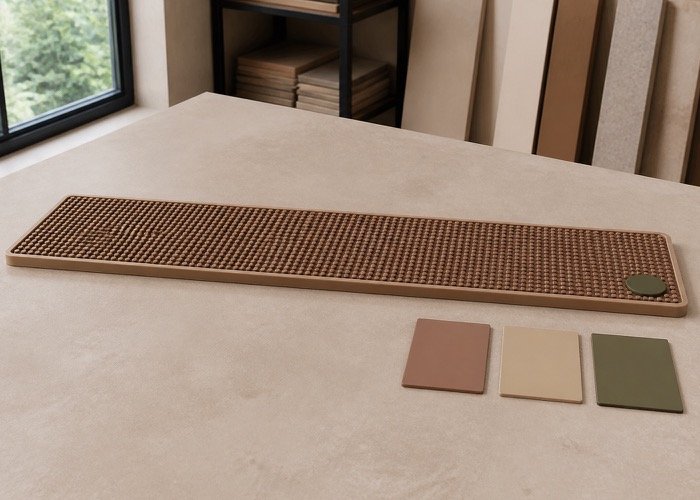
H3: The Power of a Limited Color Palette
Instead of using a rainbow of bright colors, opt for a more restrained and timeless palette. This is a core principle I recommend to clients aiming for a high-end look.
- Embrace Earth Tones: Think deep blacks, sophisticated grays, rich browns, and muted beiges. These colors convey stability and quality. They also integrate seamlessly into the décor of an upscale bar, restaurant, or salon without clashing.
- Stick to 1-3 Colors: The most premium-looking mats often use just one or two colors. A monochromatic scheme (using a single color in different shades or textures) is particularly effective. For example, a dark gray mat with a slightly lighter gray embossed logo.
- Ensure Color Consistency: Your brand colors are vital. בתור יצרן, our process includes precise color matching to specific Pantone (PMS) codes. This ensures that the hue on your mat is a perfect match for the rest of your branding, which is a key detail for brand integrity.
H3: "White Space" is Your Best Friend
In design, the space you don't fill is just as important as the space you do. This is called negative space, or "white space." On a bar mat, this means resisting the urge to cover the entire surface with logos, text, and graphics.
Generous use of negative space provides several key benefits:
- Creates a Focal Point: It naturally draws the eye toward the most important element—your logo.
- Improves Readability: It makes the design feel clean, organized, and easy to understand at a glance.
- Conveys Confidence: A design with ample breathing room suggests a brand that is confident enough to not shout for attention. It feels less like a desperate advertisement and more like a deliberate piece of design.
As a rule of thumb, I suggest that the primary logo and any essential elements should occupy no more than 30-40% of the total surface area. Let the beautiful, high-quality material speak for itself.
What is the Best Way to Feature a Logo on a Premium Custom Bar Mat?
The application of your logo is the final, critical piece of the premium design puzzle. A simple, flat-printed logo can wear away over time and looks like an afterthought. It lacks the permanence and tactile quality that define a high-end product.
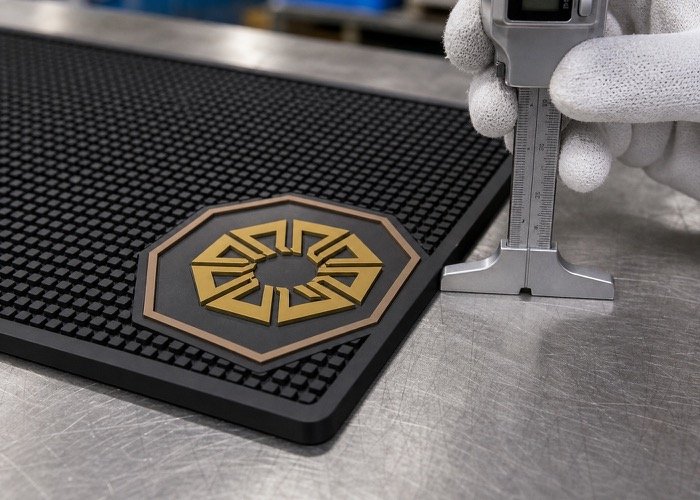
The most effective method for a premium custom bar mat is to feature a centered, multi-layered, embossed logo. This technique creates a three-dimensional effect, raising the logo from the mat's surface. This adds physical depth and texture, transforming the logo into a durable, tactile, and visually striking feature.
H3: The Difference Between Printing and Embossing
Understanding the manufacturing process helps clarify why embossing is superior for a premium look.
- Printing: A layer of ink is applied to the surface of the mat. This method is fast and cheap, but the ink sits on top of the material. It is susceptible to wear from abrasion, cleaning chemicals, and UV light. It looks and feels flat.
- Embossing (or 3D Molding): The logo is built directly into the mold itself. During production, liquid PVC or silicone is precisely dispensed into the mold, layer by layer, to build up the colors and different heights of the logo. The logo is an integral part of the mat, not something added on top. It is incredibly durable and provides a tangible, high-quality feel.
All of our premium custom mats use this 3D molding process. It is the only way to achieve the depth and permanence required for a truly high-end product.
H3: Designing for Dimension: Layering and Hierarchy
A flat embossed logo is good, but a multi-layered embossed logo is even better. This technique involves creating different heights for various elements within your design to create a sense of visual hierarchy.
For example, on a recent project for a spirits brand:
- We set the main brand name at a height of 3מ"מ.
- The intricate crest above the name was set at 2מ"מ.
- The tagline "Est. 1924" below it was set at a more subtle 1.5מ"מ.
This variation in height creates subtle shadows and highlights that make the logo far more dynamic and sophisticated. It shows a level of manufacturing precision that immediately signals quality. Our 24-hour design sketch service is perfect for helping clients visualize how layering can bring their logo to life in 3D.
H3: Keeping it Clean: Less is More
לְבָסוֹף, remember the core principle: a premium mat relies on material and detail, not an abundance of information. Avoid cluttering the design with extraneous elements like phone numbers, website URLs, or social media icons. If a web address must be included, it should be small, subtle, and integrated cleanly into the design, perhaps as a debossed (indented) element along an edge.
The goal is for the mat to be a "stage" for your brand, enhancing its presence in a physical space. When someone sees and touches your custom bar mat, the quality of the mat itself should be what leaves the lasting impression.
שאלות נפוצות
מהי כמות ההזמנה המינימלית (MOQ) for a custom bar mat?
MOQ הסטנדרטי שלנו הוא 200 חתיכות לכל עיצוב וצבע, especially when using our large library of existing mold sizes. This quantity allows us to maintain strict quality control and offer competitive pricing for a truly custom, high-quality product.
How long does it take to get a sample?
A physical sample is a critical step. From finalizing the design to holding the sample in your hands takes approximately 7 ימים. This process includes mold preparation, precise color matching, and production of the prototype for your approval before we proceed with mass production.
Can you match my brand's exact Pantone colors?
Yes, absolutely. Our production process includes a rigorous color-matching step where we formulate our PVC or silicone to match your specific Pantone (PMS) color codes. This ensures your custom bar mats are perfectly consistent with your established brand identity.
What file format do I need to provide for my logo?
For the best results, we always recommend providing your logo and any artwork in a vector file format. The preferred formats are Adobe Illustrator (.ai), .eps, or a high-resolution .pdf. Vector files allow us to scale your design perfectly without any loss of quality when creating the production mold.
מַסְקָנָה
Creating a truly premium custom bar mat is an exercise in thoughtful restraint and a focus on quality over quantity. The formula is clear: start with a heavy, matte-finish material like high-grade PVC or silicone. Build on that foundation with a minimalist, earth-tone color palette and generous use of negative space. לְבָסוֹף, make your logo the star with a multi-layered, embossed 3D effect that adds tactile and visual sophistication. By following these principles, you move beyond creating a simple promotional item and instead produce a durable, elegant brand asset that speaks volumes about your company's commitment to quality.
Ready to design a custom bar mat that reflects the true quality of your brand? Contact our team today for a free consultation. Our 24-hour design sketch service can help you visualize the premium possibilities for your project.