
Finding a partner to produce your branded bar mats presents a significant opportunity. But the process can be filled with uncertainty, risking your budget and brand reputation on a supplier who might not deliver. The key is to partner with a true custom bar mat manufacturer who can provide transparency, quality, and reliability from start to finish.
To choose a reliable custom bar mat manufacturer, you must verify their production capabilities with a video tour, check material compliance with test reports like REACH or LFGB[^1], thoroughly test a physical sample for durability and safety, and secure fair business terms like a 30% deposit in a formal contract.

This direct approach to vetting removes guesswork and protects your investment. Now, let’s explore the specific steps you can take to identify a top-tier manufacturing partner and avoid the common pitfalls that trap inexperienced buyers.
How Can You Verify a Manufacturer's Real Capabilities?
You've found a supplier with a professional website and impressive product photos. The question is, are they a genuine factory or a trading company just acting as a middleman? This distinction is critical for your project's success.
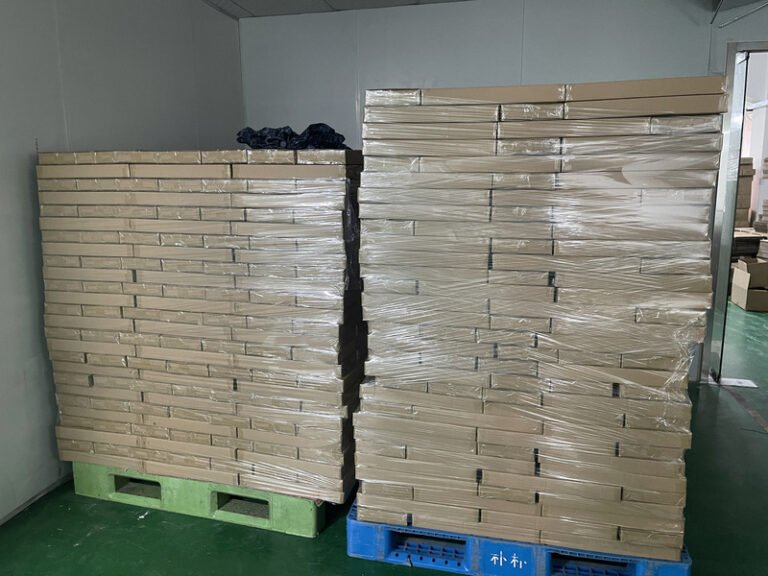
The most effective way to verify a supplier is to ask for a live video call to tour their factory floor. A true manufacturer will be proud to show you their production lines, molding machines, and raw material inventory.

Tauchen Sie tiefer ein: Manufacturer vs. Handelsunternehmen
When sourcing from overseas, especially from manufacturing hubs like China, you will encounter both direct factories and trading companies. While traders can offer convenience, partnering directly with a custom bar mat manufacturer provides significant advantages. I've worked with countless clients who initially went with a trader only to face communication delays and quality issues.
Here’s a breakdown of the key differences:
| Besonderheit | Direct Manufacturer | Handelsunternehmen |
|---|---|---|
| Price | More competitive, no middleman markup. | Higher due to their added margin. |
| Communication | Direct access to technical and production teams. | Communication is filtered, slower responses. |
| Anpassung | Deep expertise in materials and mold making. | Limited technical knowledge; may misinterpret needs. |
| Qualitätskontrolle | Full control over the entire production process. | Relies on the factory's QC; less direct oversight. |
| Transparency | Able to provide factory tours and real-time updates. | Often cannot or will not show the factory. |
How to spot a true manufacturer:
- Request a Video Tour: This is the easiest and most definitive test. If they hesitate or refuse, it's a major red flag.
- Check Their Business License: Ask for a copy of their business license. The "scope of business" section should explicitly list "production," "manufacturing," or terms related to plastics and rubber processing. A trading company's license will typically list "trading," "import/export," or "wholesale."
- Ask for Case Studies: A seasoned manufacturer will have a portfolio of stable, high-volume custom projects for other brands. Bei SuperfectCraft, we have a vast library of existing molds from past projects, which demonstrates our extensive experience and can help new clients develop products faster.
What Compliance Documents Should a Custom Bar Mat Manufacturer Provide?
Your custom bar mats are an extension of your brand. The last thing you want is for them to be made from unsafe materials that could cause harm or fail to meet your market's regulations.
A reliable manufacturer must be able to provide or arrange for material safety and compliance reports relevant to your target market. This is non-negotiable for any professional brand, especially those selling in the EU, UNS, or on platforms like Amazon.
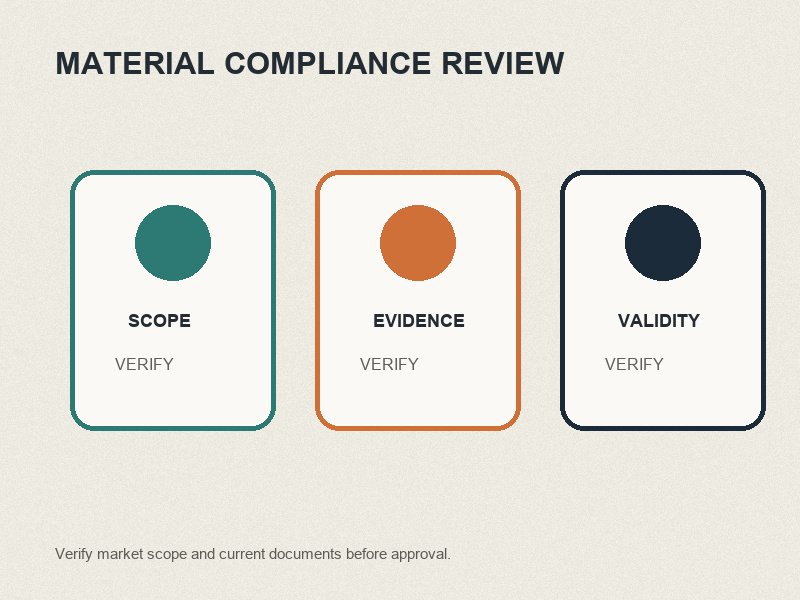
Tauchen Sie tiefer ein: Navigating Material Safety
The specific tests required depend on the material (PVC, Silikon, Gummi), the colors used, and your sales region. A professional supplier won't just send you an old, generic report. They will understand that testing is often project-specific.
Here are the most common compliance standards you should know:
-
For the European Union (EU):
- ERREICHEN / SVHC[^2]: This regulation covers the Registration, Evaluation, Authorisation, and Restriction of Chemicals. An SVHC (Substances of Very High Concern) test checks for the presence of harmful chemicals from a regularly updated list. It's essential for any product sold in the EU.
- Phthalate (z.B., 6P, 16P): Phthalates are plasticizers often used in PVC. Many are restricted due to health concerns, and testing is crucial, especially for items that come into contact with beverages or are used in public spaces.
-
For the United States (UNS):
- Kalifornischer Vorschlag 65 (Stütze 65)[^3]: This requires businesses to provide warnings about significant exposure to chemicals that cause cancer, Geburtsfehler, oder andere Fortpflanzungsschäden. A custom bar mat manufacturer serving the US market must be familiar with this.
- FDA / LFGB[^4]: If your mat is silicone and might have incidental food contact (z.B., a service mat where garnishes are placed), it may need to meet food-grade standards. LFGB is the German/EU standard, often considered stricter than the US FDA standard.
-
General Quality & Safety:
- Alcohol Resistance: For rubber bar mats, a test to ensure the printed logo or material surface doesn't degrade when exposed to alcohol is vital.
- Odor & Schwermetalle: Tests for strong chemical odors or the presence of heavy metals like lead and cadmium are important for user safety and product quality.
As a manufacturer, we handle these requests regularly. While standard commercial orders might not require certification, we always recommend it for brand projects. We can arrange third-party testing with accredited labs like SGS or Intertek based on your exact product specifications and market needs.
Why is Thoroughly Testing a Sample So Crucial?
A digital proof looks good and the price is right. But you can't truly judge the quality of a custom bar mat until you have a physical sample in your hands. This step is your single best protection against mass production disasters.
Testing a pre-production sample is your chance to verify everything—color accuracy, durability, anti-slip function, and material safety. It ensures that what you approved on paper translates into a high-quality physical product. Never skip this step.
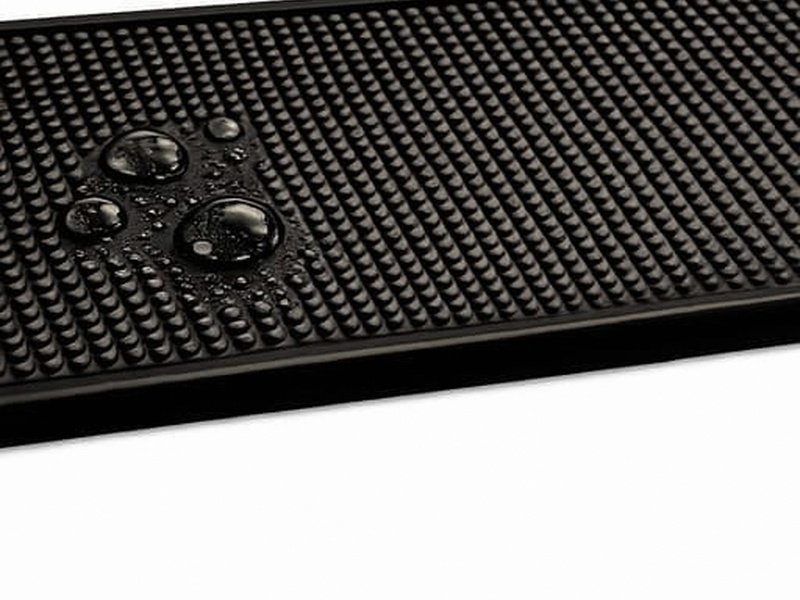
Tauchen Sie tiefer ein: Your Pre-Production Testing Checklist
Once your sample arrives (a reasonable lead time is about 7 Tage, like our process at SuperfectCraft), don't just look at it. Put it through a series of real-world tests. A common reason for poor quality is the use of cheap, recycled materials, and these tests can help expose that.
Here is a practical checklist I recommend to all my clients:
-
The Alcohol Wipe Test:
- What to do: Dampen a cloth with a common spirit (like vodka or gin) and firmly rub the logo and surface of the mat 20-30 times.
- What it checks: This tests the durability of the logo printing or colored PVC. A poor-quality mat's colors will fade, smudge, or come off on the cloth.
-
The Liquid Soak Test:
- What to do: Pour some beer, soda, and water onto the mat and let it sit for an hour. Then, rinse it clean.
- What it checks: See if any staining occurs. The material should be non-porous and easy to clean. It also tests the drainage capability if it's a spillage mat.
-
The Smell Test:
- What to do: Unbox the mat and smell it up close. Let it air out for a day and smell it again.
- What it checks: A strong, persistent chemical or gasoline-like odor is a major red flag. It often indicates the use of low-grade recycled PVC or rubber, which may contain harmful volatile organic compounds (VOCs). A quality mat should have a minimal, neutral smell.
-
The Anti-Slip Test:
- What to do: Place the mat on a smooth, clean counter (wood, laminate, stainless steel). Try to slide it around. Do the same with a wet counter.
- What it checks: The mat should grip the surface firmly and not slide easily. This is a critical safety and functional feature.
-
The Flexibility & Durability Test:
- What to do: Roll it, bend it, and twist it.
- What it checks: The mat should be flexible without cracking or showing signs of stress. If it feels overly stiff or brittle, it could be made from inferior materials.
If the sample fails any of these tests, you must insist on revisions. A reliable custom bar mat manufacturer will willingly remake the sample until it meets your standards, because they know that sample approval is the basis for mass production.
How Do You Assess a Custom Bar Mat Manufacturer's Quality Control?
A perfect sample is a great start, but how can you be sure the 500th or 1,000th unit will have the same quality? The answer lies in the manufacturer's internal Quality Control (QC) system.
A supplier with robust QC will have documented inspection checkpoints at multiple stages of production, not just a quick look at the end. You should be able to discuss these processes and even get quality standards written into your agreement.
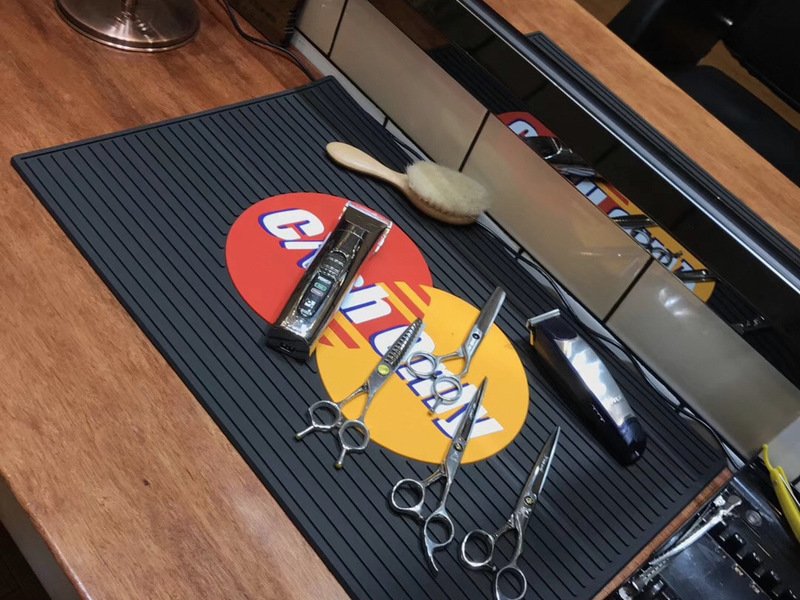
Tauchen Sie tiefer ein: From Raw Materials to Final Packing
Quality isn't accidental; it's engineered into the process. In my years running a mat factory, I've learned that proactive inspection is far more effective than trying to catch defects at the end. Here are the key QC stages for custom bar mat production:
-
H3: Wareneingangskontrolle Before any production begins, the raw materials (z.B., PVC resin, Silikon, rubber sheets) must be inspected. This involves checking for correct specifications, purity, and any visible defects. Using substandard raw materials is the first step toward a failed production run.
-
H3: Schimmel & Farbabstimmung The mold must be clean and precise to ensure sharp logos and clean edges. The most critical step here is color matching. Our technicians use Pantone codes to mix pigments, creating test swatches to be approved by the client before any liquid material is dispensed for the actual products. This prevents color errors across the entire batch.
-
H3: In-Process Quality Control (IPQC) This is where a good factory separates itself. Inspectors should be monitoring the work as it happens. For a PVC mat, this includes:
- Abgabe: Checking that the liquid PVC is injected cleanly into the mold cavities without bubbles or overflow.
- Molding: Ensuring the oven temperature and curing times are correct to create a durable, properly formed mat.
- Entformen & Trimming: Inspecting each mat as it comes out of the mold for imperfections and ensuring edges are trimmed cleanly.
-
H3: Final Quality Assurance (FQA) Before packing, every single mat should undergo a final 100% inspection. The inspector checks against the approved sample and a quality standard checklist for things like:
- Correct colors and logo clarity.
- No physical defects (cracks, bubbles, dirt).
- Correct dimensions and thickness.
- Cleanliness.
Ask your potential custom bar mat manufacturer about their defect rate (also known as the不良率, bùliáng lǜ). A low, controlled rate is a sign of a mature process. You can and should specify the acceptable quality level (AQL) in your contract.
What Are Fair and Secure Business Terms to Look For?
The final piece of the puzzle is the business agreement. The most beautiful, compliant, high-quality bar mat is worthless to you if the deal is structured in a risky way that exposes you to financial loss.
Fair and secure terms are the hallmark of a professional partner. This means you should receive a clear, itemized quotation with no hidden fees and agree to a payment schedule that balances risk for both parties, such as a 30% deposit and 70% balance payment.
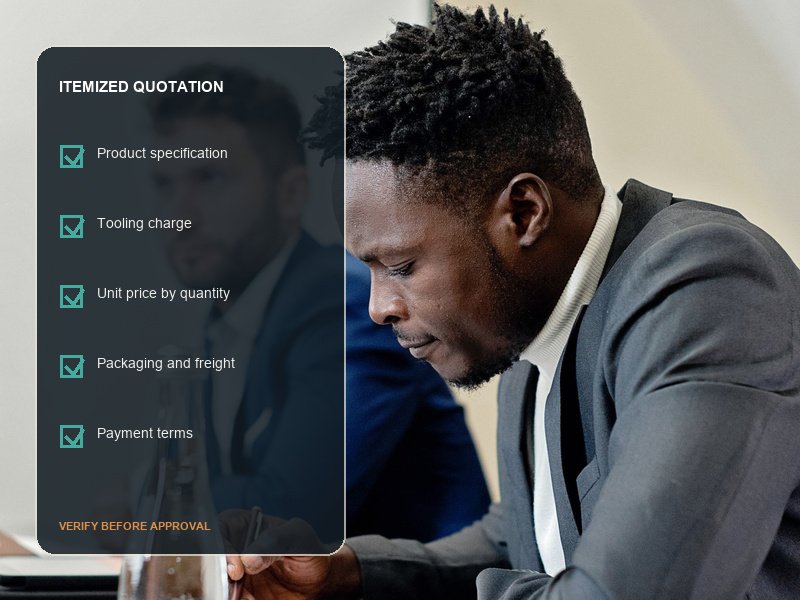
Tauchen Sie tiefer ein: Protecting Your Investment
Navigating contracts and payments can be intimidating, but a few key principles will protect you. I always advise my clients to focus on clarity and mutual security.
H3: Deconstruct the Quotation A professional quote is more than just a final price. It should be itemized. Look for:
- Unit Price: The cost per mat.
- Mold Fee: A one-time charge for creating your custom mold. (Bei SuperfectCraft, if you use one of our existing molds, this fee is often waived).
- Sample Fee: The cost for the pre-production sample (often refundable if you place a bulk order).
- Material & Specs: The quote should specify PVC, Gummi, or silicone, and include dimensions and thickness.
- Incoterms: Shipping terms like FOB (Free On Board) or EXW (Ex Works) that define who pays for and manages shipping.
H3: Secure Payment Structures Never agree to 100% upfront payment. This gives you zero leverage if something goes wrong. The industry standard is a balanced approach:
- Ideal Structure: 30% deposit to start production (covers raw materials) Und 70% balance payment after mass production is complete and has passed your inspection (or you've seen photos/video of the finished goods).
- Acceptable Alternative: 50% deposit and 50% balance.
- Red Flag: Any demand for 70% or more upfront is a sign of a cash-flow problem or a potential scam.
H3: The Power of the Purchase Contract Your verbal agreements should be formalized in a Purchase Order (PO) or a simple contract. This document should clearly state:
- Product specifications
- Approved sample reference
- Quality standards (AQL)
- Mass production lead time (z.B., 20-30 Tage)
- Payment terms
- Policy for handling defects or delays
A reliable custom bar mat manufacturer will welcome this level of detail because it protects them as well by ensuring all expectations are aligned.
Häufig gestellte Fragen
What is a typical Minimum Order Quantity (Mindestbestellmenge) for custom bar mats?
For a custom bar mat manufacturer using existing molds, a typical MOQ is around 200 Stücke pro Design und Farbe. If a brand new mold shape and size is required, the MOQ might be higher, around 500 Stücke, to offset the custom tooling costs.
How long does it take to get a custom sample made?
The sample production process, from confirming the design sketch to having a physical sample ready to ship, usually takes about 7 Tage. This includes time for mold setup, color matching, material dispensing, and curing.
What is the best material for a custom bar mat: PVC, Gummi, or silicone?
It depends on your needs. PVC is the most popular and cost-effective for detailed, colorful logos. Gummi (often Nitrile Rubber) is excellent for durability, heat resistance, and a more premium feel, often used for service mats. Silikon is food-grade, extremely flexible, and heat-resistant, but typically more expensive.
Can I provide my own artwork for the bar mat?
Absolut. The entire process is built around your design. A good OEM/ODM manufacturer works from your artwork (usually a vector file like .AI or .EPS). We even offer a free 24-hour design sketch service to help clients visualize their logo on a mat before committing to a mold.
Abschluss
Choosing the right custom bar mat manufacturer is a strategic decision that directly impacts your brand's image and your bottom line. By moving beyond surface-level promises and implementing a rigorous vetting process, you can secure a partner who delivers on quality, compliance, und Zuverlässigkeit. Remember the key pillars: verify their factory status, demand compliance documentation, test samples thoroughly, scrutinize their QC process, and lock in fair business terms. This methodical approach transforms sourcing from a game of chance into a predictable, successful business function.
If you are looking for a reliable, experienced partner in China with a proven track record, our team at SuperfectCraft is here to help. We are a source factory in Dongguan with full OEM/ODM capabilities in PVC, Gummi, and silicone mats. Contact us today to get a free design sketch and start your project with confidence.
- WhatsApp: +86 15816822766
- E-Mail: sales01@superfectcraft.com
- Webseite: www.superfectcraft.com
- Contact Form: https://babarmat.com/contact/
[^1]: "PVC Reach Compliance in EU & US Explained", https://www.compliancexl.com/understanding-pvc-compliance-rules-in-europe-and-the-united-states/. The European Chemicals Agency (ECHA) outlines REACH compliance as a key regulation for chemical safety, while LFGB is a German standard for food-contact materials. Beweisrolle: Mechanismus; Quelltyp: Regierung. Unterstützt: REACH and LFGB standards are widely recognized for ensuring material safety in consumer products.. Hinweis zum Umfang: These standards apply primarily to specific regions and may not cover all global markets. [^2]: "EU REACH", https://www.trade.gov/eu-reach. The European Chemicals Agency mandates REACH compliance for products containing chemicals, ensuring safety for consumers and the environment. Beweisrolle: Statistik; Quelltyp: Regierung. Unterstützt: ERREICHEN / SVHC testing is required for products sold in the EU to comply with chemical safety regulations.. Hinweis zum Umfang: The regulation applies specifically to the EU market and may not be relevant elsewhere. [^3]: "About Proposition 65 - OHHA - CA.gov", https://oehha.ca.gov/proposition-65/about-proposition-65. The California Office of Environmental Health Hazard Assessment outlines Prop 65 requirements for chemical disclosures in consumer products. Beweisrolle: Mechanismus; Quelltyp: Regierung. Unterstützt: Stütze 65 mandates warnings for products with chemicals linked to cancer or reproductive harm.. Hinweis zum Umfang: The regulation is specific to California and may not apply to other regions. [^4]: "Progress in research on the safety of silicone rubber products in food ...", https://pubmed.ncbi.nlm.nih.gov/37183940/. Die USA. FDA and German LFGB standards provide guidelines for food-contact materials, ensuring safety and compliance. Beweisrolle: general_support; Quelltyp: Institution. Unterstützt: FDA and LFGB standards are recognized for ensuring food-grade safety in silicone products.. Hinweis zum Umfang: The standards may differ in scope and enforcement between regions.