
Choosing the right PVC bar mat manufacturer is a critical step for your brand's success. An unreliable partner can lead to poor quality products that tarnish your reputation and create costly delays. A systematic audit process ensures you partner with a manufacturer that has the capabilities, quality standards, and reliability to bring your vision to life.
To audit a PVC bar mat manufacturer, you must conduct a seven-step evaluation. This includes verifying their compliance and business licenses, assessing their on-site production hardware to confirm they are a genuine factory, reviewing their sampling and prototyping capabilities, scrutinizing their quality control system, analyzing their OEM service scope, and finally, confirming their production capacity, lead times, and client history.
This comprehensive audit might seem like a lot of work, but each step is a crucial filter. Following this framework will help you confidently distinguish a top-tier manufacturing partner from a simple trader or an under-equipped factory. Let's break down exactly what to look for in each stage of the audit.
What Are the Non-Negotiable Compliance Checks?
Verifying a supplier's basic legal and quality certifications is your first gate. Overlooking this step can expose you to significant legal, financial, and reputational risks down the line. It's a simple check that can immediately disqualify unsuitable partners.
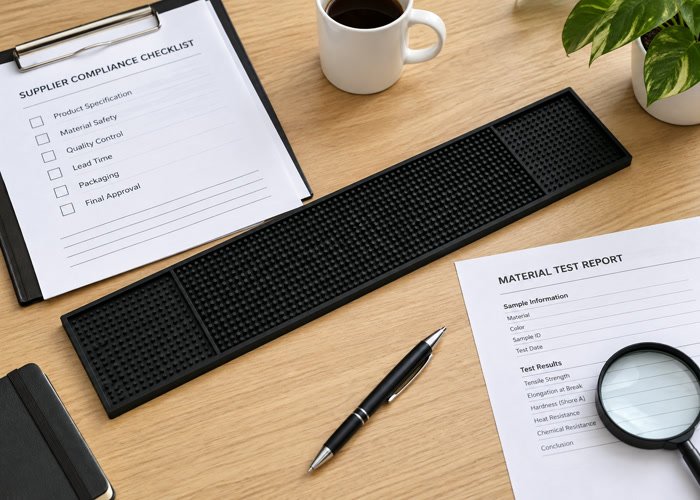
The first thing to confirm is that the manufacturer is legally registered and compliant with industry standards. This foundational check ensures you are dealing with a legitimate business entity, not a phantom operation, and that they have a baseline commitment to quality and safety.
Mergulhe mais fundo: Verifying Foundational Credentials
When I start vetting a potential partner, I treat this as a pass/fail test. If a manufacturer cannot provide these basic documents, the conversation ends. It’s a clear red flag that indicates a lack of professionalism or legitimacy.
Here is the essential checklist for compliance verification:
- Business License: This is the most basic requirement. It confirms the company is a legally registered entity in its country of origin. You should check the business scope on the license to ensure it includes "manufacturing" or "production" of plastic, borracha, or silicone goods. This helps verify they aren't just a trading company.
- Quality Management System (QMS) Certification: Look for certifications like ISO 9001. This demonstrates that the manufacturer has established and follows a systematic approach to quality management, from raw material sourcing to final inspection. It's a strong indicator of their commitment to consistency and process control.
- Social and Environmental Audits: Depending on your brand's values and your target market, you might also ask for social audit reports like BSCI (Business Social Compliance Initiative) or Sedex. These audits assess labor standards, health and safety, and environmental practices.
Material Safety & Market-Specific Compliance
Beyond general business compliance, you must verify their ability to meet the specific material safety standards of your target market. This is especially critical for brands selling in the EU, EUA, or on platforms like Amazon.
A reliable PVC bar mat manufacturer should be transparent about their material capabilities. For example, at SuperfectCraft, we regularly handle requests for:
- ALCANÇAR / SVHC: For products sold in the European Union.
- Proposta da Califórnia 65: For products sold in California, which has stringent chemical warning requirements.
- LFGB / FDA: For mats that may have incidental food contact.
- Ftalatos, PAHs, and Heavy Metals Testing: Common requirements for consumer goods to ensure they are free from harmful substances.
An experienced manufacturer won't just say "yes" to everything. They will ask about your specific market, the intended use of the mat, and help you determine the necessary tests. They should also have established relationships with third-party testing labs (like SGS, TUV, or Intertek) and be able to facilitate this process for you.
How Can You Verify a Manufacturer's Production Hardware?
Are you talking to a real factory or a middleman? This is the core question this audit step answers. Visiting the factory in person or conducting a thorough virtual tour is the only way to verify their production hardware and distinguish a genuine PVC bar mat manufacturer from a trading company.
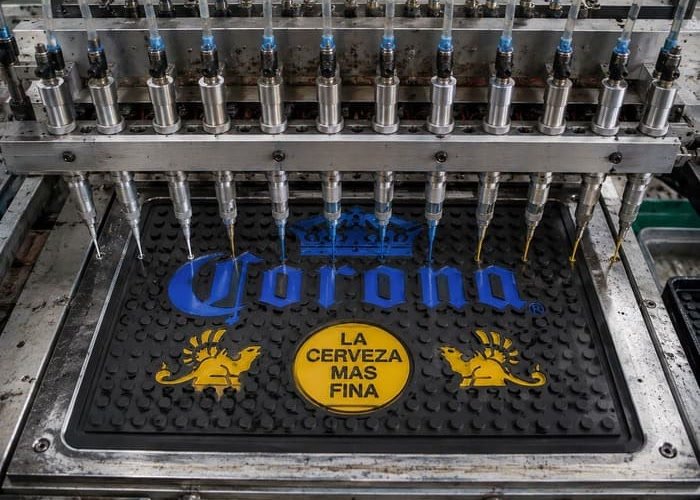
A true manufacturer will have a physical factory floor with visible production lines. Look for key machinery like dispensing machines, molding presses, vacuum chambers, and ovens. The presence of this equipment, along with organized raw material storage and a dedicated molding department, confirms their manufacturing capabilities.
Mergulhe mais fundo: What to Look for on the Factory Floor
I once worked with a supplier who claimed to be a factory, but their "facility" was just a small office. All production was outsourced to a network of smaller, unvetted workshops, leading to massive quality inconsistencies. This experience taught me to always verify the hardware.
When you audit the production site, here’s your checklist:
Key Machinery and Equipment
A well-equipped PVC bar mat factory should have dedicated areas for each stage of production.
| Equipment / Area | What to Look For | Red Flags |
|---|---|---|
| Mold Department | In-house CNC machines for mold making, organized storage of existing molds. | No mold-making capability; relies entirely on external suppliers for molds. |
| Dispensing Lines | Automated or semi-automated dispensing machines for applying liquid PVC. Look for multiple lines to handle different orders simultaneously. | Manual dispensing only; very few machines relative to claimed capacity. |
| Curing/Baking Area | Industrial ovens with temperature controls. A vacuum machine is often used before baking to remove air bubbles. | Small, low-quality ovens; lack of vacuum process (can lead to defects). |
| Trimming & Finishing | A dedicated station for trimming excess material (flashing) and cleaning the final product. | Messy finishing area; products with rough, untrimmed edges. |
| Raw Material Storage | A clean, organized area for storing barrels of liquid PVC, pigments, and other materials. | Disorganized storage; materials exposed to contaminants or extreme temperatures. |
Differentiating a Factory from a Trading Company
- In-House Molds: Ask to see their library of existing molds. A manufacturer like us has a large collection, which can speed up development and lower costs for clients. A trading company won't have this.
- Production Staff: You should see workers operating machines, overseeing processes, and performing quality checks.
- Raw Material Inventory: A real factory will have a significant stock of raw materials. Ask where they source their PVC and what quality grades they use.
- Technical Expertise: Talk to the production manager or an engineer. They should be able to answer detailed questions about the PVC dispensing process, curing temperatures, and troubleshooting common defects. A salesperson from a trading company will lack this deep technical knowledge.
Verifying the hardware gives you confidence that the supplier has direct control over the production process, which is fundamental to controlling quality, lead times, and cost.
How Important is a Manufacturer's Prototyping and Sampling Process?
The sampling process is your first tangible proof of a manufacturer's ability to execute your design. It's where you vet their technical skill, attention to detail, and communication. A flawed sample often predicts a flawed mass production run.
An excellent sampling process involves quick design turnaround, precise color matching, and the creation of a physical prototype that meets your exact specifications. This sample serves as the "golden standard" for mass production, ensuring there are no surprises when you receive your final order.

Mergulhe mais fundo: From Artwork to Physical Sample
A great PVC bar mat manufacturer acts as a true partner during the development phase. They don't just take your artwork and press "go." They provide feedback, suggest improvements, and ensure the design is optimized for manufacturing.
Here’s a breakdown of what a strong sampling and design process looks like:
The Design and Sketch Phase
Many clients, especially promotional product agencies or new brands, may have a logo but not a production-ready design file. This is where a manufacturer's service level shines.
- Design Support: Can the manufacturer work with a simple logo file (like a JPEG or PNG)? A top-tier supplier will have an in-house design team that can convert your concept into a professional 2D production sketch. Na SuperfectCraft, we offer a serviço gratuito de esboço de design 24 horas to help clients visualize the final product quickly.
- Artwork Approval: The manufacturer should provide a detailed artwork file for your approval before any physical work begins. This file should specify dimensions, cores (ideally with Pantone codes), and logo placement.
The Sampling Production Steps
Once you approve the artwork, the physical sampling begins. This is a multi-step process that tests the factory's core competencies:
- Mold Creation: If it's a new design, a production mold must be created. The precision of this mold dictates the sharpness and detail of your final product.
- Combinação de cores: The factory must accurately mix pigments to match the Pantone colors specified in your artwork. Ask for a photo of the color swatches for approval before they proceed with dispensing.
- Liquid PVC Dispensing: Technicians use dispensing machines to carefully inject the colored PVC into the mold, layer by layer, to create your logo and design. This requires immense skill to prevent colors from bleeding.
- Curing and Demolding: The filled mold goes through a vacuum process to remove air bubbles and then into an oven to cure. After cooling, the mat is carefully removed from the mold.
- Inspection and Finishing: The sample is inspected for defects, and any excess flashing is trimmed off.
A reliable manufacturer should be able to complete this entire process within a reasonable timeframe. Por exemplo, our standard sample lead time is just 7 dias for designs using existing molds. This speed allows you to test and iterate quickly.
What Does a Robust Quality Control System Look Like?
A quality control (Controle de qualidade) system is the set of procedures that prevents defects and ensures every unit meets the agreed-upon standard. Without a robust QC system, you risk receiving a shipment with inconsistent colors, dimensional errors, or surface blemishes. This can force you to manually inspect every piece, leading to delays and added costs.
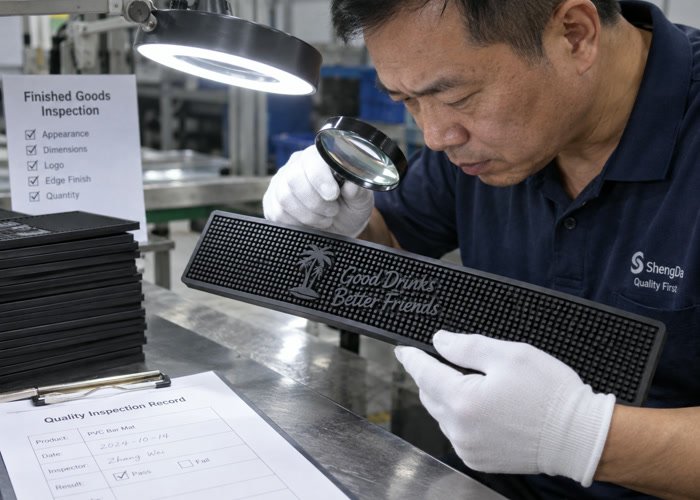
A truly effective QC system for a PVC bar mat manufacturer is multi-layered, involving checks at every critical stage of production. It starts with vetting raw materials and continues with in-process inspections, a 100% post-production check, and a final pre-shipment audit.
Mergulhe mais fundo: The Four Layers of Quality Inspection
Relying on a single final inspection is a recipe for disaster. By the time defects are caught at the end, it's often too late or too costly to fix them. I insist on a four-layer inspection process with any manufacturing partner. This proactive approach catches issues early.
Here’s how this tiered system works:
Layer 1: Incoming Quality Control (IQC)
This is the first line of defense. Before any production begins, the raw materials must be inspected.
- What they check: The viscosity, cor, and purity of the liquid PVC. They verify that the pigments match the master color standards.
- Why it matters: Using substandard raw materials is the root cause of many defects, such as poor flexibility, discoloration over time, or unpleasant odors. A good PVC bar mat manufacturer will reject any batch of raw materials that doesn't meet their standards.
Layer 2: In-Process Quality Control (IPQC)
Inspections are performed at key steps during the manufacturing process.
- What they check: After dispensing, they check for color bleeding or air bubbles. After demolding, each unit is checked for molding defects, like incomplete fill or surface marks.
- Why it matters: Catching a defect mid-process (por exemplo, an issue with a dispensing machine) allows for immediate correction. This prevents hundreds or thousands of defective units from being produced.
Layer 3: Final Quality Control (FQC)
After the mats are produced, trimmed, and cleaned, they undergo a 100% visual inspection.
- What they check: Every single mat is inspected for dimensional accuracy, color correctness (compared to the approved sample), logo clarity, and any surface defects (scratches, dirt, blemishes).
- Why it matters: This is a comprehensive check to ensure every piece that gets packaged meets the quality standard established by the approved prototype. Defective units are sorted out and either reworked or scrapped.
Layer 4: Outgoing Quality Control (OQC)
Just before the order is shipped, a final random audit is performed.
- What they check: A random sample of packaged products is pulled to double-check the mat quality, embalagem, labels, and carton markings against the order specifications.
- Why it matters: This final check ensures that the correct product, in the correct quantity, with the correct packaging, is being sent out. It's the last chance to catch any errors before the goods leave the factory.
Ask your potential manufacturer to walk you through their QC process. If they can’t clearly define these four stages, it’s a major red flag.
What OEM Service Capabilities Should You Look For?
OEM (Fabricante de equipamento original) service is about more than just putting your logo on a generic product. True OEM capability means the manufacturer can act as an extension of your product development team. They should offer a wide range of customization options that allow you to create a unique product that aligns perfectly with your brand.
Um nível superior PVC bar mat manufacturer provides comprehensive OEM services, including custom shapes and sizes, a large library of existing molds, advanced structural design, and full customization of packaging and accessories. These capabilities empower you to go beyond a standard bar mat and create something truly functional and branded.

Mergulhe mais fundo: Evaluating the Scope of Customization
When I'm developing a new product, I need a partner who says "yes, and here's how," not "no, we can't do that." A manufacturer's OEM service depth is a direct measure of their experience and technical prowess.
Here are the key OEM capabilities to audit:
Core Product Customization
This goes beyond just the logo. A flexible manufacturer should offer:
- Custom Sizes and Shapes: Can they produce a mat in a unique shape that fits a specific countertop or a die-cut shape that reflects your brand's identity?
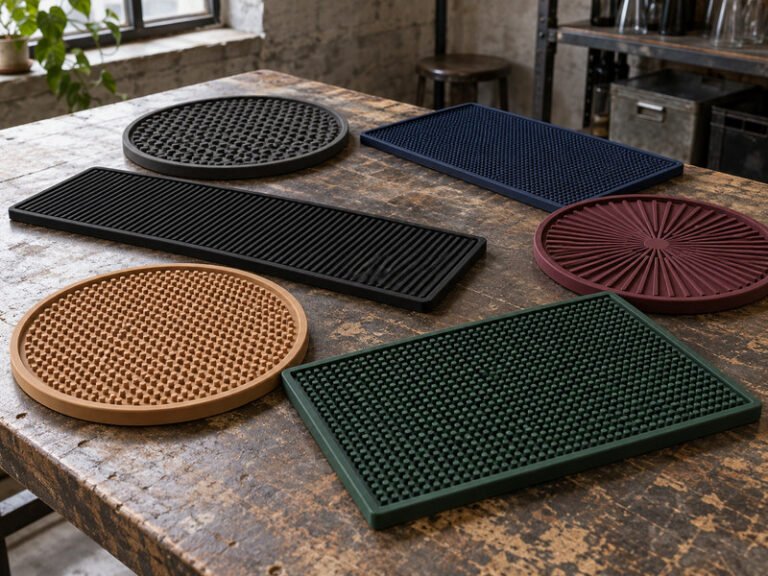
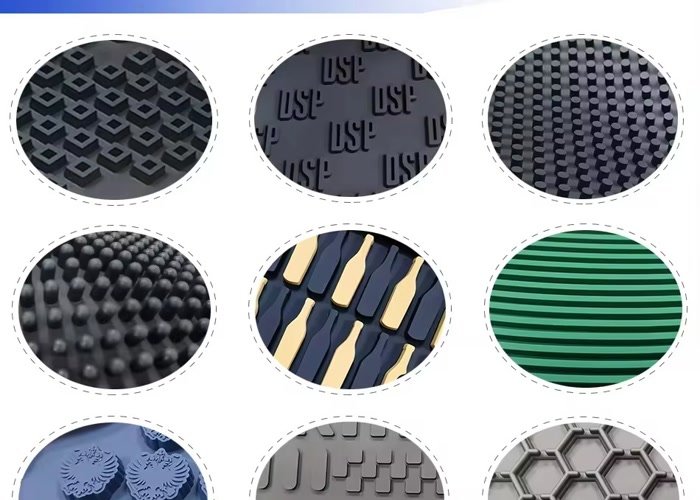
- Custom Colors and Textures: Can they match any Pantone color? Can they create different surface textures, such as glossy, matte, or a custom pattern?
- Material Options: While the focus may be PVC, can they also produce mats in other materials like silicone, borracha, or TPE? This is useful if you need heat-resistant tool mats for a barber shop or food-grade silicone mats for a restaurant.
Functional and Structural Design
This is where advanced manufacturers really stand out. Bar mats aren't just for branding; they serve a purpose. Look for a supplier who understands functional design.
- Anti-Slip Features: Can they design a specific pattern on the back of the mat to maximize grip on wet surfaces?
- Drainage Structures: Do they have experience designing pillar heights and channel widths to optimize liquid drainage and keep surfaces dry?
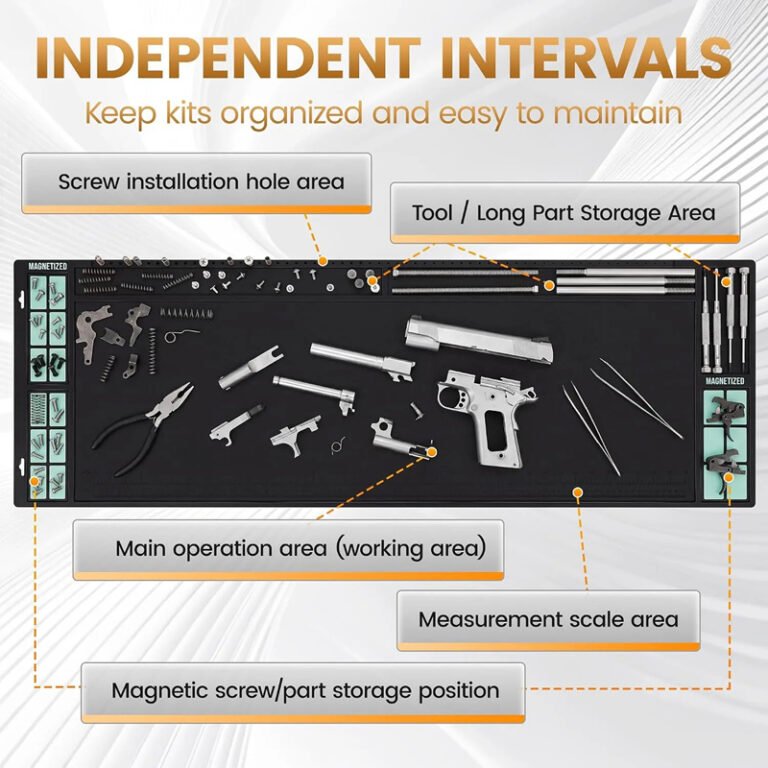
- Specialty Features: Ask about their experience with more complex designs, such as posicionamento magnético for barber tools or embedding other components within the mat. Our ability to engineer these special structures is a key differentiator for clients needing high-performance tool mats.
Packaging and Accessory Customization
The product experience doesn't end with the mat itself. A great OEM partner helps you with the total package.
- Embalagem personalizada: Can they provide custom-printed poly bags, color boxes, or header cards?
- Labeling and Barcodes: Can they apply UPC barcode stickers or other required labels to the packaging?
- Bundling: Can they bundle the mat with other accessories, like coasters or bottle openers, into a single retail-ready kit?
A manufacturer with deep OEM capabilities allows you to be more creative and competitive in the market.
How Do You Assess Capacity, Lead Time, and Commercial Terms?
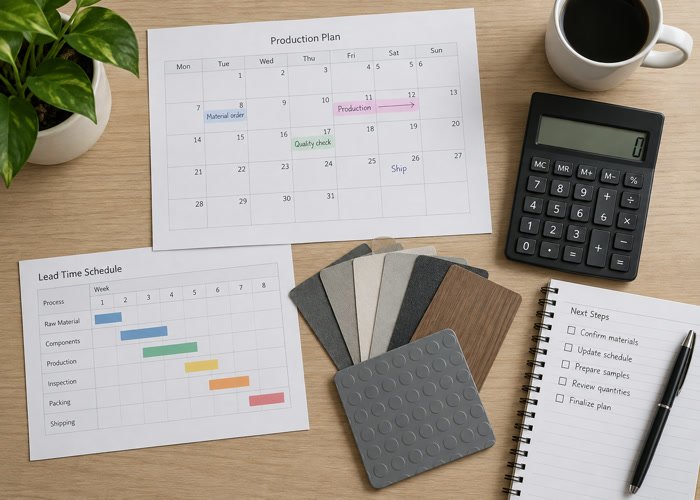
Understanding a manufacturer's production capacity, lead times, and business terms is essential for planning your inventory and managing your cash flow. Misaligned expectations in these areas can lead to stockouts during peak season or financial strain. This part of the audit is about ensuring their operational rhythm matches your business needs.
To assess this, you need clear, documented answers on their Minimum Order Quantity (Quantidade mínima), production lead times for both samples and mass orders, and their payment and shipping terms. A reliable PVC bar mat manufacturer will provide this information upfront and have policies that are clear and reasonable.
Mergulhe mais fundo: Getting Clarity on the Numbers
During this stage, I move from technical capabilities to the business relationship. Vague answers are a warning sign. I need firm commitments that I can build my own business forecasts upon.
Here’s what to confirm:
Production Capacity and MOQ
- Quantidade mínima de pedido (Quantidade mínima): This is the smallest order a factory will accept. It's often dictated by the setup costs for a production run. A lower MOQ is better for testing new designs or for smaller businesses. For example, nosso MOQ is 200 peças por design for items using existing molds, which is accessible for many brands.
- Maximum Capacity: Ask about their monthly output. How many machines do they have? How many shifts do they run? This helps you understand if they can handle your volume, especially during peak demand. You don't want to be a tiny customer at a huge factory or the biggest customer at a small one.
Lead Times
You need to know how long it takes to get your product. Be sure to differentiate between the stages.
- Prazo de entrega da amostra: How long does it take to get a physical sample after you approve the artwork? A fast turnaround is crucial for quick product development. As mentioned, we target a 7-day sample lead time.
- Prazo de produção em massa: How long does it take to produce your full order after you approve the sample? This typically ranges from 20 para 30 days depending on order quantity and complexity. Be sure to ask if this includes packaging. This timeframe is standard in our operations.
- Seasonal Variations: Ask if lead times increase during peak seasons (por exemplo, before major holidays). A good partner will be transparent about this and help you plan accordingly.
Commercial Terms
| Term | What to Ask | Standard Practice |
|---|---|---|
| Payment Terms | What is the required deposit? When is the balance due? | Typically 30-50% deposit to start production, with the balance due upon completion, before shipment. |
| Shipping Terms (Incoterms) | Do you quote EXW (Ex Works), FOB (Free on Board), or DDP (Delivered Duty Paid)? | Most Chinese manufacturers quote in FOB terms, meaning they handle costs until the goods are loaded onto the vessel at the port of origin. |
| Mold Fees | Is there a cost for creating a new mold? Is this fee refundable after a certain order volume? | Sim, new custom molds have a one-time fee. Some manufacturers may offer to refund it after a large cumulative order quantity. |
Getting these details in writing in a formal Proforma Invoice (PI) is essential before you send any money.
Why Should You Review a Manufacturer's Client History and Experience?
A manufacturer's past projects and client list are a powerful indicator of their reliability and expertise. A long history of working with reputable brands suggests they have consistently met high standards for quality, communication, and delivery. It's the ultimate form of social proof.
Reviewing a manufacturer's experience involves asking for case studies, client references, and examples of past work relevant to your industry. A seasoned PVC bar mat manufacturer will be proud to (non-confidentially) share their experience with beverage brands, salon suppliers, or promotional product companies, demonstrating their ability to meet diverse industry needs.

Mergulhe mais fundo: Using Past Performance to Predict Future Success
You wouldn't hire an employee without checking their references; the same logic applies to a manufacturing partner. Their track record is the best predictor of your future experience with them.
Here is how you can effectively audit their experience:
Requesting Case Studies and Work Examples
Ask the manufacturer to provide examples of projects similar to yours.
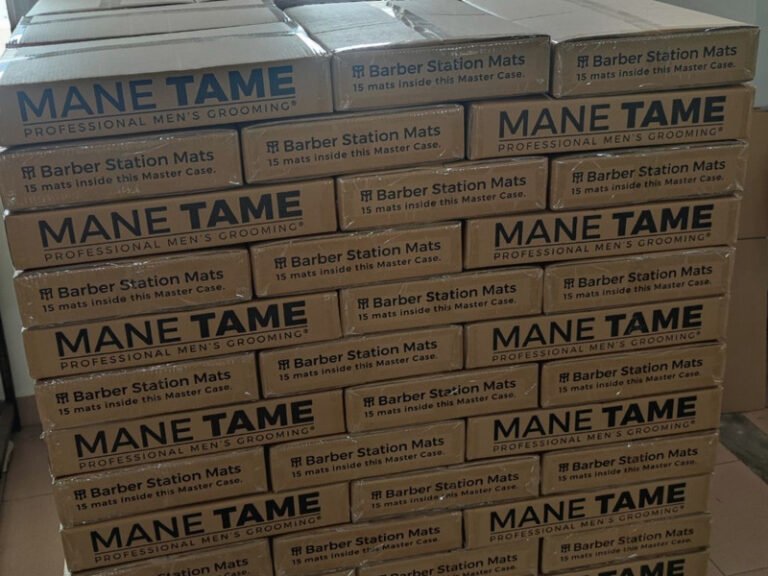
- Industry Relevance: If you are a beverage brand, ask to see mats they have made for other beverage companies. If you are a barber supplier, ask for examples of barber station mats. This shows they understand the specific demands and aesthetics of your market.
- Complexity: Ask to see examples of their most complex projects. This could be a mat with very fine details, many colors, or a unique functional structure. This demonstrates the upper limit of their capabilities.
- Global Clients: If they have experience exporting to your country or region, it’s a huge plus. It means they are already familiar with your market's shipping logistics, customs requirements, and compliance standards.
As a manufacturer with a global client base, we understand the nuances of working with brand owners, importadores, and private-label companies in North America, Europe, and beyond.
Client Types and Long-Term Relationships
A manufacturer's client profile tells a story.
- Who are their typical customers? A factory that primarily serves large multinational brands (like major beverage companies) is accustomed to rigorous quality audits and strict delivery schedules. A factory that works with promotional product distributors is skilled at handling high-volume, quick-turnaround orders with less complex designs.
- How long have they worked with their key clients? Long-term relationships spanning several years are a fantastic sign. It shows that the client is happy enough with the quality and service to keep coming back. It proves the manufacturer is a reliable long-term partner, not just a one-time supplier.
While confidentiality agreements will prevent them from naming every client, an experienced manufacturer should be able to speak to the types of clients they serve and the longevity of those partnerships.
Perguntas frequentes
What's the main difference between a PVC, borracha, and silicone bar mat?
PVC bar mats are the most common and cost-effective, offering excellent detail for logos and vibrant colors. Rubber mats are heavier and more durable, often preferred for high-traffic industrial settings. Silicone mats are heat-resistant and often food-grade, making them ideal for use as tool mats for hot styling tools or in kitchen environments.
How much does a custom mold for a PVC bar mat typically cost?
The cost of a custom mold depends on the size and complexity of the mat design. Um simples, small mold might cost a few hundred dollars, while a large, intricate mold could be over a thousand. This is a one-time investment. Many manufacturers, including us, offer a large library of existing molds that can be used to reduce or eliminate this cost.
Can a manufacturer help me if I only have a logo and an idea?
Sim, a good OEM manufacturer should be able to help. You can provide your logo, dimensões desejadas, and a basic concept. Their design team will then create a professional 2D production sketch for your review. This service is often complimentary, as we provide a 24-hour sketch service to help clients get started.
What is the average lead time for a mass production order of PVC bar mats?
The average mass production lead time is typically between 20 e 30 days after the final sample has been approved. This can vary based on the order quantity, a complexidade do design, and the factory's current production schedule. Always confirm the lead time for your specific order before placing it.
Conclusão
Auditing a PVC bar mat manufacturer is a methodical process that pays dividends in product quality and supply chain reliability. By moving through these seven stages—from verifying compliance and production hardware to scrutinizing their QC system, OEM services, and client history—you build a complete picture of their capabilities. This structured approach empowers you to select a true partner who can consistently deliver high-quality, custom mats that elevate your brand. A thorough audit protects your investment and lays the foundation for a successful, long-term manufacturing relationship.
If you're looking for a reliable OEM/ODM partner with proven experience, a robust quality system, and deep customization capabilities, my team at SuperfectCraft is ready to help. Contact us today to discuss your project, and let us show you how we can bring your custom mat vision to life.