
Thinking about sourcing custom mats for your brand but feeling lost in the complexity of global trade? The process to import mats from China can seem like a daunting maze of regulations, language barriers, and logistical hurdles. You worry about finding a reliable factory, ensuring quality, and navigating customs without costly mistakes. This guide demystifies the entire journey, providing a clear, step-by-step roadmap to success.
To import mats from China successfully, you must follow a seven-step process: 1) Secure your import qualifications and understand local compliance. 2) Vet a source factory and sign a detailed OEM contract. 3) Approve a final sample before paying the deposit for mass production. 4) Ensure the factory prepares all export documents. 5) Arrange international shipping and pre-declarations. 6) Use a local broker for customs clearance. 7) Conduct a final inspection upon delivery and archive all paperwork.

This clear, seven-stage process turns a potentially confusing endeavor into a manageable project plan. We'll break down each step in detail below, giving you the confidence and knowledge to source high-quality mats directly from the manufacturer. Let's dive into the specifics.
What Legal and Compliance Standards Must You Prepare For?
The first step in any import journey begins at home, not abroad. Are you legally set up to import goods, and do you know the specific safety standards your products must meet? Overlooking this foundational step can lead to your shipment being rejected by customs, resulting in massive financial losses.
Before you even contact a factory, you must register for the necessary import credentials in your country and identify all mandatory product compliance standards. This preparation is non-negotiable for a smooth customs clearance process.
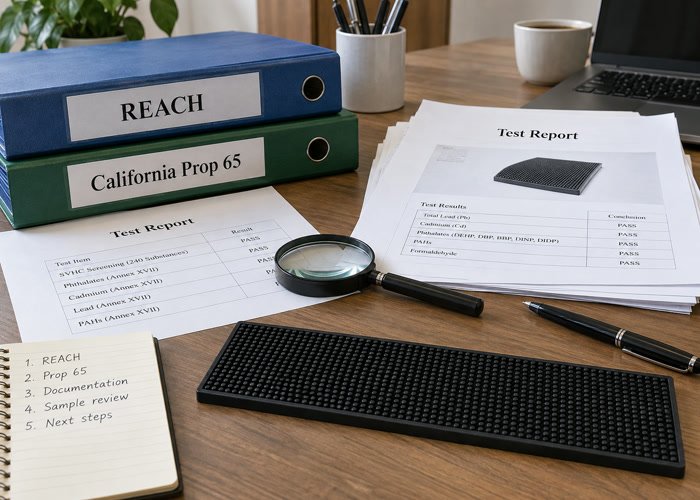
Potopite se globlje: Establishing Your Legal and Product Framework
Your journey to import mats from China starts with paperwork in your own country. This is the crucial first gate to pass.
Secure Your Importer Credentials
Before you can commercially import goods, your government needs to know who you are. This typically involves registering your business as an importer.
- In the European Union: You need an EORI (Economic Operators Registration and Identification) number. This is a unique ID used in all customs procedures. Applying is straightforward and usually done through your country's customs authority website.
- In the United States: You need a Tax ID number, also known as an Employer Identification Number (EIN), za vaše podjetje. If you are importing as an individual, you can use your Social Security Number. For shipments valued over $2,500, a Customs Bond is also required.
- Other Regions: Most countries have a similar system, requiring a business registration number or a specific importer code. Check with your national customs agency.
Lock In Local Compliance Standards
This is where many first-time importers stumble. The mats you import must be safe for end-users and compliant with your target market's regulations. These standards vary significantly by region and dictate the materials and chemicals that can be used.
Key regulations include:
- DOSEG / SVHC (EU): Regulates chemicals and substances of very high concern.
- LFGB / FDA (EU/US): Pertains to materials intended for food contact, relevant for some bar mats.
- California Proposition 65 (US): Requires warnings for products containing certain chemicals.
- Phthalates and Heavy Metals: Restrictions on these are common worldwide.
You must identify these standards before production begins. A reliable manufacturer will be able to produce mats that meet these requirements, but you must request it and specify it in your contract. We often arrange third-party testing for our clients to provide certified proof of compliance for their specific market.
How Do You Find and Vet a Chinese Mat Manufacturer?
With your legal groundwork laid, the next challenge is finding the right partner in China. You need a factory that not only makes great products but also understands OEM processes and international business. Choosing the wrong partner can lead to poor quality, communication breakdowns, and production delays.
The solution is a systematic screening process. You must identify true source factories, verify their capabilities, and formalize your partnership with a robust OEM contract and Non-Disclosure Agreement (NDA) before sharing sensitive designs.

Potopite se globlje: Selecting and Engaging Your Factory Partner
Finding a manufacturer is easy; finding the right one takes effort. I remember my first time sourcing—I was overwhelmed by the sheer number of listings on Alibaba. I quickly learned to look past the flashy ads and focus on verifiable capabilities.
Identifying True Source Factories
Your goal is to work directly with a manufacturer, not a middleman or trading company. Direct partnership gives you better pricing, more control, and clearer communication.
- Online Marketplaces: Sites like Alibaba are a starting point. Use filters to find "Verified Suppliers" or "Manufacturers." Look for companies that specialize in your product category (npr., "PVC bar mats").
- Trade Shows: Events like the Canton Fair are excellent for meeting factory representatives in person.
- Referrals: Ask for recommendations within your industry network.
- Direct Search: Look for manufacturers with their own websites, like us at SuperfectCraft. A professional website with detailed capabilities is a strong positive signal.
Vetting Potential Partners
Once you have a shortlist, evaluate them based on these criteria:
- OEM/ODM Experience: Do they have a portfolio of custom work for other brands?
- Knjižnica plesni: A large library of existing molds means they can develop new products faster and at a lower cost.
- Design Support: Can they help you if you don't have a professional design? We offer a 24-hour design sketch service for this very reason.
- Material Expertise: Can they work with the specific materials you need (PVC, silikon, guma)?
- Communication: Are their responses prompt, clear, in strokovno?
| Factory Type | Pros | Cons |
|---|---|---|
| Manufacturer | Lower price, better control, deep product knowledge | Higher MOQ, less product variety |
| Trading Company | Lower MOQ, wide product variety, consolidated shipping | Higher price, less control, potential for miscommunication |
The OEM Contract and NDA
This is your legal shield. Never start a project without a signed contract.
- Non-Disclosure Agreement (NDA): Protects your designs and intellectual property. Sign this before sharing any sensitive logos or plans.
- OEM Contract / Purchase Order (PO): This document should explicitly state everything:
- Product specifications (dimenzije, materialov, barve)
- Logo and artwork details
- Material and testing requirements (npr., "Must comply with REACH SVHC")
- Packaging instructions
- Price per unit
- Production lead time
- Payment terms
- Incoterms (npr., FOB Shenzhen)
What Are the Key Production and Quality Control Steps?
You've found a factory and signed a contract. Now, how do you ensure the 5,000 mats you ordered look exactly like the one you approved? Without a structured production and QC process, you risk receiving a container full of products that don't meet your quality standards, a costly and frustrating disaster.
A three-stage process is your best defense: sample confirmation, a clear payment structure that incentivizes quality, and a mandatory pre-shipment inspection. This locks in quality at every critical phase of production.
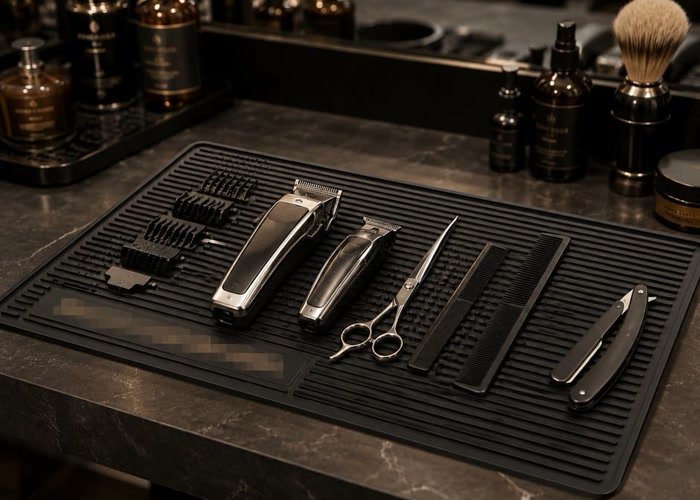
Potopite se globlje: From Sample to Shipment
This phase is where your product comes to life. Managing it correctly is key to a successful outcome when you import mats from China.
The Critical Role of Sample Confirmation (封样)
"封样" (fēng yàng) is a Chinese term that means "sealing the sample." This isn't just a prototype; this is the golden sample that serves as the benchmark for mass production.
- Prototype/Sample Production: The factory produces a physical sample based on your approved design sketch. This typically takes around 7 dni.
- Review and Approval: You receive the sample and inspect it for color accuracy, dimenzije, material feel, and overall quality. This is your chance to request revisions.
- Confirmation: Once you are 100% satisfied, you formally approve this sample. Both you and the factory should keep a sealed reference sample. All mass-produced units must match this golden sample.
Payment Structure as a Quality Lever
The standard payment term in China is a Telegraphic Transfer (T/T) with a deposit and balance payment. This structure protects both buyer and seller.
- Deposit (Typically 30%): You pay this after approving the golden sample. This payment covers the factory's cost of raw materials and signals them to begin mass production. Mass production lead time is usually 20–30 days.
- Balance Payment (Typically 70%): This is due after mass production is complete but before the goods are shipped. Crucially, you should only release this payment after you have approved the pre-shipment inspection report.
The Pre-Shipment Inspection (PSI)
This is your final quality gate before the products leave the factory. You have three options for conducting a PSI:
- Go Yourself: The best option for large or critical orders, but often impractical.
- Hire a Third-Party Inspector: Companies like QIMA, SGS, or AsiaInspection[^1] can be hired to go to the factory and perform a detailed inspection on your behalf for a few hundred dollars. They provide a comprehensive report with photos and data.
- Rely on the Factory's QC: A trustworthy, long-term partner may provide their own internal QC report. This requires a high level of trust.
The PSI should check a random sample of units against the golden sample, verifying quantity, specifications, labeling, and packaging. Only after approving this report do you pay the balance and authorize shipment.
Pogosto zastavljena vprašanja
Kolikšna je najmanjša količina naročila (MOQ) to import mats from China?
The MOQ can vary widely. Pri SuperfectCraftu, naš standardni MOQ je 200 kosov po dizajnu in barvi, zlasti pri uporabi naše velike knjižnice obstoječih kalupov. This is a relatively low barrier for businesses looking to create custom-branded mats.
How long does it take to import mats from China?
The total time can be broken down into three phases. Sample production takes about 7 dni. Mass production typically takes 20–30 days after sample approval. Sea freight shipping can take another 20–40 days, depending on your destination port. In total, plan for approximately 2–3 months from order to delivery.
Can I get a custom logo on my mats?
Vsekakor. This is our specialty. The process starts with you providing your logo and desired mat dimensions. We then create a free design sketch for your approval. Once approved, your custom logo is integrated into the mold for production, ensuring a high-quality, durable result.
What are the most common payment terms for importing?
The most common payment method is a Telegraphic Transfer (T/T). The standard structure is a 30% deposit to begin mass production after sample approval, and the remaining 70% balance paid after the pre-shipment inspection is passed, but before the goods are shipped.
Zaključek
Successfully importing mats from China is a systematic process, not a game of chance. By following these key steps—establishing legal compliance, thoroughly vetting your factory partner, managing production through sample confirmation and inspections, and coordinating logistics with experts—you can transform a complex challenge into a streamlined operation. The key is to be diligent, communicate clearly, and partner with a manufacturer who understands the entire process. While the details are many, the path is clear for those who prepare.
Ready to take the next step and source high-quality custom mats with confidence? The team at SuperfectCraft is here to guide you. With our extensive OEM experience, free design services, and deep knowledge of global logistics, we make the process to import mats from China smooth and predictable.
Contact us today for a free design sketch and a no-obligation quote. Let's build your brand together. WhatsApp: +86 15816822766 E-pošta: sales01@superfectcraft.com
[^1]: "QIMA", https://en.wikipedia.org/wiki/QIMA. QIMA and SGS are recognized for providing pre-shipment inspection services, ensuring product quality and compliance. Dokazna vloga: case_reference; vrsta vira: institution. podpira: Third-party inspection companies like QIMA, SGS, and AsiaInspection offer factory inspection services.. Opomba o obsegu: The citation may not address mats specifically but supports general inspection practices.